

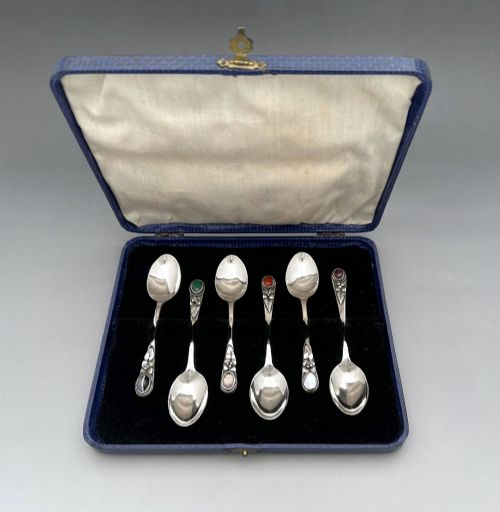


Boxed Teaspoons
Boxed teaspoons are matching sets of flatware housed in fitted cases, bought for formal tea service or as presentation gifts.
Boxed Teaspoons
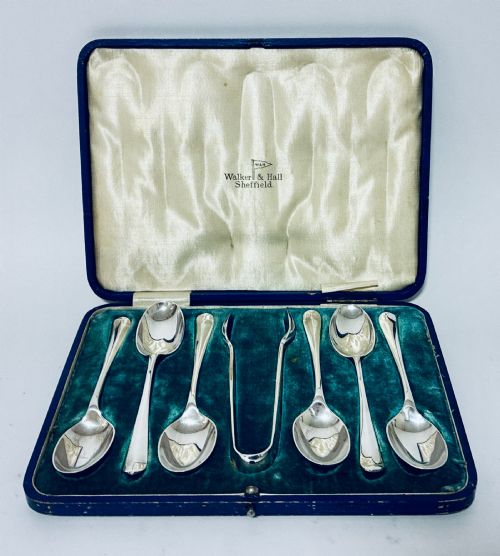
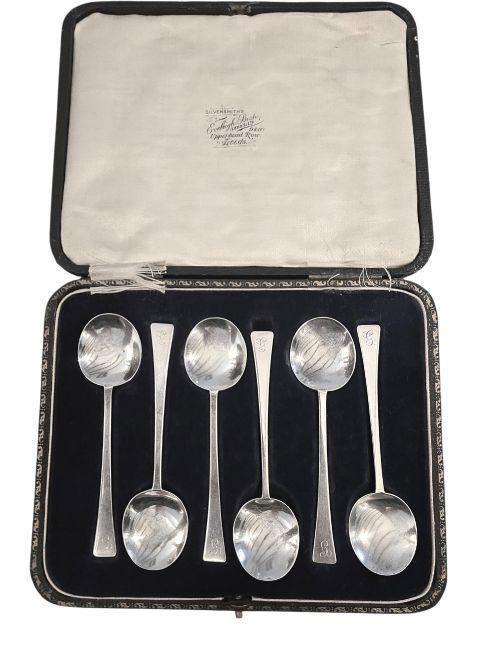
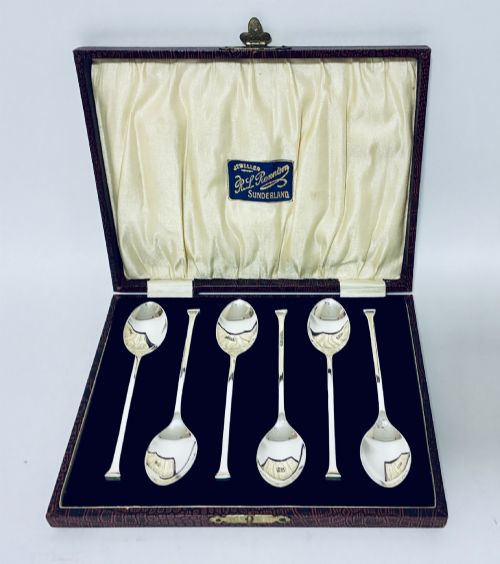
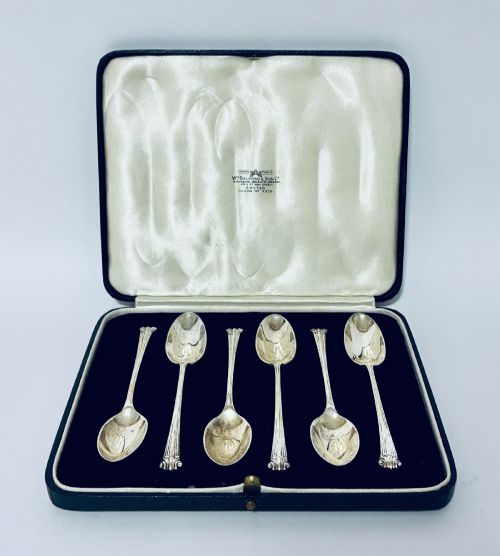
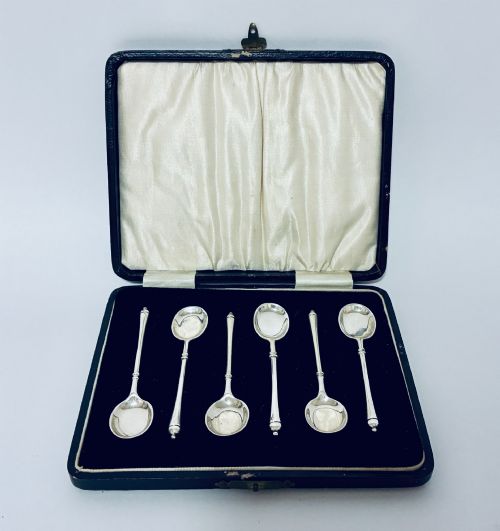
When you search for boxed teaspoons, you encounter coordinated sets of silver flatware nestled in custom-fitted presentation cases lined with silk, velvet, or satin. These sets range from modest Edwardian gatherings of six to larger Victorian and mid-century assortments accompanied by sugar tongs.
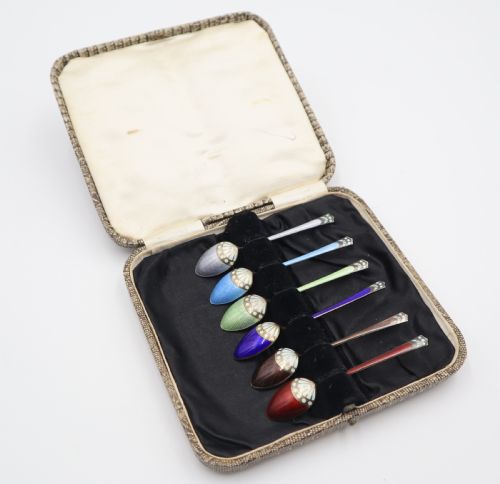
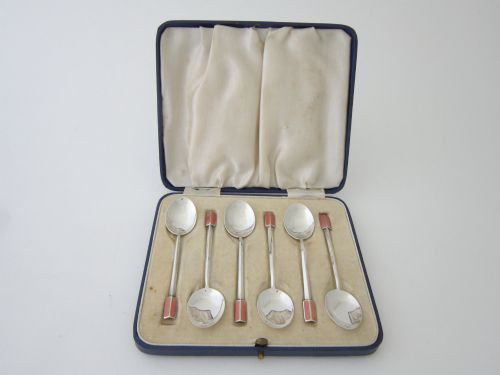
The most common versions on this page are twentieth-century sets featuring sterling silver and colourful vitreous enamel, particularly from the Art Deco period. Alongside standard teaspoons, you will frequently find specialised coffee spoons and demi-tasse sets designed for after-dinner service.
How they were made
Silversmiths shaped the spoons from sterling silver and silver-gilt, utilising traditional casting, hammering, and piercing techniques in workshops across Britain and Europe. Many pieces incorporate vitreous enamel applied to the terminal, fused to the metal through high-temperature firing.
The presentation containers consist of rigid leatherette or cardboard shells lined internally with fitted fabric beds of velvet, silk, or satin to secure the spoons and tongs in transit.
Boxed Teaspoons Retail Price Guide 2026
Typical asking prices for boxed teaspoons among the pieces listed under this phrase on Sellingantiques today, from the lower quarter to the upper quarter. They describe what is for sale here now, not the wider market.
Listings span the Victorian, Edwardian, and Art Deco periods, utilising materials including velvet, silk, enamel, leatherette, and sterling silver.
What varies in quality
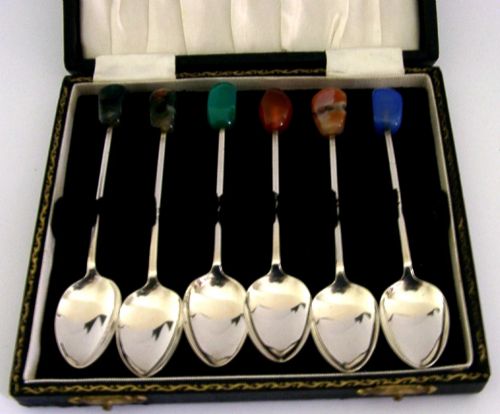
The distinction between standard sets and superior pieces lies in the precision of the silversmith's work and the intricacy of any decorative additions. Hand-applied polychrome enamel work, the inclusion of semi-precious stones, and robust silver-gilt finishes elevate certain sets above plain utilitarian examples.
The integrity and original condition of the fitted case also influence the overall standard, particularly when the internal silk linings and velvet moulds remain intact without staining or tearing.
Liberty and Company·Walker and Hall·Cooper Brothers and Sons·David Andersen·Robert Stebbings
The Boxed Teaspoons Glossary
- Demi-tasse
- A small cup used for serving Turkish coffee or espresso, accompanied by matching miniature spoons. These spoons measure considerably shorter than standard tea spoons.
- Silver-gilt
- Sterling silver that has been coated with a thin layer of gold through an electrolytic or fire-gilding process. This treatment gives the silver a rich yellow-gold appearance.
- Vitreous enamel
- A material made by fusing powdered glass to a substrate by firing, usually between seven hundred and nine hundred degrees Celsius. The powder melts, flows, and solidifies into a smooth, durable glass coating.
- Leatherette
- A form of artificial leather used to cover the exterior of presentation boxes, simulating the texture and appearance of animal hide. It provides a durable protective outer shell for the fitted interior.
- Apostle spoons
- Teaspoons or larger flatware featuring the figure of an apostle cast on the terminal of the handle. Complete sets traditionally represent all twelve disciples.
Boxed Teaspoons: Frequently Asked Questions
What is the difference between tea spoons and coffee spoons?
Coffee spoons and demi-tasse spoons possess noticeably smaller bowls and shorter handles than standard tea spoons, designed specifically for use with small coffee cups.
Tea spoons are proportioned for traditional teacups and allow for comfortable stirring of sugar and milk.
How should I clean enamelled silver spoons?
Enamelled silver requires careful maintenance to protect the fragile glass decoration from scratching or chemical damage. Warm water and mild soap applied with a soft cloth are sufficient for cleaning.
Harsh silver dips must be avoided entirely because the chemical solutions can ruin the enamel surface and weaken the metal.
Were these sets intended for everyday use?
Most cased sets were manufactured as presentation items, wedding gifts, or for special occasions rather than daily dining. The presence of fitted velvet and silk cases indicates they were stored safely between uses.
Many sets survive in excellent condition precisely because their owners reserved them strictly for formal entertaining.
How do I identify the date of manufacture?
British silver bears hallmarks stamped directly onto the metal, including city assay marks, date letters, and maker's marks. These stamps provide an exact year of testing and certification.
Stylistic indicators such as Art Deco geometric lines or Art Nouveau organic curves also help narrow down the production era.