





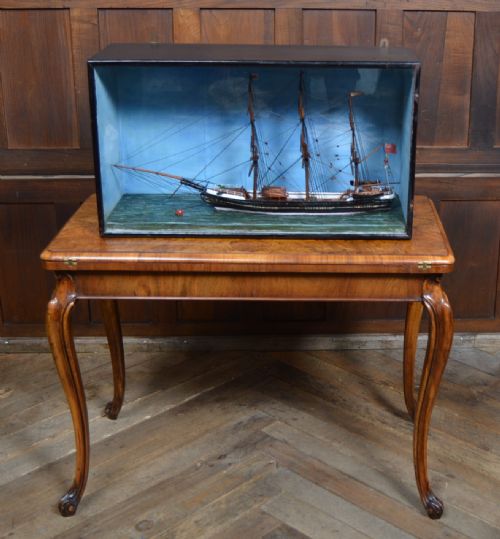


Boxed Ship Model
A boxed ship model captures a miniature maritime world inside wood and glass, offering a tangible piece of seafaring history for any room.
Boxed Ship Model
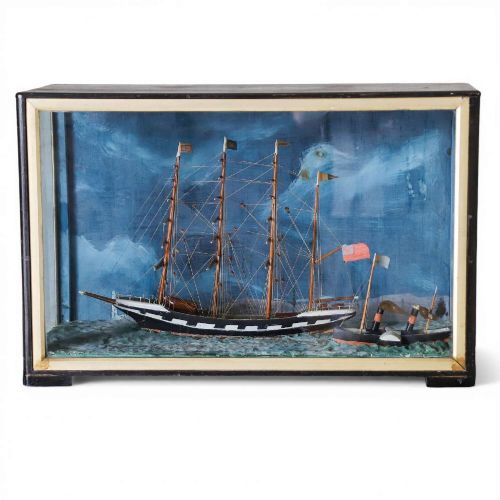
A boxed ship model is a three-dimensional maritime diorama enclosed within a protective glass-fronted case, framing detailed scenes of vessels at sea. When you search for a boxed ship model, you encounter charming examples of maritime folk art spanning the nineteenth century through the interwar period.
The most common pieces on this page are nineteenth-century English and French maritime dioramas, alongside folk art creations depicting named sailing ships and racing vessels. These works capture specific historic vessels, such as the Glynllifon or Queen Anne, rendered in precise miniature detail.
Makers often constructed these pieces to preserve the likeness of notable ships, utilising shadow boxes and wall art formats to create an illusion of depth. The combination of painted seascapes and carved hulls brings a distinct narrative quality to each cased display.
Materials and construction
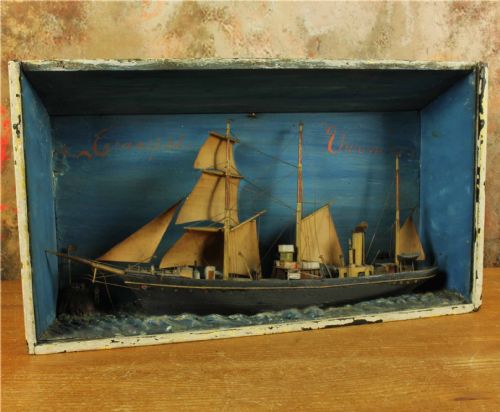
Makers shaped the hulls and waves using carved wood, canvas, and plaster, building up layered textures to represent realistic sea swells. Paint adds chromatic depth to the turneresque seascapes, capturing the turbulent motion of the ocean behind the glass.
Intricate rigging often incorporates fine thread, card, and fabric, while specialised examples feature delicate straw work to create decorative patterns on the case borders. Scratch-built models demonstrate the resourcefulness of folk artists utilising everyday materials to replicate complex naval architecture.
Boxed Ship Model Retail Price Guide 2026
Typical asking prices for boxed ship model among the pieces listed under this phrase on Sellingantiques today, from the lower quarter to the upper quarter. They describe what is for sale here now, not the wider market.
Some nineteenth-century makers incorporated delicate straw work into their maritime dioramas, transforming humble stalks into intricate geometric borders.
Factors of quality
The sophistication of the painted backdrop largely determines the visual success of the piece, separating flat representations from those with genuine atmospheric perspective. Turneresque seascapes with dynamic lighting and layered wave forms show a higher artistic ambition than basic monochrome backgrounds.
The precision of the miniature rigging and the preservation of the original wooden case significantly impact the integrity of the object. Scratch-built models that maintain their delicate components intact without major restoration reflect superior initial craftsmanship and careful historical stewardship.
The Boxed Ship Model Glossary
- Maritime diorama
- A three-dimensional scenic representation of ships and water enclosed in a glazed box. This format protects fragile rigging from dust and damage.
- Shadow box
- A deep frame used to house three-dimensional objects. It creates a stage-like perspective for enclosed miniature models.
- Scratch-built
- An object constructed entirely from raw materials rather than from a commercial kit. Folk art examples showcase individual ingenuity in this method.
- Turneresque
- A style of painting influenced by J.M.W. Turner, focusing on dramatic light and atmospheric seascapes. This treatment enhances the emotional weight of maritime scenes.
- Folk art
- Artistic work created within a traditional culture by self-taught makers. These pieces rely on community traditions and personal resourcefulness rather than formal academic training.
Boxed Ship Model: Frequently Asked Questions
What is a boxed ship model?
A boxed ship model is a three-dimensional maritime display housed inside a glazed wooden case, featuring miniature vessels set against a painted background. These pieces combine carpentry and painting to preserve historical scenes of sailing ships.
They serve as decorative wall art or tabletop displays, originating primarily from nineteenth-century and early twentieth-century folk art traditions.
How were these models used?
Sailors, maritime enthusiasts, and local folk artists created these models to commemorate specific vessels, naval victories, or personal voyages. They functioned as permanent homages to famous ships operating during the Victorian and interwar periods.
Owners displayed them in homes and maritime establishments to showcase their connection to the sea and celebrate notable sailing vessels.
How do I date a ship diorama?
Dating relies on examining the construction materials of the case, the style of the painted backdrop, and the specific vessel depicted if named. Nineteenth-century examples often display distinct folk art characteristics and traditional wooden framing techniques.
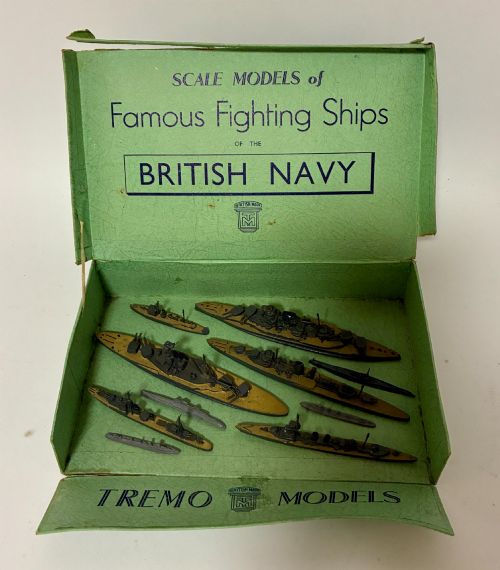
Later pieces from the interwar period or the nineteen-thirties incorporate different material combinations, such as diecast metal or scale components from firms like Tremo.
How should I care for a cased model?
Keep the piece away from direct sunlight and damp environments to protect the painted canvas, paper elements, and wooden structure inside the case. The glass front should remain sealed to prevent dust from accumulating on the delicate rigging.
Cleaning requires only a soft cloth for the exterior wood and glass, avoiding any moisture near the vulnerable interior components.