




Box Seat Armchair
A box seat armchair offers deep comfort and solid shelter from drafts, combining sturdy vernacular woodworking with practical storage.
Box Seat Armchair
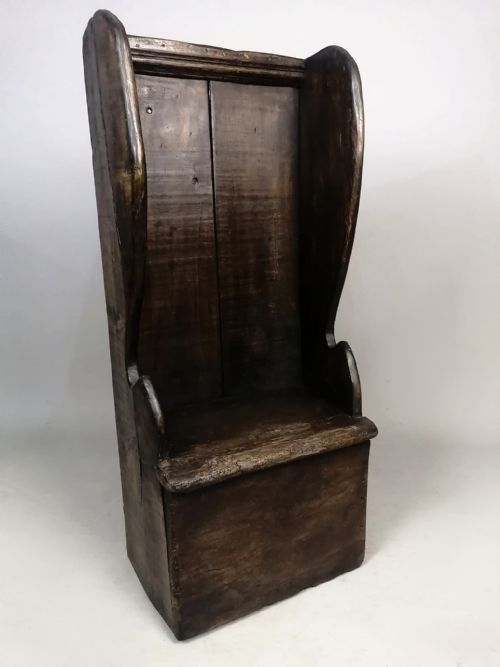
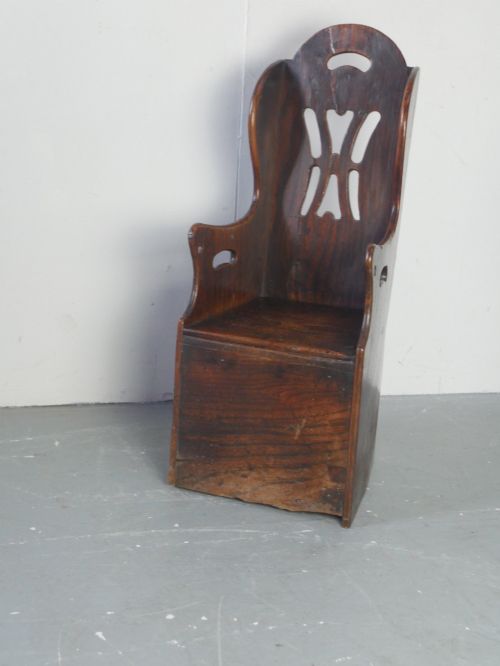
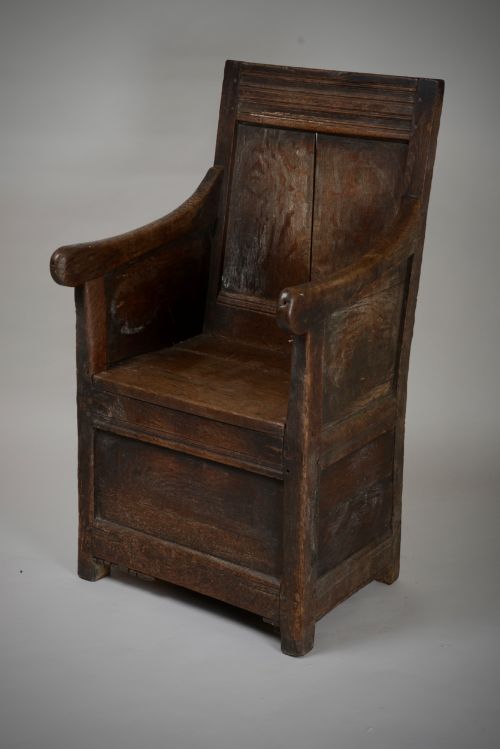
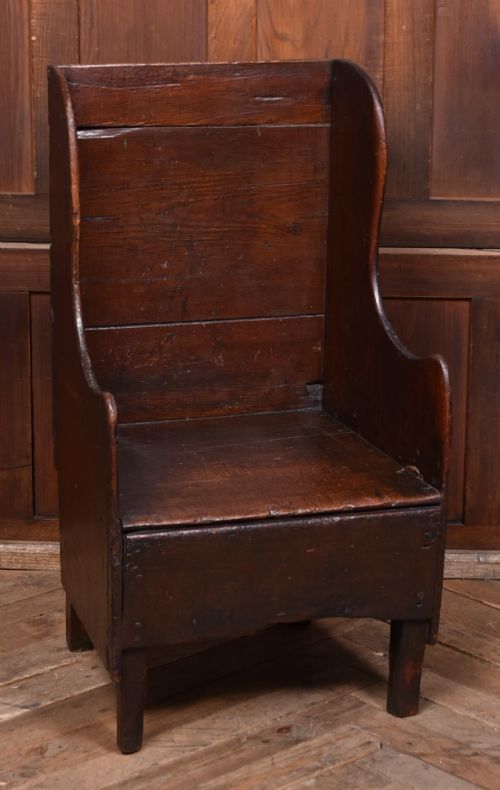
A box seat armchair is a substantial seating form featuring a solid enclosed compartment beneath the seat, historically designed to keep out household draughts. The listings span several centuries, with examples originating from the sixteenth century through to the nineteenth century in various regional styles.
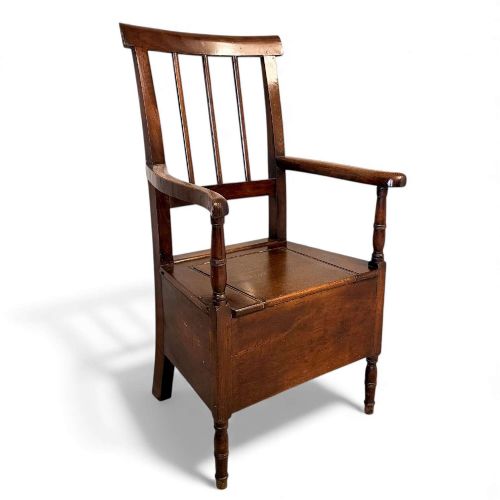
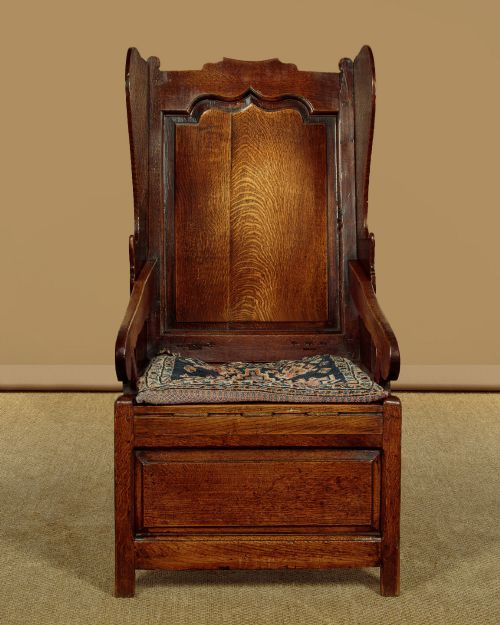
Most pieces encountered on this page belong to the country tradition, including vernacular iterations such as lambing chairs and enclosed armchairs. These items appear in both adult dimensions and smaller child sizes, alongside commode chairs and ceremonial designs.
Origins stretch across English country workshops and Dutch country traditions, reflecting the utilitarian needs of domestic interiors over hundreds of years. The overarching characteristic remains the solid wooden enclosure below the seat rails, distinguishing them from standard open-frame seating.
Construction and materials
Makers utilised native timbers such as oak, elm, and fruitwood to build these heavy-set frames, occasionally incorporating walnut or teak. The primary construction relies on thick boards joined to form the enclosed base, providing both structural rigidity and storage capability.
Surface decoration ranges from plain timber boards to carved ornamentation seen on ceremonial armchairs and Elizabethan pieces. Some examples incorporate textile or fabric elements, adding softness to the functional wooden forms.
Box Seat Armchair Retail Price Guide 2026
Typical asking prices for box seat armchair among the pieces listed under this phrase on Sellingantiques today, from the lower quarter to the upper quarter. They describe what is for sale here now, not the wider market.
The listings span five distinct centuries, featuring oak, elm, and fruitwood across English and Dutch country styles.
Assessing quality and proportion
Quality in a box seat armchair rests largely on the integrity of the timber and the balance of the proportions. Heavy, honest construction using primary woods like oak or fruitwood holds greater appeal than composite repairs or heavily altered frames.
The sophistication of the joinery and the depth of any carving distinguish standard vernacular pieces from more ambitious workshop productions. Patina developed through centuries of handling adds considerable character to the surface.
The Box Seat Armchair Glossary
- Lambing chair
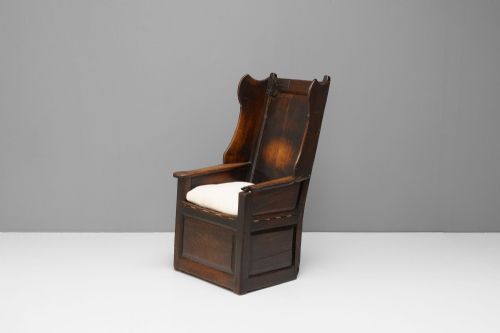
- A specific vernacular form of box seat armchair featuring high winged sides designed to block cold draughts near a hearth. These chairs typically include a solid enclosed base.
- Enclosed armchair
- A seating piece with panelled or boarded sides that completely block lateral air movement around the sitter. This term frequently describes seventeenth-century examples.
- Vernacular
- Everyday furniture made by local regional joiners rather than urban cabinetmakers, following traditional regional patterns. This describes much of the country furniture found in these listings.
- Commode chair
- A seating form incorporating a concealed chamber pot or receptacle within the box seat compartment. The early Georgian oak and walnut example on this page demonstrates this dual purpose.
Box Seat Armchair: Frequently Asked Questions
What is a box seat armchair?
A box seat armchair is a heavy wooden chair featuring a solid enclosed compartment beneath the seat boards. This design was historically created to keep sitters warm by blocking floor-level draughts.
Such chairs range from utilitarian country lambing seats to grander Elizabethan and ceremonial armchairs. The storage space underneath also served practical household purposes.
How do you date an old box seat armchair?
Dating relies on examining the timber species, joinery techniques, and the style of any carved ornament. Sixteenth and seventeenth-century pieces often display pegged mortise and tenon joints with heavy oak panels.
Later nineteenth-century country examples show different tool marks and lighter construction methods. Comparing the proportions against known period vernacular items helps confirm the era.
Where were box seat armchairs used?
These chairs were primarily utilised in domestic farmhouses and country homes where keeping warm near an open hearth was essential. The high winged sides of lambing chairs trapped heat around the upper body.
They also appeared in more formal settings depending on the maker and materials used. Ceremonial or carved variants served different civic or domestic roles.
Are child-sized box seat armchairs authentic?
Miniature versions were made for children using the exact same construction methods and native timbers as adult chairs. Small elm and fruitwood examples from the seventeenth and eighteenth centuries reflect genuine historical domestic production.
These pieces mirrored adult seating to teach posture and provide comfortable seating by the fire. They remain sought-after examples of vernacular miniature woodworking.