



Bow Fronted Display Case
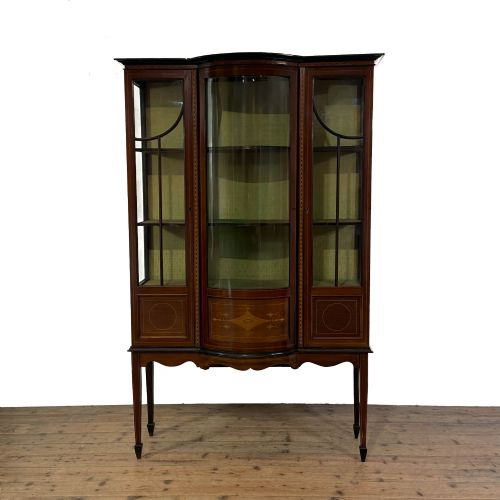
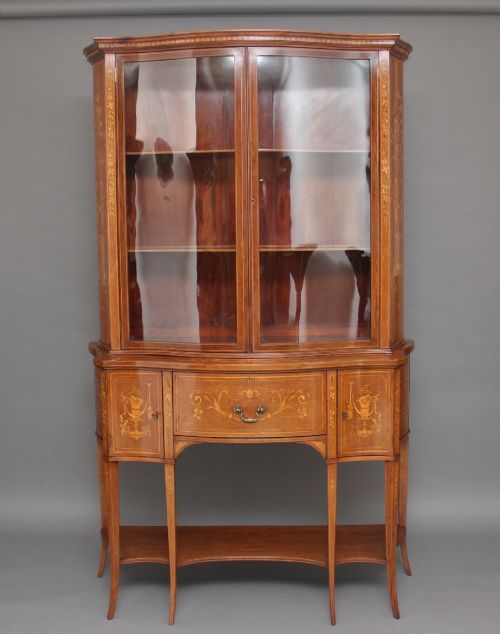
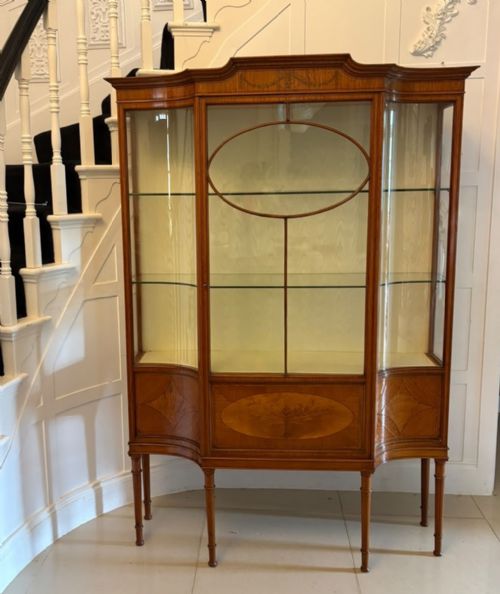
A bow fronted display case brings curved glass and figured timber together to showcase curated objects with genuine period character.
Bow Fronted Display Case
A bow fronted display case is primarily a cabinet built to exhibit valuables, showing the distinct outward curve that defines the form. These pieces emerge in styles ranging from Victorian and Edwardian periods down through the early twentieth century.
Buyers encounter freestanding floor models alongside corner cupboards designed to fit room angles efficiently. Mahogany and satinwood construction dominates the record, often featuring detailed stringing and inlay work.
Makers produced these cabinets as both residential furniture for china and ornaments, and larger shop display units for commercial wares. The shared element across all examples is the curved glazed door or front elevation.
Quality factors in period cabinetry
The sophistication of the timber figure and the precision of the satinwood inlay separate standard utility pieces from finer commissions. Cabinetmakers who selected richly grained mahogany and executed crisp stringing produced work of enduring appeal.
The integrity of the curved glass and the smoothness of door alignment dictate daily utility and mechanical success. Superior examples maintain original brass fittings and structurally sound framing without heavy restoration.
Bow Fronted Display Case Retail Price Guide 2026
Typical asking prices for bow fronted display case among the pieces listed under this phrase on Sellingantiques today, from the lower quarter to the upper quarter. They describe what is for sale here now, not the wider market.
One Edwardian cabinet arrives with shop signwriting still intact, advertising vintage perfume brands to its visitors.
James Jones of London·J. Cooper and Sons
The Bow Fronted Display Case Glossary
- Bow front
- A convex, outwardly curved front elevation that softens the linear geometry of a room. This design maximises internal depth while maintaining a streamlined exterior profile.
- Inlay
- Contrasting woods or materials set flush into the primary timber surface to create decorative patterns. Satinwood and darker stringing frequently accent mahogany panels.
- Vitrine
- A glass-sided cabinet or display case designed specifically for showing porcelain, curiosities, or collections. The term originates from the French word for glass.
- Stringing
- Thin, linear inlay work used to outline drawers, doors, and cornices. It adds subtle geometric definition to cabinet surfaces.
- Pier cabinet
- A low cabinet built to fit the wall space between windows. These pieces often feature glass doors and delicate timber framing.
Bow Fronted Display Case: Frequently Asked Questions
How do I date a bow fronted display case?
Dating relies on identifying stylistic markers such as Edwardian satinwood inlay, Victorian proportions, or earlier Georgian carcase construction. Examining secondary timbers and construction methods helps confirm the production era.
Hardware styles, foot designs, and glazing bar thickness also offer clear chronological clues for distinguishing between nineteenth and twentieth-century examples.
Are bow fronted display cases suitable for small rooms?
Many examples are proportioned for domestic interiors, including corner cabinet variants that utilise awkward angles efficiently. The curved glass profile reduces the sharp corners associated with traditional square cabinets.
Freestanding models range from compact china cabinets to larger glazed bookcases, allowing buyers to match scale to available floor space.
What items are appropriate inside these display cases?
Traditional interiors suit porcelain collections, glassware, silver, and small decorative antiques. Fabric-lined shelves provide a neutral backdrop that protects delicate bases.
Some collectors utilise similar glazed cabinets for natural history specimens, taxidermy, or specialised curio displays.
How should I care for mahogany and satinwood furniture?
Keep wooden cabinets away from direct sunlight and heat sources to prevent timber splitting and veneer lifting. Regular dusting with a soft, dry cloth maintains the polished surface.
Avoid silicone-based sprays, opting instead for traditional beeswax applied sparingly to nourish the period finish.