

Bow Fronted Cupboard
A bow fronted cupboard brings a curved, room-softening silhouette to a corner or wall while offering practical enclosed storage.
Bow Fronted Cupboard
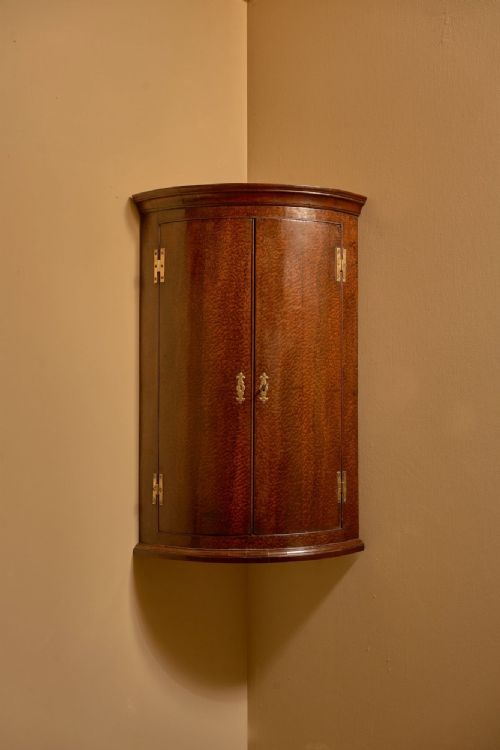
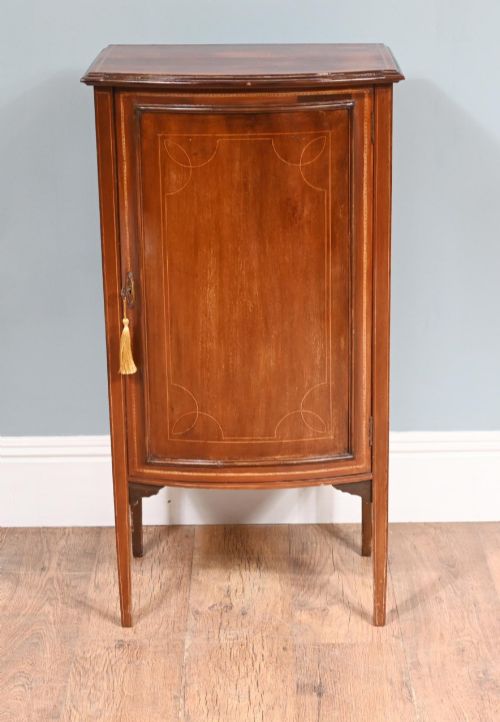
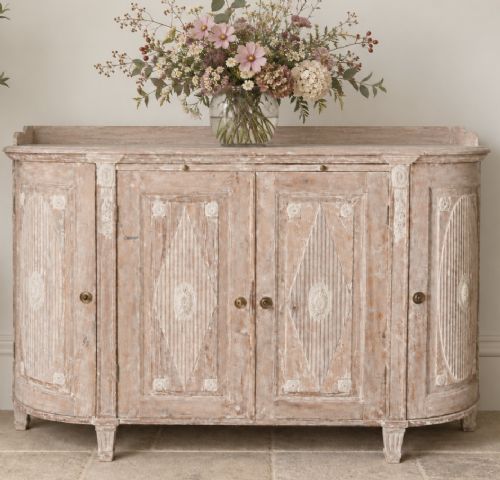
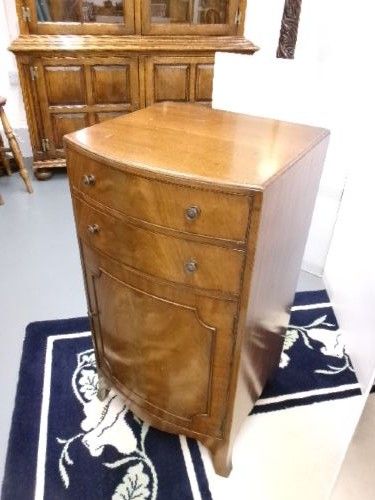
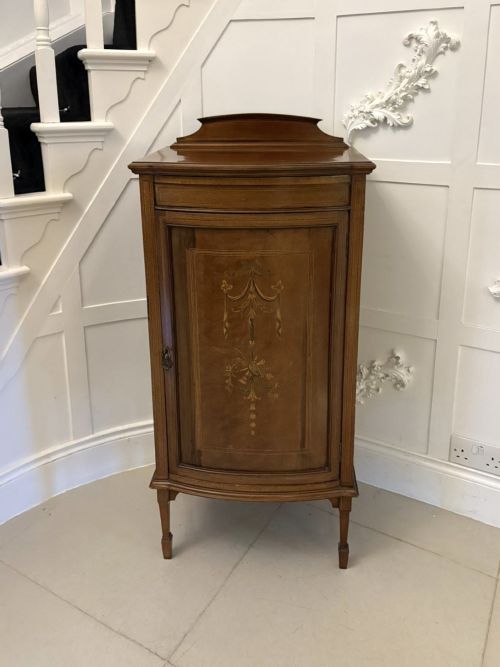
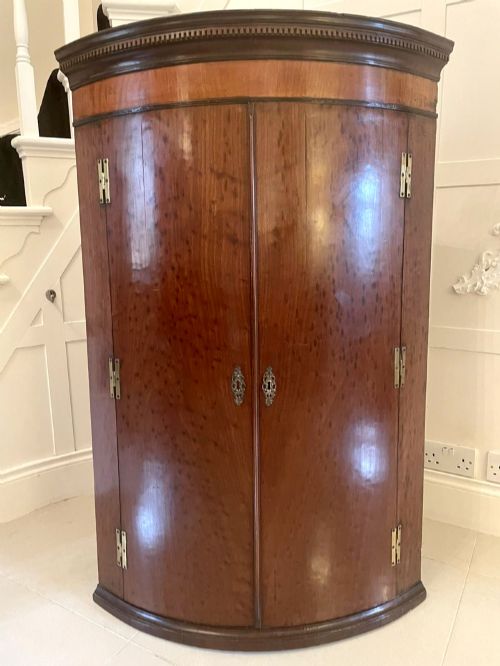
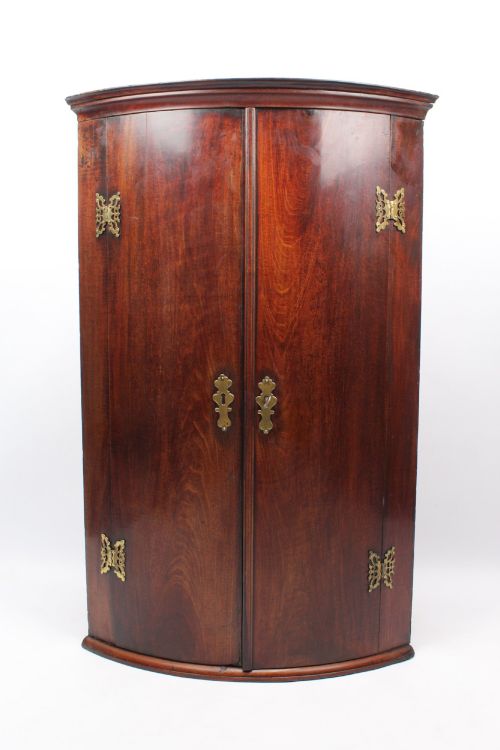
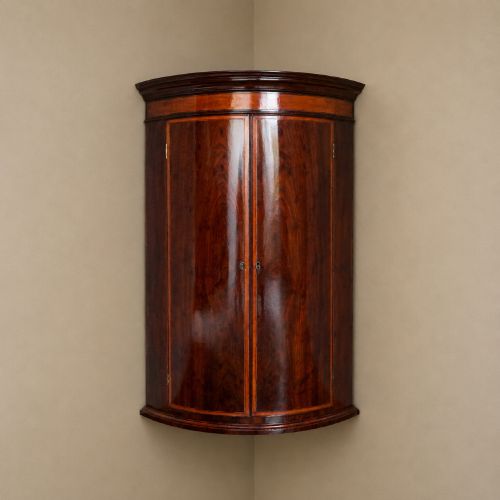
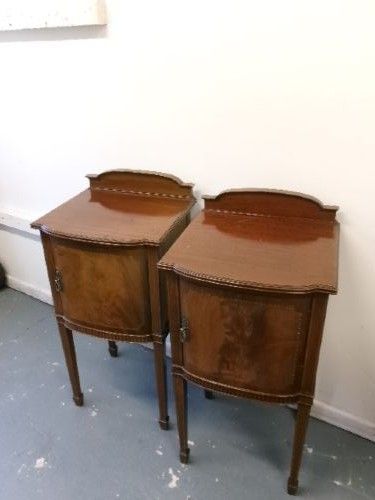
A bow fronted cupboard provides concealed shelving or display space through a convex, outward-curving front facade. These pieces appear frequently as hanging corner cupboards, floor-standing corner cabinets, tall linen presses, and bedside units across the Georgian, Victorian, and Edwardian periods.
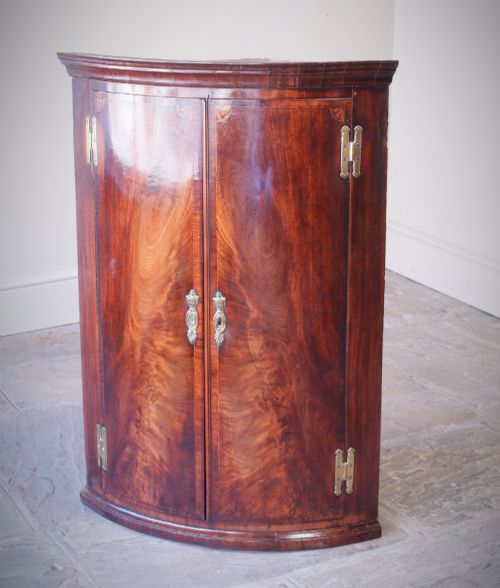
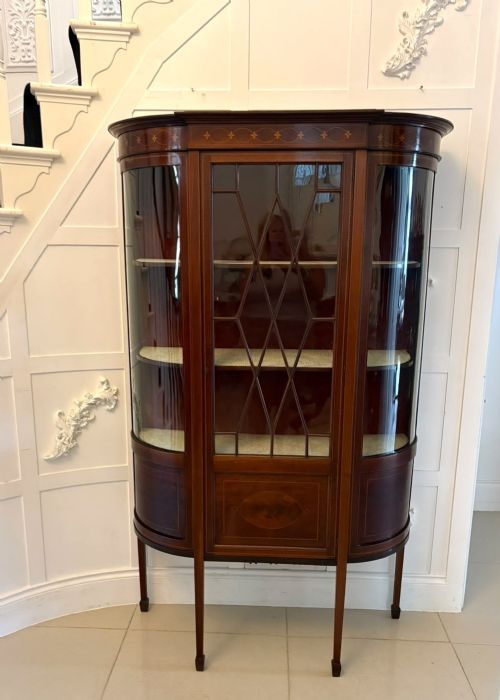
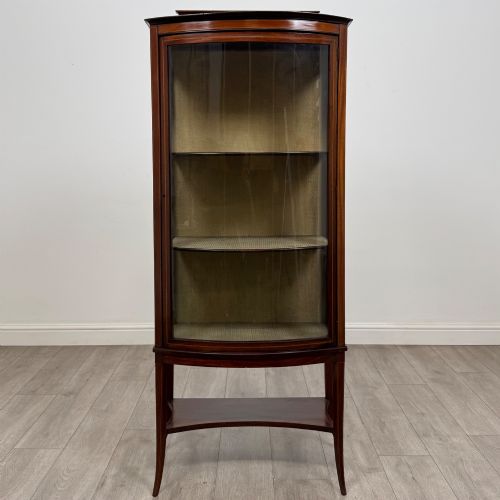
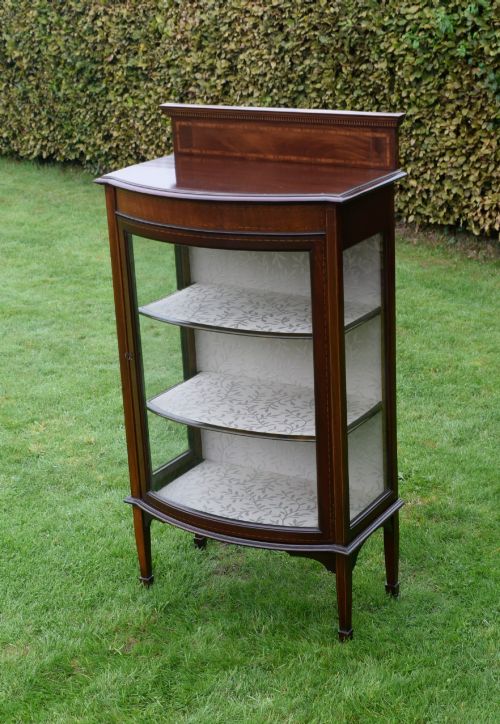
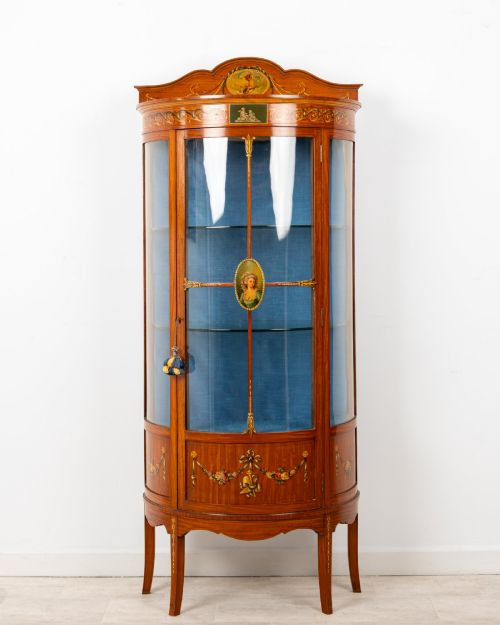
The version most commonly met on this page is the Georgian mahogany corner cupboard, designed to fit snugly into room junctions while presenting a finished wooden curve to the interior. Alongside these, Edwardian display cabinets and twentieth-century wardrobes utilise the same characteristic convex shaping to break up straight lines in domestic spaces.
Materials and Construction
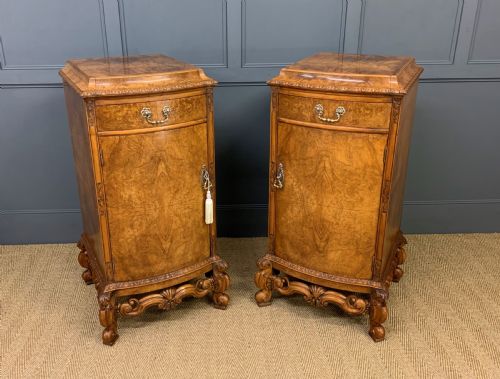
Cabinet makers constructed these curved doors and frames primarily using solid mahogany, oak, and walnut, frequently applying figured veneers such as flame mahogany or burr walnut to the outer surfaces. To achieve the signature bow front, craftsmen bent thin layers of timber or shaped solid blocks, supporting the structure with sturdy internal carcases.
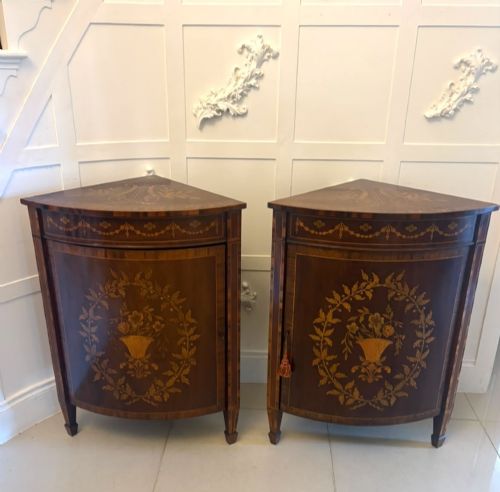
Decoration relied on contrasting timbers and hardware, incorporating satinwood stringing, boxwood inlay, and painted Chinoiserie motifs alongside brass hinges and key escutcheons. Glazed panels appear on display cabinets and vitrines, secured by delicate wooden glazing bars that divide the glass into smaller panes.
Bow Fronted Cupboard Retail Price Guide 2026
Typical asking prices for bow fronted cupboard among the pieces listed under this phrase on Sellingantiques today, from the lower quarter to the upper quarter. They describe what is for sale here now, not the wider market.
Listings feature mahogany, oak, and burr walnut across Georgian, Victorian, and Edwardian periods.
Distinctions in Execution
Quality rests upon the selection of timber figures and the precision of the curved joinery, where finely matched flame mahogany or burr walnut veneers demonstrate superior workshop standards. The integrity of the bowed doors and the alignment of the framing reveal the maker's skill in handling tensioned wood over centuries.
Refinement in secondary details elevates a piece, such as delicate marquetry inlay, hand-painted Chinoiserie decoration, and original brass hardware rather than later replacements. The balance of proportions between the curved front and the supporting cornice or bracket feet determines the visual success of the cabinet.
Maple & Co.
The Bow Fronted Cupboard Glossary
- Bow front
- A convex, outwardly curved front elevation that softens the linear geometry of a cabinet or chest. This curved profile requires specialised joinery to maintain structural stability.
- Corner cupboard
- A storage piece specifically built with a triangular or angled back to fit directly into the corner of a room. Many examples feature the characteristic curved bow front.
- Linen press
- A tall storage cupboard featuring upper doors enclosing sliding trays for textiles, positioned above a base chest of drawers. These pieces often showcase figured mahogany veneers.
- Chinoiserie
- European decorative style imitating Chinese artistic traditions, frequently featuring painted or lacquered motifs on a dark ground. Examples on this page appear on eighteenth and nineteenth-century cabinets.
- Stringing
- Thin inlay lines of a contrasting timber, such as boxwood or satinwood, set flush into the primary wood surface. This technique outlines doors, drawers, and cornices on inlaid pieces.
Bow Fronted Cupboard: Frequently Asked Questions
How do I hang a wall corner cupboard?
Wall-hanging corner cupboards require secure fixing to solid wall studs or masonry using appropriate weight-bearing brackets. The triangular shape distributes weight back toward the corner junctions.
Ensure the internal hanging battens are sound before mounting the piece, as older timbers can weaken around original screw holes.
How do I date an antique mahogany cupboard?
Dating relies on timber characteristics, construction methods, and secondary woods visible inside the carcase or drawer linings. Georgian pieces often display hand-cut dovetails and dense, rich mahogany grains.
Edwardian and later twentieth-century iterations frequently introduce machine-sawn elements, lighter satinwood crossbanding, and standardised brass hardware fittings.
How do I care for burr walnut veneer?
Burr walnut veneer requires stable indoor humidity away from direct sunlight and heat sources to prevent timber shrinkage and lifting. Dust the surface regularly with a dry, soft cloth.
Avoid silicone-based polishes and excessive moisture, applying a quality beeswax sparingly only when the wood appears dry.