



Botanical Chandelier
A botanical chandelier brings floral and leaf motifs into overhead lighting, offering a distinctive decorative presence for period interiors.
Botanical Chandelier
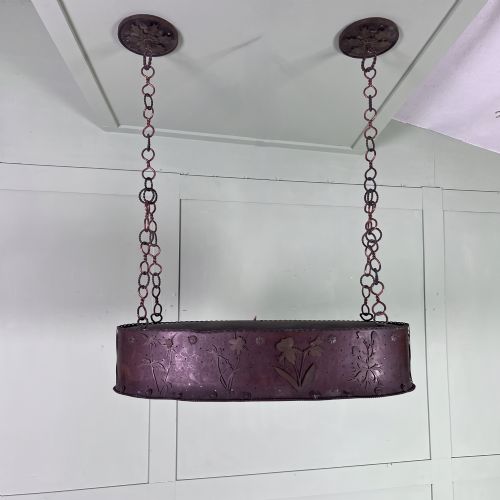
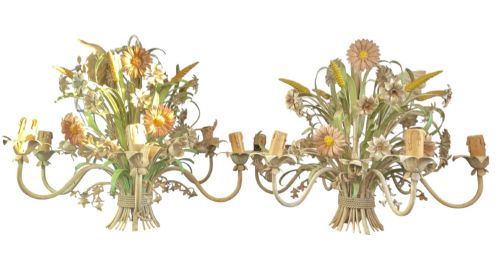
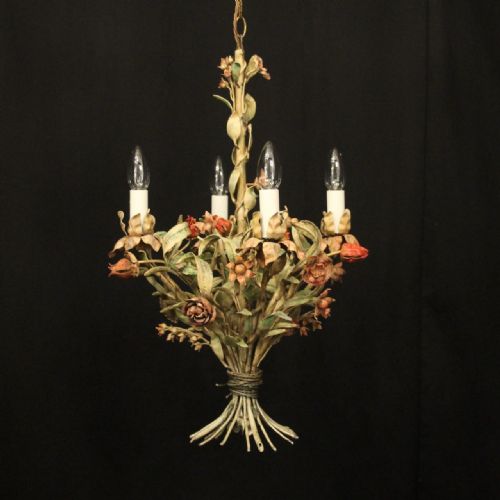
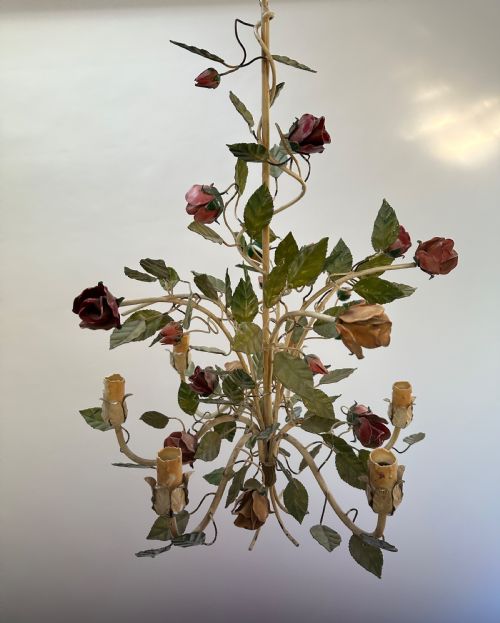
A botanical chandelier comprises hanging lighting fixtures decorated with leaf, flower or plant motifs, spanning periods from the nineteenth century through to the nineteen-thirties. Buyers searching for a botanical chandelier will encounter pieces originating largely from French workshops, encompassing styles such as French Chateau, Arts and Crafts, and French Country. The most common examples on this page are French toleware polychrome designs and gilded metal fixtures.
The form primarily takes the shape of chandeliers and pendant lights, suspending multiple light sources from chains or metal mounts. These fixtures integrate floral forms directly into the metalwork, using painted sheet metal or cast bronze to represent foliage. They serve as central overhead illumination while functioning as decorative sculptural elements within a room.
How they were made
Makers constructed these chandeliers using metals such as copper, brass, wrought iron, bronze, and painted or gilded metal. Toleware pieces utilise painted sheet metal shaped into leaves and petals, often finished with polychrome pigments to create naturalistic floral colours.
Heavier examples employ cast bronze or wrought iron for the structural framework and arms, supporting the lighter metal botanical elements. Gilt metal finishes were applied to enhance the reflective quality of the light and provide a decorative surface sheen.
Botanical Chandelier Retail Price Guide 2026
Typical asking prices for botanical chandelier among the pieces listed under this phrase on Sellingantiques today, from the lower quarter to the upper quarter. They describe what is for sale here now, not the wider market.
Listings feature items spanning the nineteenth century through to nineteen-thirty, predominantly showcasing French regional and decorative styles.
What varies in quality
Quality in these chandeliers is determined by the finesse of the metalwork and the hand-painting on polychrome toleware components. Finer examples display delicate, individual petal and leaf formations rather than mass-produced stampings.
The sophistication of the surface finish, whether through detailed gilding, chased bronze detailing, or well-preserved polychrome paintwork, separates standard items from finer decorative pieces.
The Botanical Chandelier Glossary
- Polychrome
- Decorated in multiple colours. This technique appears on metal chandeliers to render naturalistic flower and leaf hues.
- Gilt metal
- Metal that has been treated with a thin layer of gold or gold-coloured finish. It adds brightness to the fixture when unlit.
- Pendant light
- A solitary light fixture suspended from the ceiling by a cord, chain, or metal rod. These sit within the broader category of hanging lights.
Botanical Chandelier: Frequently Asked Questions
What is a botanical chandelier?
A botanical chandelier is a hanging light fixture decorated with floral, leaf, or plant motifs, created in various metals and painted finishes.
These pieces range from Arts and Crafts copper designs to French toleware polychrome models dating from the nineteenth century into the nineteen-thirties.
How were these chandeliers used?
They were suspended from ceilings to provide primary overhead illumination in domestic rooms and formal spaces.
Beyond their lighting function, their botanical forms acted as decorative focal points that complemented natural themes in interior decoration.
How do I live with a botanical chandelier?
Living with these pieces involves hanging them at an appropriate height over dining tables, in hallways, or living rooms where the metalwork and floral details can be appreciated.
Care should be taken during cleaning to preserve delicate polychrome paintwork and metallic finishes on toleware and gilt components.
How do I tell periods apart?
Differentiating periods relies on observing the materials, construction methods, and stylistic cues present in the metalwork.
Nineteenth-century examples often lean towards Arts and Crafts copper and brass work, while twentieth-century pieces frequently showcase French toleware and mid-century aesthetics.