




Bone Inlay Frame
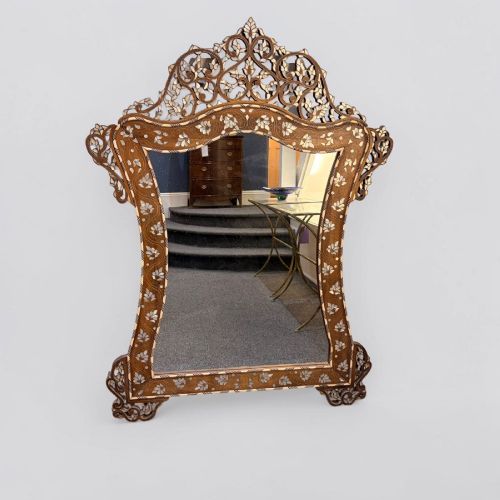
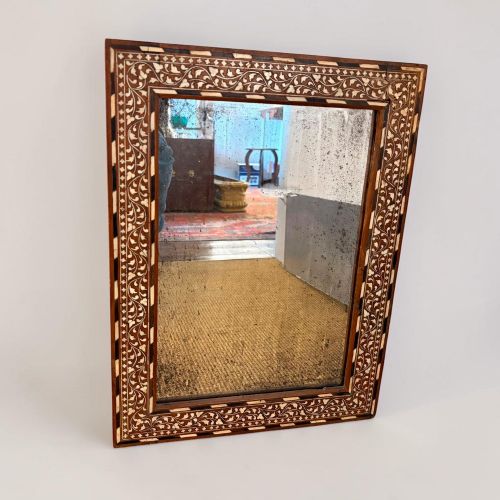
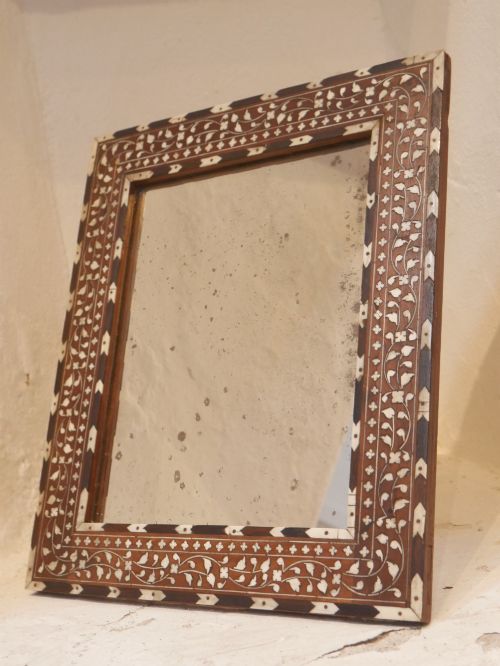
A bone inlay frame brings intricate geometric pattern and luminous shell into a room.
Bone Inlay Frame
A bone inlay frame brings distinct craftsmanship into a room through intricate surface decoration. When searching for a bone inlay frame, buyers encounter wall mirrors and occasional tables fashioned in regional workshops.
The pieces on this page span the nineteenth century into the early twentieth century. Most examples originate from Syrian, Levantine, and Indian traditions, with regional Hoshiarpur work appearing frequently.
Makers utilised dense timbers and structural woods as foundations for elaborate surface work. Alongside wall mirrors, the selection includes side tables and armchairs featuring similar decorative programmes.
Materials and construction methods
Artisans constructed these frames using solid woods such as walnut, teak, shisham, and fruitwood. These sturdy timber foundations provided stable canvases for detailed surface decoration.
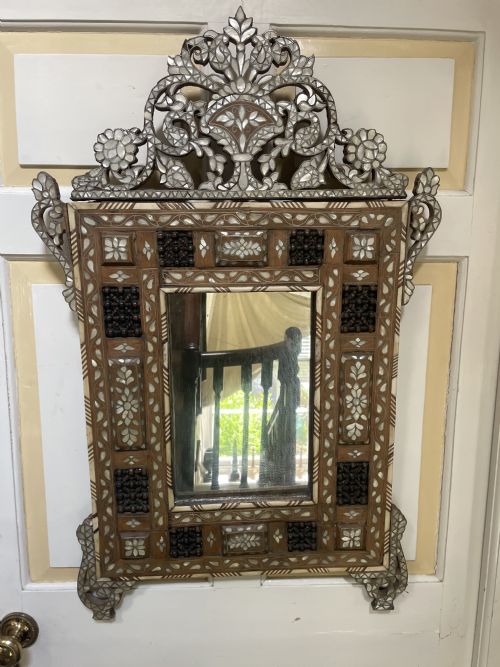
Workers shaped fragments of animal bone and mother-of-pearl, pressing them into precise geometric recesses carved into the wood. Additional depth came from carved panels, turned wooden elements, and fitted mirror glass.
Bone Inlay Frame Retail Price Guide 2026
Typical asking prices for bone inlay frame among the pieces listed under this phrase on Sellingantiques today, from the lower quarter to the upper quarter. They describe what is for sale here now, not the wider market.
The listings combine nineteenth-century periods with materials like walnut, teak, bone, and mother-of-pearl across mirror and table forms.
Distinguishing finer examples
Quality rests in the precision of the geometric layout and the tightness of the fitted bone pieces. Finer execution shows minimal gaps in the surrounding resin or adhesive and sharp definition in the carved wooden borders.
The complexity of the surface programme separates standard production from exceptional work. Pieces featuring integrated mother-of-pearl, delicate nacre-shell segments, and elaborate turned mashrabiya panels demonstrate superior workshop skill.
The Bone Inlay Frame Glossary
- Mashrabiya
- A decorative lattice or turned wooden panel used in Middle Eastern architecture and furniture. These elements provide intricate geometric shadow and texture within the frame design.
- Nacre-shell
- Iridescent pearl layer harvested from mollusc shells, often used alongside bone inlay. This material catches the light and adds shimmering contrast to the wooden ground.
- Shisham
- A durable Indian rosewood utilised for structural stability in nineteenth-century furniture. The dense grain supports detailed carving and holds heavy inlay work securely.
- Hoshiarpur
- A North Indian centre renowned for intricate woodwork and inlay production. Pieces from this region typically combine dense floral and geometric patterns across the wooden frame.
Bone Inlay Frame: Frequently Asked Questions
How do I clean a bone inlay frame?
Dust the surface gently with a dry, soft cloth to prevent particles settling in the intricate recesses.
Avoid using liquid cleaners, moisture, or chemical polishes, as these can discolour the bone or loosen the adhesive holding the inlay.
Are these frames suitable for bathrooms?
Bathrooms experience fluctuating humidity and moisture levels that can warp structural wood and damage traditional adhesives.
Keep these pieces in dry living areas or hallways to preserve the integrity of the bone and mother-of-pearl inlay.
How do I date a nineteenth-century mirror?
Examine the timber construction, backing boards, and the characteristics of the glass itself for signs of age.
Hand-beveled edges, oxidised mirror backing, and traditional joinery help distinguish nineteenth-century examples from later revivals.
Can I hang a heavy inlay mirror safely?
These frames often combine dense hardwoods, bone, and glass, resulting in substantial overall weight.
Secure the piece directly into wall studs using appropriate fixings rated for heavy loads rather than relying on standard picture wire.