



Bone Inlay Chair
A bone inlay chair brings intricate geometry and striking contrast into a room, offering functional seating rich in historic craftsmanship.
Bone Inlay Chair
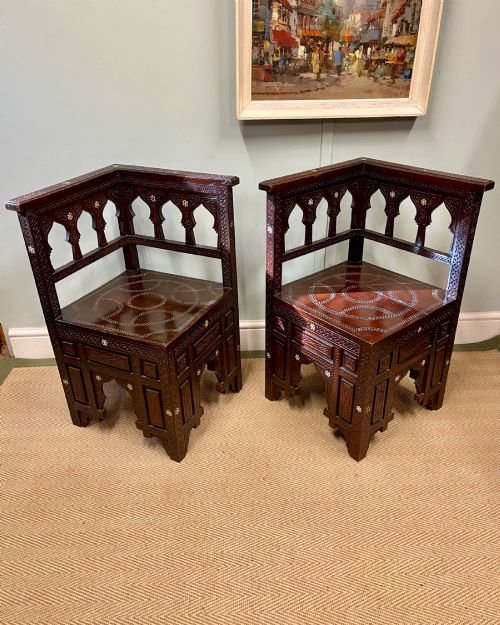
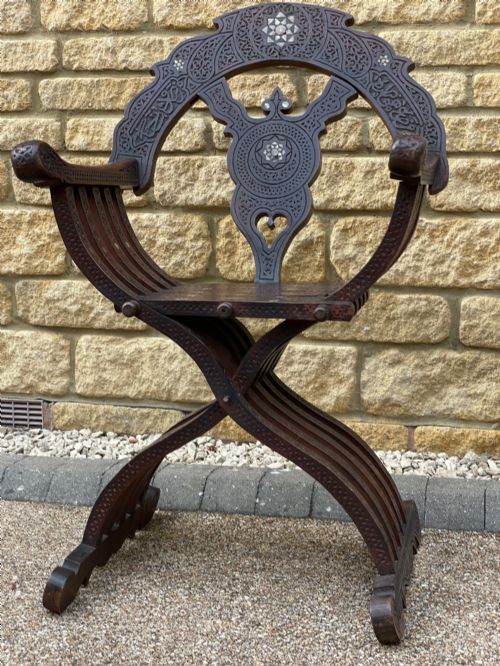
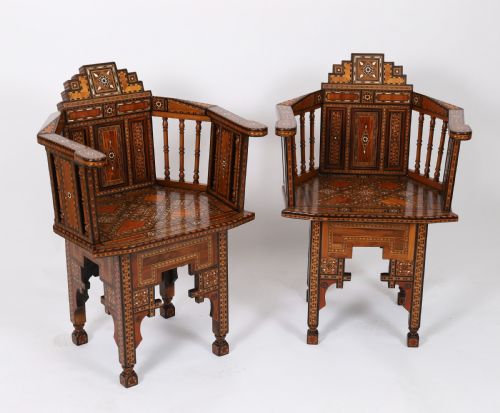
A bone inlay chair is a form of decorative seating defined by geometric patterns of bone set into wooden frames, often associated with Moorish, Syrian, and Levantine traditions. When you search for bone inlay chair, you encounter an array of seating types ranging from upright side chairs and corner chairs to substantial armchairs and folding campaign chairs.
The pieces appearing on this page span the eighteenth, nineteenth, and early twentieth centuries, reflecting diverse global workshops. You are most likely to meet nineteenth-century examples displaying Moorish Revival, Syrian, or Anglo-Moorish styles alongside occasional eighteenth-century Portuguese walnut forms.
Beyond standard armchairs and side chairs, the category includes specialised seating such as conversation seats, settee suites, and hip-joint chairs. Each version utilises dense arrangement of inlaid panels, carved woodwork, and contrasting materials to create striking visual depth.
Materials and construction methods
The construction of these chairs relies on durable timbers such as walnut, mahogany, hardwood, and boxwood, providing a sturdy framework for intricate decoration. Artisans shaped these woods into folding frames, corner structures, and turned legs before applying surface ornament.
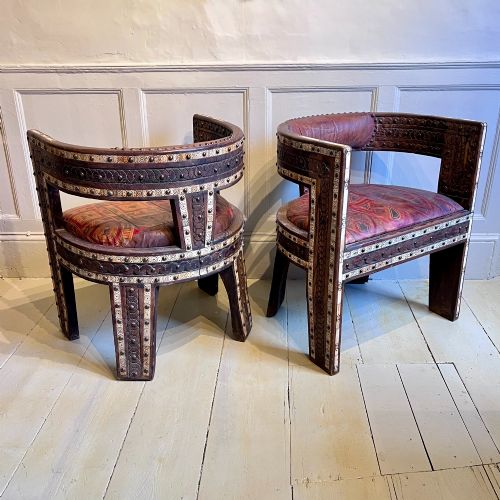
Bone and mother-of-pearl form the primary inlay materials, shaped into delicate geometric tesserae, floral motifs, and fine button details. These individual pieces are meticulously embedded into channels carved within the wood, often accompanied by brass accents and leather upholstery.
Bone Inlay Chair Retail Price Guide 2026
Typical asking prices for bone inlay chair among the pieces listed under this phrase on Sellingantiques today, from the lower quarter to the upper quarter. They describe what is for sale here now, not the wider market.
A nineteenth-century folding chair allows you to pack up your intricate Moorish geometry and take it entirely on the road.
Assessing quality in inlaid seating
Quality in these chairs rests upon the precision of the geometric parquetry and the complexity of the carved woodwork. Finer examples display tightly fitted bone and mother-of-pearl tesserae with minimal filler, maintaining crisp alignment across complex curves and joints.
The structural integrity of the underlying timber framework dictates the tier of a piece, particularly in folding or campaign forms where mechanical joints endure frequent movement. Depth of relief carving, such as Mashrabiya panels and pierced crest rails, further separates standard production from exceptional craftsmanship.
Liberty and Co
The Bone Inlay Chair Glossary
- Bone inlay
- A decorative technique where small pieces of animal bone are shaped and embedded into a wooden surface to form geometric or floral patterns. This method creates high contrast against dark hardwoods.
- Mother-of-pearl
- The iridescent inner layer of certain mollusc shells, utilised alongside bone in intricate mosaic panels to catch the light. It adds a shimmering tonal shift to the chair surface.
- Mashrabiya
- A type of projecting oriel window enclosed by carved wood latticework, which also inspires the intricate pierced wooden panels found on certain nineteenth-century chairs. These panels provide delicate screenwork textures.
- Parquetry
- Geometric mosaic woodwork formed by fitting small veneer blocks or inlay pieces together to cover a surface. It provides the complex repeating patterns seen across Levantine and Syrian furniture.
- Savonarola chair
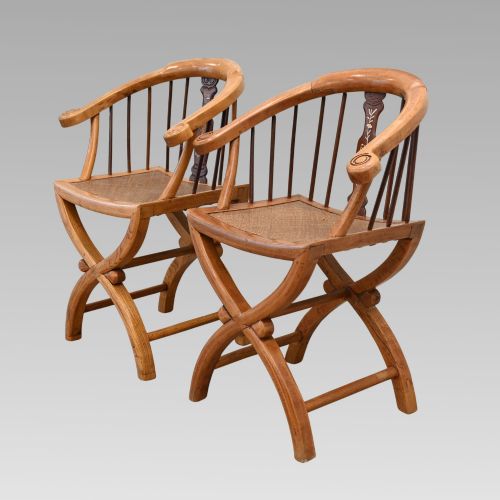
- A folding chair formed of multiple intersecting curved wooden slats that create an X-shape profile when viewed from the side. This historic form often receives elaborate bone and inlay decoration.
- Hip-joint chair
- An ancient chair design featuring intersecting members secured by a central pivot joint, popular in Spanish and Moorish traditions. These portable seats frequently incorporate turned wooden elements.
Bone Inlay Chair: Frequently Asked Questions
How do I care for a bone inlay chair?
Keep these chairs away from direct sunlight and extreme temperature fluctuations to prevent the wood from shrinking and loosening the bone tesserae. Dust gently with a dry, soft cloth and avoid chemical polishes that can seep into the porous inlay.
Condition the wooden frames occasionally with appropriate furniture wax, taking care not to apply heavy substances directly onto the exposed bone or mother-of-pearl sections. Regular gentle maintenance preserves both the contrasting materials and the structural joints.
Where were bone inlay chairs made?
These chairs originate from diverse geographic regions including Syria, Egypt, North Africa, Spain, and Portugal, reflecting centuries of cross-cultural design exchange. Workshops in Damascus, Cairo, and Levantine centres produced much of the intricate parquetry work.
European makers also adopted these aesthetic traditions during the nineteenth century, creating Moorish Revival and Anglo-Moorish interpretations in domestic workshops. Each region contributed distinct wood choices, such as walnut or native hardwoods, alongside specific geometric motifs.
Can I use an antique bone inlay chair daily?
Many of these chairs function well for everyday seating provided they are structurally sound and handled with reasonable care. Solid hardwood frames and sturdy corner chair constructions offer reliable support for normal use.
Delicate folding campaign chairs or pieces with extensive surface parquetry require more mindful placement to avoid accidental impact damage to the inlay. Assess the rigidity of each frame before designating it for frequent daily sitting.
What is Moorish Revival furniture?
Moorish Revival is a nineteenth-century architectural and decorative style that reinterprets traditional Islamic art and architecture from Spain and the Middle East. It incorporates horseshoe arches, intricate geometric parquetry, and elaborate screenwork into European and Levantine domestic pieces.
In seating, this translates to dark wood frames heavily decorated with bone, mother-of-pearl, and pierced woodwork such as Mashrabiya panels. These items reflect the Victorian fascination with exoticism and historic craftsmanship.