

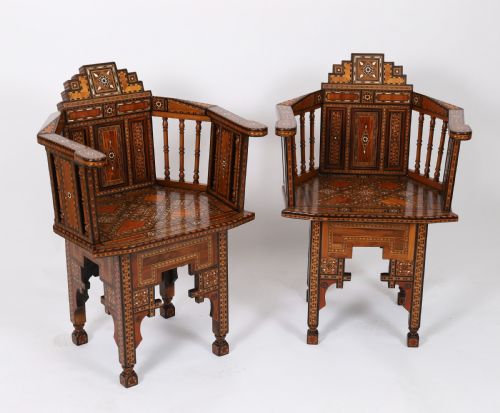


Bone Inlay Armchairs
Bone inlay armchairs bring intricate geometric patterns and striking orientalist design into a room through centuries-old woodworking traditions.
Bone Inlay Armchairs
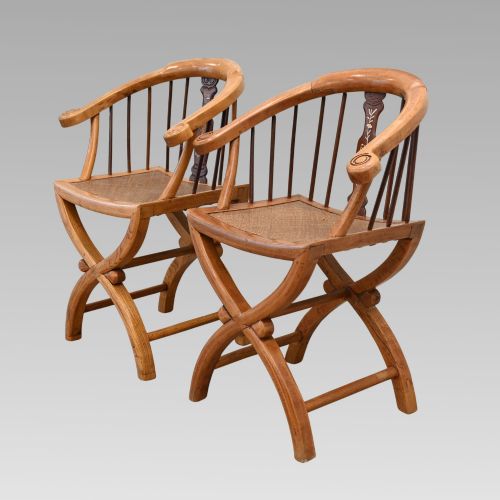
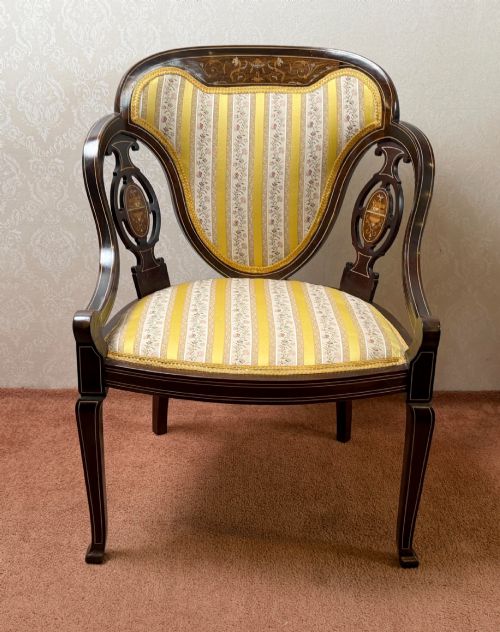
Bone inlay armchairs encompass heavily decorated seating options from periods such as the nineteenth century up through the nineteen-thirties. The examples on this page span styles including Moorish Revival, Syrian Ottoman, Levantine, and Anglo-Moorish, alongside Victorian and Egyptian Revival interpretations.
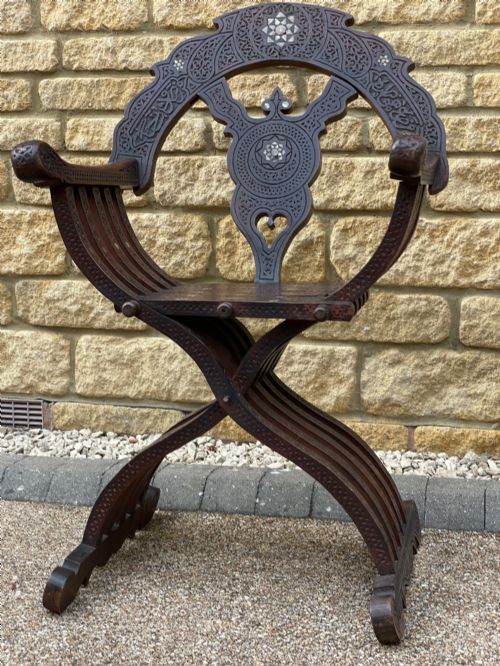
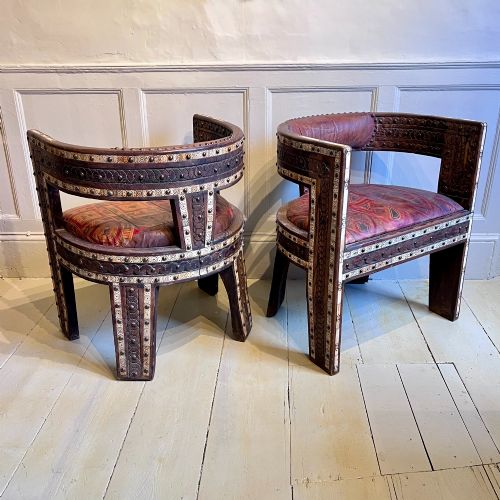
Buyers will encounter various forms ranging from standard armchairs and accent chairs to folding campaign chairs, corner chairs, and conversational seating suites. Many pieces incorporate intricate parquetry, carved mashrabiya panels, and mother-of-pearl accents alongside the characteristic bone decoration.
How they were made
Artisans constructed these chairs using dense timbers such as walnut and various hardwoods as a stable foundation for intricate decorative work. Small pieces of bone and mother-of-pearl were meticulously shaped and set into the wooden surfaces to create elaborate geometric and floral motifs.
Additional detailing involved piercing, carving, and turning the wood, sometimes complemented by brass elements or leather upholstery. Folding mechanisms and campaign designs required precise joinery to ensure structural integrity alongside decorative richness.
Bone Inlay Armchairs Retail Price Guide 2026
Typical asking prices for bone inlay armchairs among the pieces listed under this phrase on Sellingantiques today, from the lower quarter to the upper quarter. They describe what is for sale here now, not the wider market.
The listings show nineteenth-century pieces utilising walnut, hardwood, leather, brass, bone, and mother-of-pearl across Moorish and Syrian styles.
What varies in quality
The standard of a piece rests heavily on the precision of the parquetry and the tightness of the individual bone segments within the timber. Higher grades show careful alignment and minimal gaps where the organic material meets the surrounding hardwood.
Carved elements such as mashrabiya panels and crest rails demonstrate varying levels of depth and sharpness in the relief work. The complexity of the overall design, from straightforward folding frames to elaborate multi-piece seating suites, dictates the sophistication of the craftsmanship.
Liberty and Co
The Bone Inlay Armchairs Glossary
- Bone Inlay
- A decorative technique where small carved pieces of bone are embedded into a wooden base to form patterns. This method creates high-contrast visual surface designs.
- Mashrabiya
- An architectural pierced wood-turning screen element often incorporated into seating backs and panels. It provides intricate texture and structural shadowing.
- Parquetry
- Geometric mosaic woodwork created by fitting small veneer blocks or inlays together. It forms the patterned background often surrounding the bone work.
- Savonarola Chair
- A type of X-framed folding chair originating in the Renaissance and revived in later centuries. It relies on intersecting curved wooden slats.
- Moorish Revival
- An architectural and decorative style popular in the nineteenth century that draws on Islamic North African and Spanish motifs. It defines much of the ornamentation on these chairs.
Bone Inlay Armchairs: Frequently Asked Questions
How do I care for bone inlay?
Keep the wood and bone nourished with appropriate conditioning and avoid placing the chair in direct sunlight or near heat sources. Excessive temperature changes can cause the organic inlay to contract and loosen.
Dust gently with a soft cloth rather than using wet cleaners or harsh chemical polishes. Regular gentle maintenance protects both the timber foundation and the delicate surface decoration.
Are these chairs comfortable for daily use?
Many of these seating options were designed for formal display or specific social settings rather than lounging. Their firm wooden structures and upright backs encourage an attentive posture.
Some variations include leather upholstery or form part of larger seating suites suited for conversational spaces. Consider how often the chair will be used when selecting a specific form like a folding chair or a rigid armchair.
How do I date a nineteenth-century chair?
Examine the construction methods, wood ageing, and the tools used to shape the frame and cut the inlay. Nineteenth-century examples often display hand-carved details and specific regional stylistic markers.
Comparing the decorative motifs, such as Moorish or Levantine patterns, helps narrow down the decade of production. Documentation or historical attribution can also provide reliable chronological context.
What is a campaign folding chair?
A campaign chair is a portable piece of furniture engineered with a folding frame for easy transport during travel. Nineteenth-century versions combined functional portability with elaborate decorative flourishes like bone button decorations and carved crest rails.
These pieces offer a unique intersection of utilitarian design and high-status craftsmanship. They function well as versatile accent seating in modern interiors.