


Bombe Style Chest
A bombe style chest brings curving, swelling fronts and substantial presence to a room, offering both sculptural grace and deep drawer storage.
Bombe Style Chest
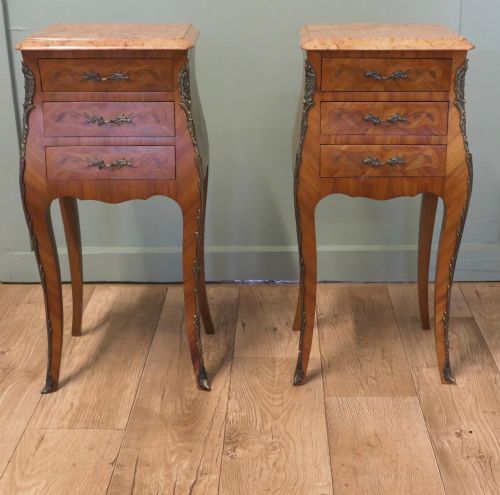
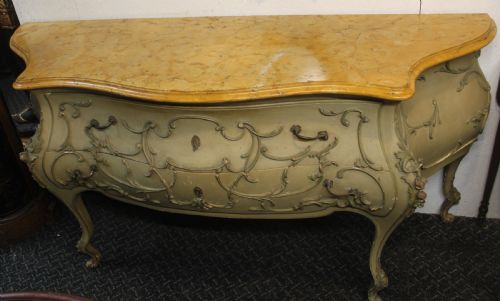
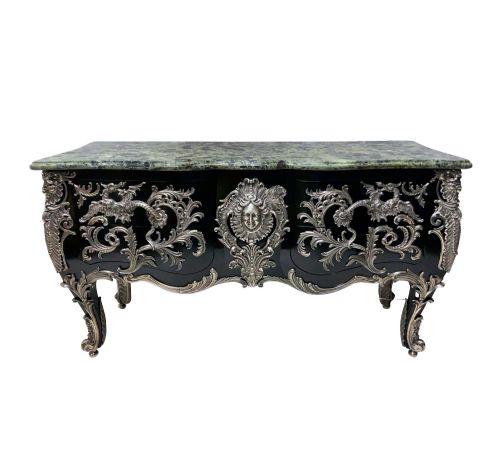
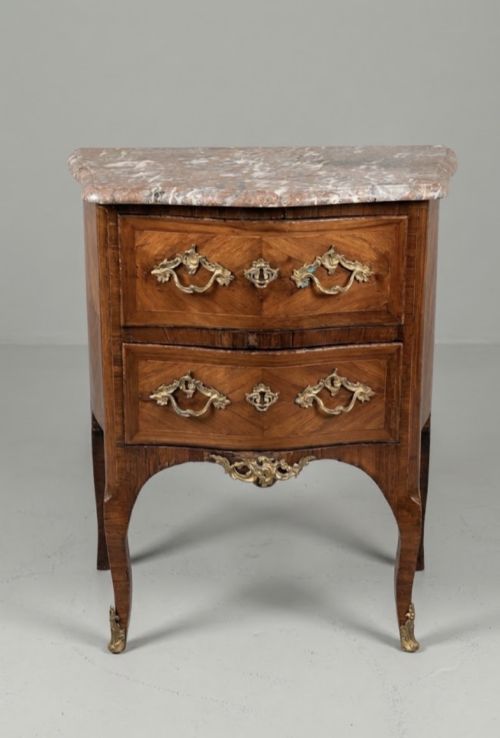
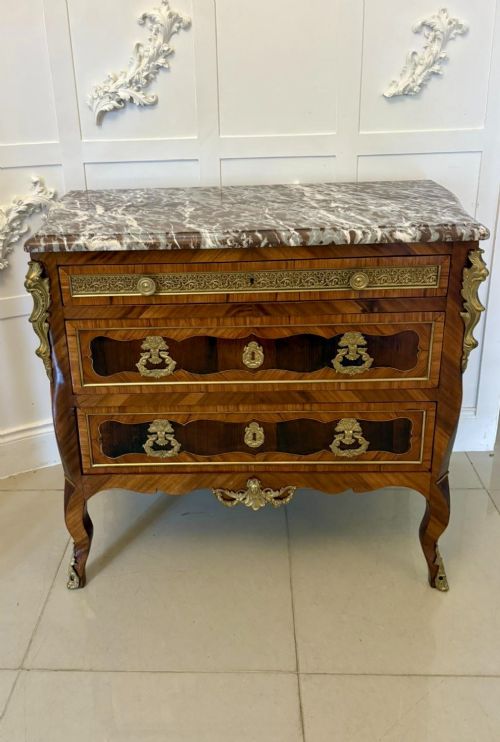
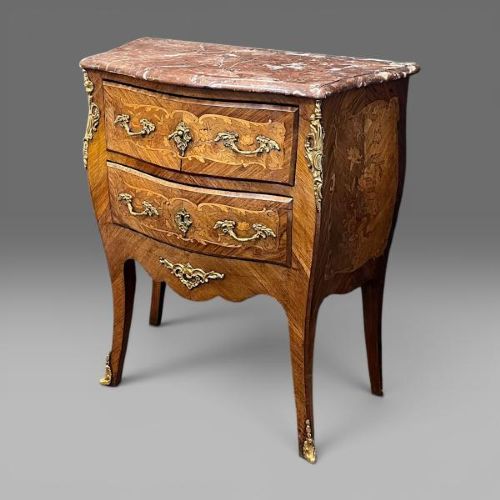
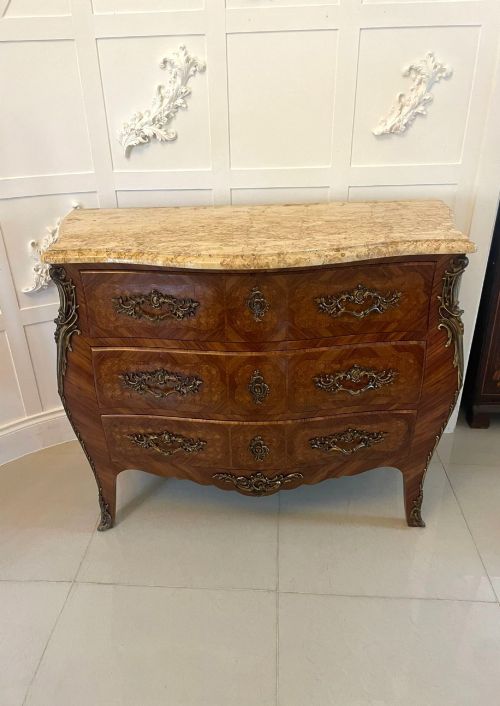
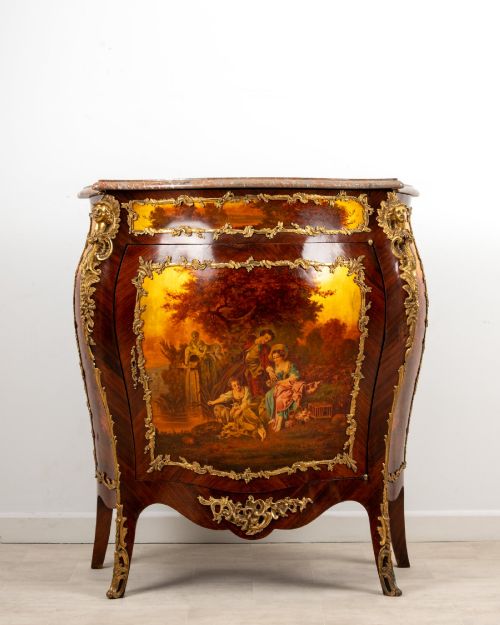
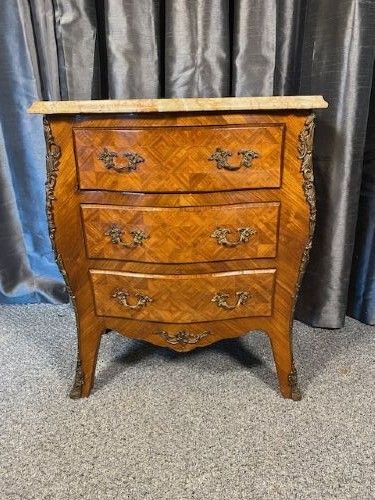
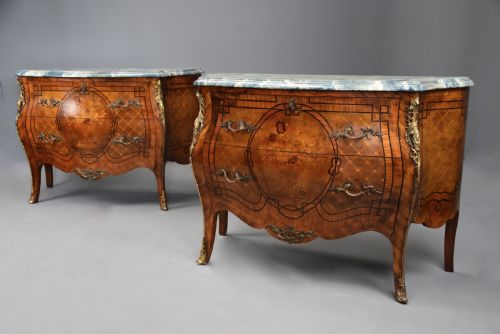
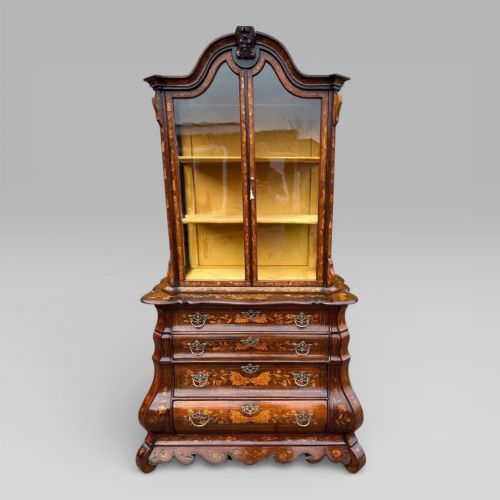
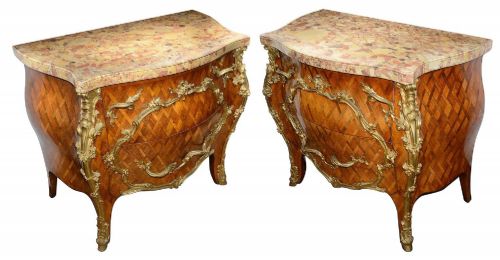
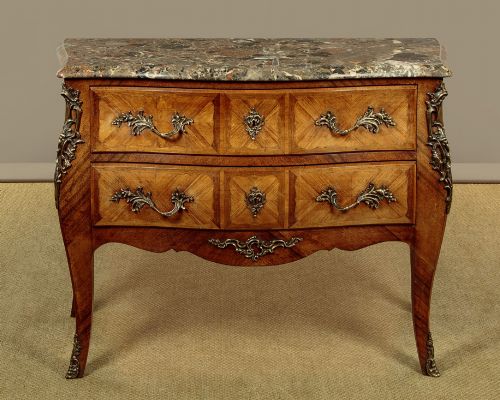
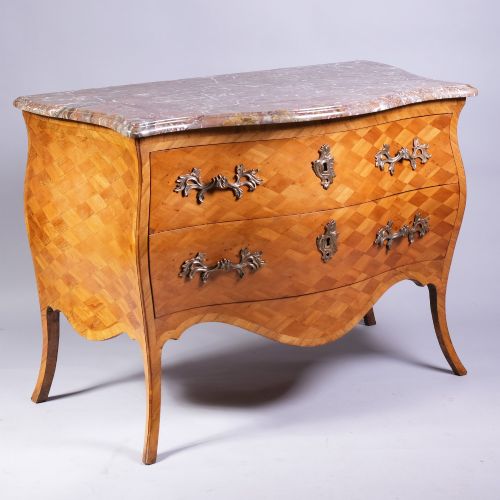
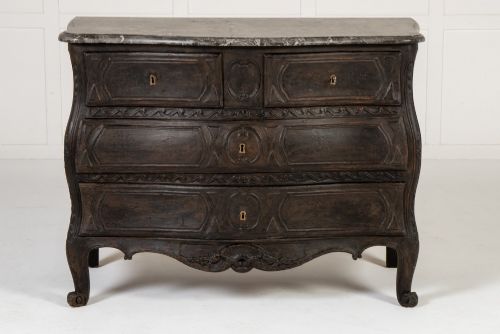
A bombe style chest presents a distinctive convex silhouette that swells outwards at the lower section, echoing European baroque and rococo cabinet-making traditions. Buyers examining this page encounter diverse forms ranging from French commodes and display cabinets to Dutch bureaus and bedside tables.
Most examples originate from the nineteenth and early twentieth centuries, drawing heavily on eighteenth-century Louis XV and Dutch baroque design idioms. Makers across France, Britain, and the Netherlands adopted these swelling contours, resulting in varied regional interpretations of the profile.
The selection encompasses large display cabinets and smaller bedside tables, all united by their curved drawer fronts and sides. Walnut, mahogany, and fruitwood provide the primary carcasses, often enriched with intricate marquetry or parquetry patterns.
Materials and construction
Cabinet-makers built these carcasses using dense timbers such as walnut, mahogany, and kingwood, applying carefully cut veneers over foundational woods to achieve complex curved surfaces. Marquetry and parquetry designs utilised contrasting fruitwoods and exotic timbers laid in geometric or floral motifs.
Ormolu mounts cast in bronze and frequently gilt were applied to corners, handles, and apron mounts to accentuate the swelling lines. Heavy slab marble tops, shaped to follow the contours of the timber carcase, completed many of the French and continental pieces.
Bombe Style Chest Retail Price Guide 2026
Typical asking prices for bombe style chest among the pieces listed under this phrase on Sellingantiques today, from the lower quarter to the upper quarter. They describe what is for sale here now, not the wider market.
Some Dutch chests incorporate claw feet that anchor their swelling frames to the floor.
Distinctions in quality
Quality rests in the fluidity of the swelling wood and the precision with which veneers follow the complex curves without buckling or lifting. Superior examples display seamless grain matching across multiple drawer fronts and crisp hand-chased details on the ormolu mounts.
The interior construction, including secondary timbers used for drawer linings and the smoothness of the drawer action, separates standard production from exceptional cabinet-making. Original marble tops fitted tightly to the shaped wooden profile rather than later replacements indicate higher integrity.
Edwards & Roberts
The Bombe Style Chest Glossary
- Bombe
- A swelling or bulging out of the front and sides of a piece of furniture. This characteristic convex profile defines eighteenth-century rococo and baroque designs.
- Ormolu
- Gilt bronze mounts applied as decorative ornaments to furniture. Makers used these cast metal details to highlight corners and feet.
- Marquetry
- Decorative veneer work formed by fitted pieces of different coloured wood arranged in pictorial or patterned designs. Craftsmen applied these patterns to tabletops and drawer fronts.
- Parquetry
- Geometric wood inlay forming repeating patterns such as cubes or herringbones. This technique ornamented the flat and curved surfaces of cabinets and commodes.
- Commode
- A low chest of drawers, typically decorative and standing on relatively short legs. The term frequently describes French pieces dating from the eighteenth century onwards.
Bombe Style Chest: Frequently Asked Questions
What is a bombe style chest?
A bombe style chest is a cabinet or set of drawers featuring a prominent convex profile that swells outward toward the base. These pieces originated in continental Europe during the baroque and rococo periods.
Cabinet-makers achieved this curved silhouette by shaping the structural frame and applying wooden veneers over the curved surfaces. They serve as sculptural storage furniture in traditional interiors.
Where were these chests made?
These chests were produced primarily in France, the Netherlands, and Britain by workshops influenced by continental design movements. French examples often featured marble tops and ormolu mounts, while Dutch versions frequently displayed elaborate floral marquetry.
Regional cabinet-makers adapted the swelling form using local timbers such as walnut, mahogany, and various fruitwoods. This resulted in distinct stylistic variations between French commodes and Dutch cabinets.
How do I style a bombe chest?
A bombe chest functions effectively as a focal point in a hallway, living room, or bedroom due to its strong sculptural silhouette. Placing a lamp or decorative objects on the marble or wood top balances the visual weight of the curved base.
Because these pieces have protruding fronts, they require adequate floor space to allow drawers to open fully without obstruction. They pair well with both traditional antiques and simplified modern furnishings.
How do I tell periods apart?
Eighteenth-century originals display hand-cut joinery, aged patination on the timber, and often distinct regional marquetry techniques. Later nineteenth and early twentieth-century revival pieces utilise machine-sawn secondary woods and standardised mount castings.
Examining the drawer linings, backboards, and veneer thickness helps distinguish eighteenth-century construction from Victorian or Edwardian revival interpretations. Hardware fixings and screw types also offer clues to the date of manufacture.