


Bombe Serpentine Commode
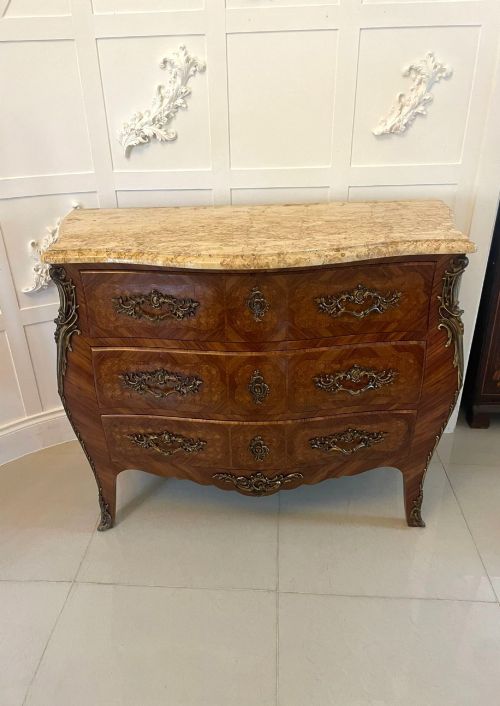
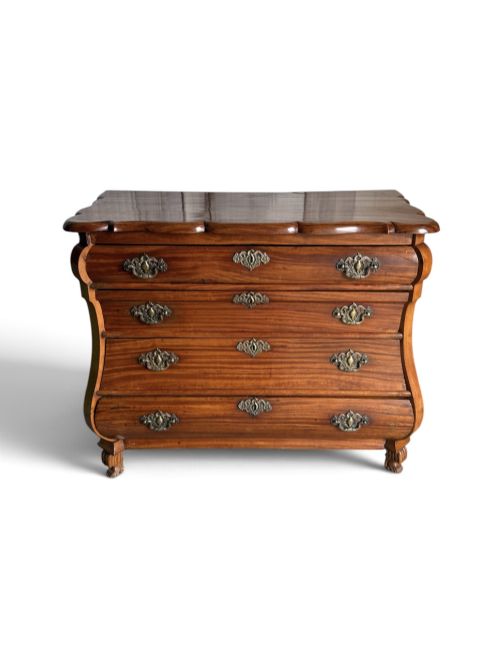
A bombe serpentine commode brings sweeping, curvaceous timber and heavy mounts into a room with undeniable presence.
Bombe Serpentine Commode
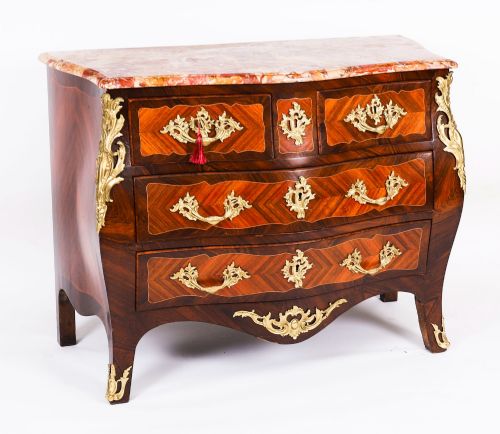
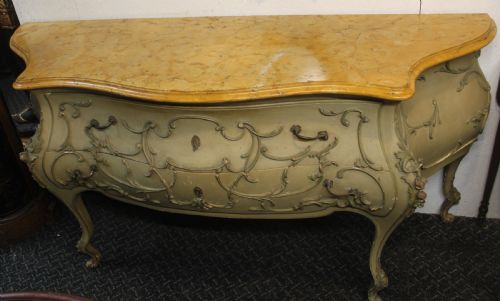
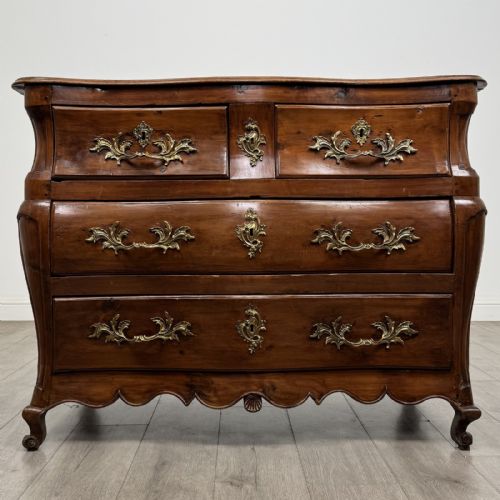
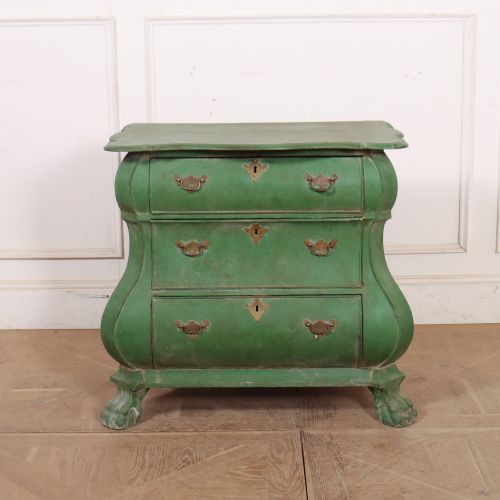
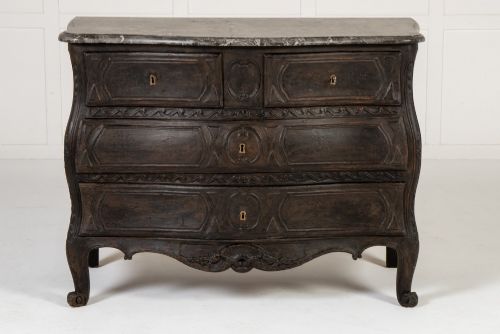
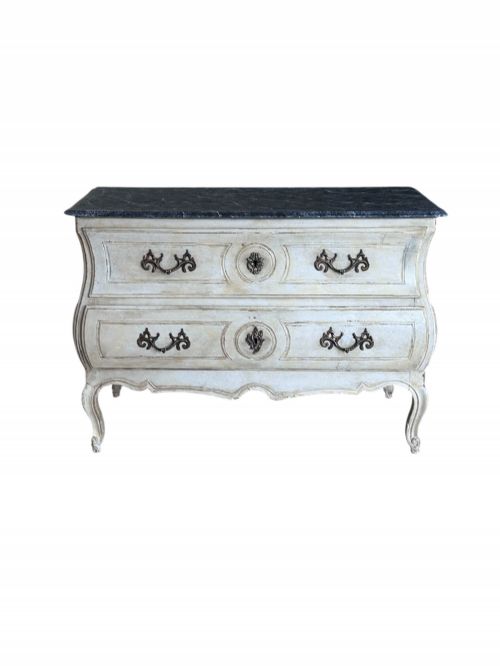
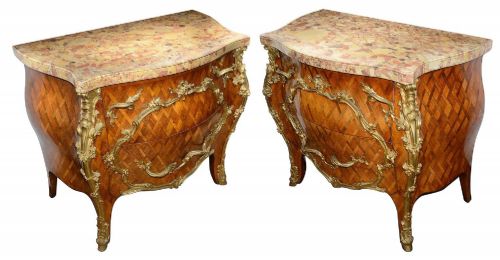
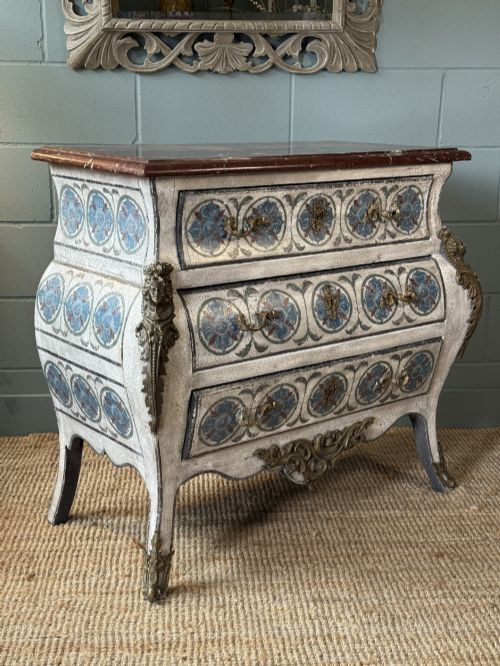
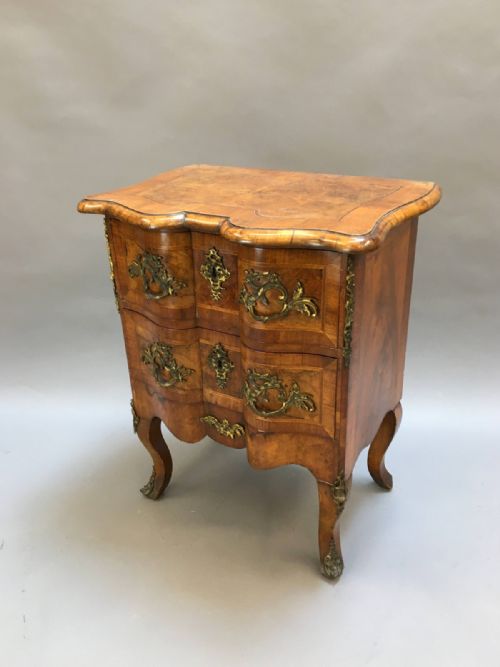
A bombe serpentine commode is a chest of drawers defined by a bulging, swelling front and sides coupled with an undulating serpentine outline. Buyers searching for a bombe serpentine commode encounter grand statement pieces originating mostly from the eighteenth and nineteenth centuries, with French and Dutch examples appearing frequently.
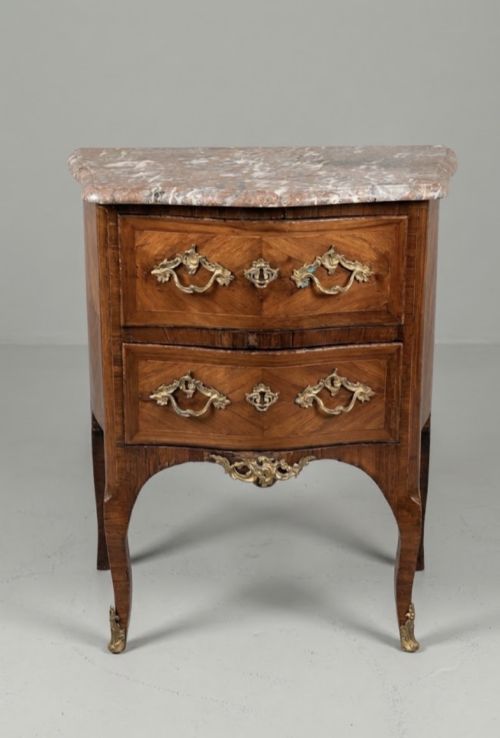
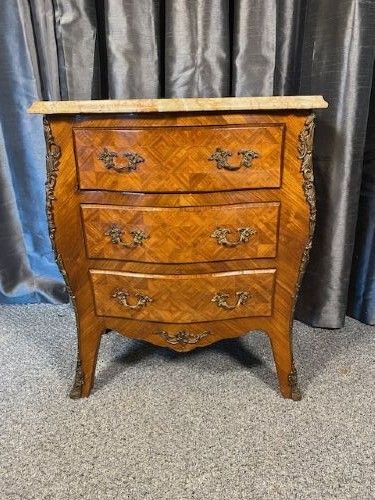
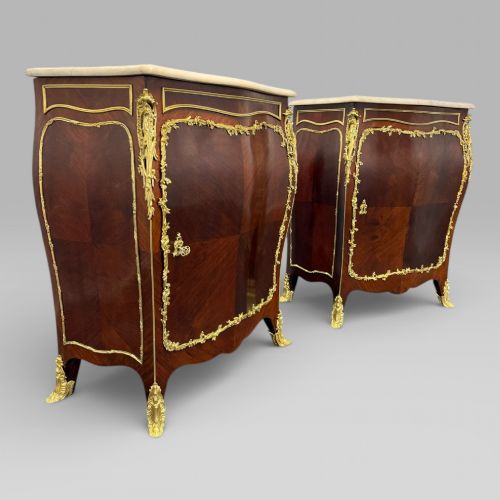
The form spans centuries of cabinet-making, encompassing authentic eighteenth-century periods as well as later nineteenth-century revivals in the Louis XV and Dutch Rococo tastes. Alongside full-sized chests, smaller bedside cabinets and side variants surface across the selection.
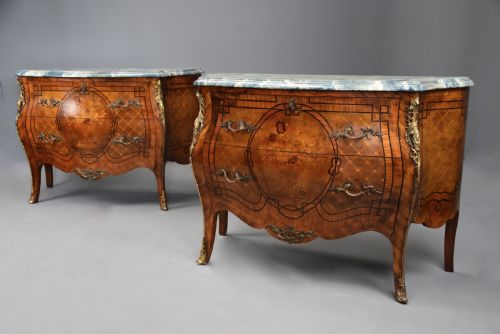
Makers utilised rich timbers, often pairing sweeping veneers with decorative marble tops and heavy bronze or brass mounts. The silhouette demands exceptional skill from the maker, as the outward-bulging panels must match the curving frame precisely.
Materials and Construction
Carpenters built these cabinets using solid foundational woods like oak or pine, onto which they applied elaborate veneers of kingwood, walnut, burr walnut, mahogany, and satinwood. Some pieces received painted and gilt finishes, while others showcased intricate parquetry and marquetry patterns arranged across the swelling drawer fronts.
Heavy cast ormolu and brass mounts dress the corners, handles, and aprons, often secured with threaded pins through the timber frame. Marble slabs, cut to follow the complex serpentine contour of the top surface, sit heavily upon the upper carcase to provide a durable finish.
Bombe Serpentine Commode Retail Price Guide 2026
Typical asking prices for bombe serpentine commode among the pieces listed under this phrase on Sellingantiques today, from the lower quarter to the upper quarter. They describe what is for sale here now, not the wider market.
Some chests feature secret drawers tucked neatly behind the moulded apron, designed to outsmart prying eyes.
Judging Quality
The standard of a bombe serpentine commode rests on the precision of the veneer work and the crispness of the bronze or brass mounts. Superior examples display seamless grain matching across the curved drawers, whereas lesser pieces show disjointed timber patterns.
The weight and chasing of the ormolu mounts indicate the workshop's ambition, with finer pieces showing sharp, hand-finished detailing rather than soft, mass-cast edges. The integration of the marble top, particularly how tightly it follows the complex serpentine sweep, marks the difference between standard production and master cabinet-making.
E. Kahn
The Bombe Serpentine Commode Glossary
- Bombe
- A swelling or bulging out shape typical of continental furniture from the eighteenth century. This rounded profile requires complex carpentry to achieve stability across the carcase.
- Serpentine
- A furniture front or top shaped with a double curve, concave in the middle and convex at the ends. It adds dynamic movement to the cabinet silhouette.
- Ormolu
- Gilded bronze mounts applied to furniture for decorative accent and edge protection. The metal is cast and chased by hand to achieve crisp relief.
- Marquetry
- The art of applying small pieces of veneer to a structure to form decorative patterns and pictures. Craftsmen use various tinted woods to create tonal depth.
- Parquetry
- Geometric wood-mosaic work used to cover furniture surfaces. Pieces are cut precisely and laid in repeating patterns like chequers or cubes.
Bombe Serpentine Commode: Frequently Asked Questions
Where did bombe commodes originate?
The bombe form developed primarily in continental Europe during the eighteenth century, with master cabinet-makers in France and the Netherlands refining the swelling silhouette. These nations drove the aesthetic through successive royal styles and regional workshops.
Craftsmen adapted the form to suit local tastes, producing French Rococo statements and sturdy Dutch interpretations that survived across generations.
How do I style a commode?
A commode serves as a focal point in a hallway, bedroom, or living space, providing generous surface area and deep drawer storage. Placing a large mirror or artwork above balances the heavy visual weight of the marble top and timber carcase.
Because the sides curve outwards, these pieces need adequate floor space rather than tight corners to show their silhouette properly.
Are marble tops original?
Many period commodes feature heavy marble slabs cut specifically to match the undulating serpentine edges of the wooden carcase below. These stone surfaces protected the timber and provided a cool, durable finish for daily use.
Replacements or later additions occur, so inspecting how the marble sits against the wood grain helps determine originality.
How do I spot a revival piece?
Nineteenth-century revival pieces often mimic eighteenth-century French and Dutch models using machine-cut veneers and standardised cast mounts. Examining the interior construction reveals machine-sawn timber and modern fixing screws rather than hand-cut joints.
Cabinet-makers working during the later nineteenth-century revival periods still employed high standards of craftsmanship, making these pieces collectible in their own right.