


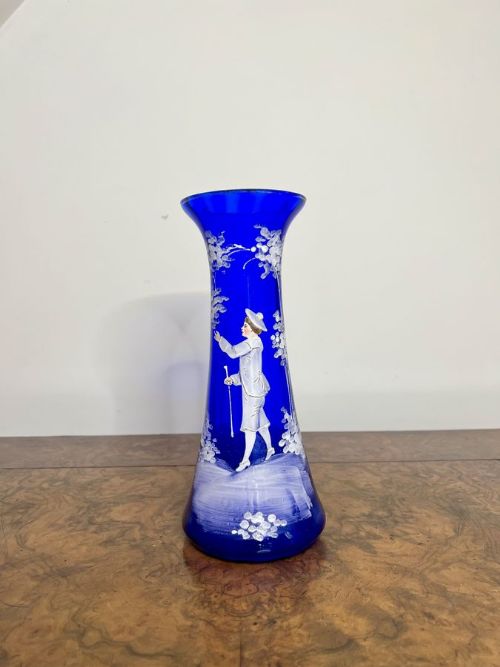


Bohemian Enamel Glassware
These pieces of bohemian enamel glassware bring together vibrant coloured glass and meticulous hand-painted details from the Victorian period through to the Art Deco era.
Bohemian Enamel Glassware
When you search for bohemian enamel glassware, you encounter a varied selection of decorative items including vases, decanter sets, goblets, and tableware originating primarily from the nineteenth and early twentieth centuries.
The objects on this page span several distinct design movements, ranging from Victorian historicism and Art Nouveau to geometric Art Deco creations from Czech workshops.
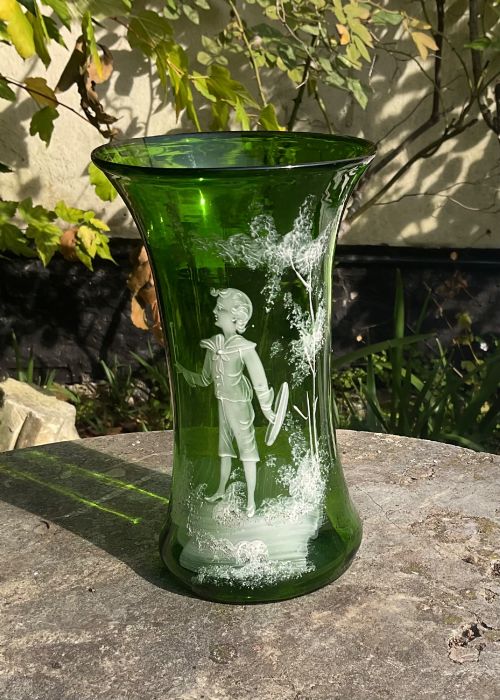
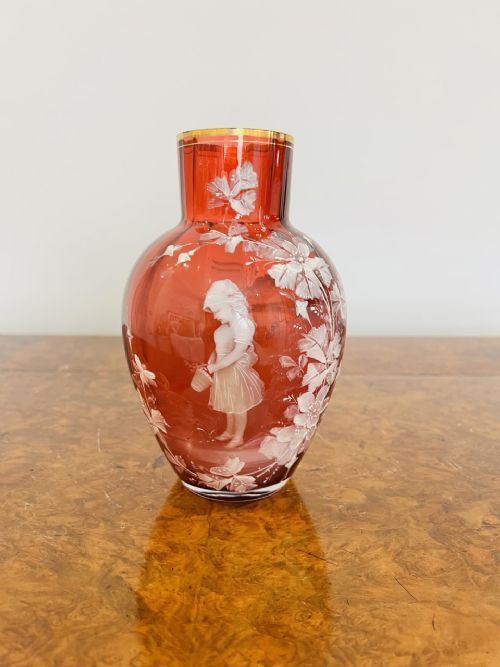
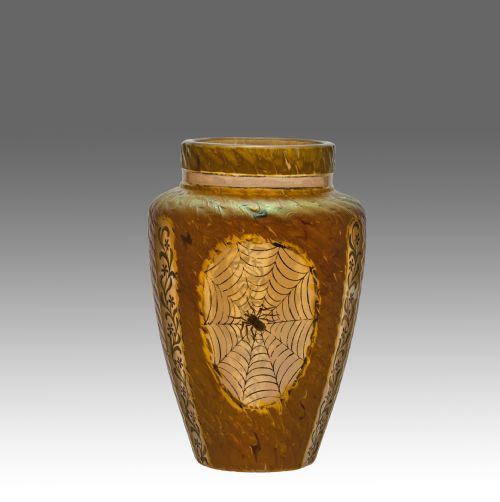
Vases and decanter sets dominate the selection, often taking the form of green, cranberry, or amber glass embellished with detailed painted scenes and gilding.
How they were made
The foundation of these pieces relies on blown glass techniques, yielding clear or coloured substrates such as cranberry, amber, and green glass.
Makers applied enamel paints by hand directly onto the glass surface, frequently incorporating gold leaf detailing or overlaid portraits to heighten the decorative effect.
Bohemian Enamel Glassware Retail Price Guide 2026
Typical asking prices for bohemian enamel glassware among the pieces listed under this phrase on Sellingantiques today, from the lower quarter to the upper quarter. They describe what is for sale here now, not the wider market.
A hand-painted fox hunting scene unfolds across one green glass vase, bringing unexpected sporting action to delicate nineteenth-century drinkware.
What varies in quality
Quality rests upon the precision of the hand-painting and the complexity of the enamelled motifs, where skilled brushwork on figures and foliage distinguishes finer examples.
The weight and clarity of the blown glass base, along with the preservation of applied gold leaf and surface etchings, mark the division between standard production and exceptional studio output.
Karl Palda·Kralik Glass·Fritz Heckert·Lobmeyer·Moser·Salviati·Harrach
The Bohemian Enamel Glassware Glossary
- Mary Gregory
- A style of white enamel painting depicting silhouetted children in garden settings, commonly found on Victorian green and cranberry glass.
- Gilding
- The application of gold leaf or gold paint to highlight rims, handles, and painted enamel designs.
- Roemer
- A traditional large drinking glass with a wide bowl and a patterned stem, often rendered in green glass with polychrome enamel decoration.
- Jugendstil
- The continental European manifestation of Art Nouveau, visible in flowing organic motifs applied to glass surfaces around the turn of the twentieth century.
- Garniture set
- A matching group of three or more decorative vessels, typically comprising vases designed to be displayed together on a mantelpiece.
Bohemian Enamel Glassware: Frequently Asked Questions
What is Mary Gregory glass?
Mary Gregory glass refers to glassware decorated with distinctive white enamel silhouettes depicting children at play, foliage, or birds. These pieces are typically set against coloured glass backgrounds such as green or cranberry.
While named after an American artist, the technique was widely used by Bohemian and Victorian glassmakers who exported these popular decorative items internationally.
How do I identify Art Deco bohemian pieces?
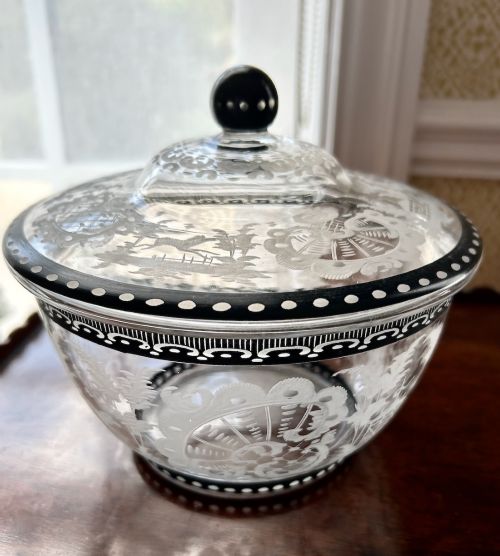
Art Deco bohemian pieces, particularly those from Czech workshops, are characterised by geometric forms, stylised etching, and opaque or crystal glass. They often include matching decanter sets and vases with stark black or vibrant enamel accents.
These designs date predominantly from the 1930s, contrasting sharply with the organic curves and figurative scenes of earlier Victorian and Art Nouveau glassware.
Were these items used for dining?
Many of these objects served functional roles in nineteenth and twentieth-century homes, functioning as decanter sets, wine goblets, liquor stands, and complete tea services for entertaining guests.
Other items, such as large vases and garniture sets, were intended purely for display on tables and mantelpieces to showcase the owner's taste.
How should I clean enamelled glass?
Enamelled and gilded glass requires careful handling to preserve the delicate painted surfaces and gold leaf details. Cleaning should be done gently by hand using lukewarm water without harsh detergents.
Submerging these pieces in hot water or using abrasive cloths can damage the historic enamel decoration and diminish the longevity of the object.