

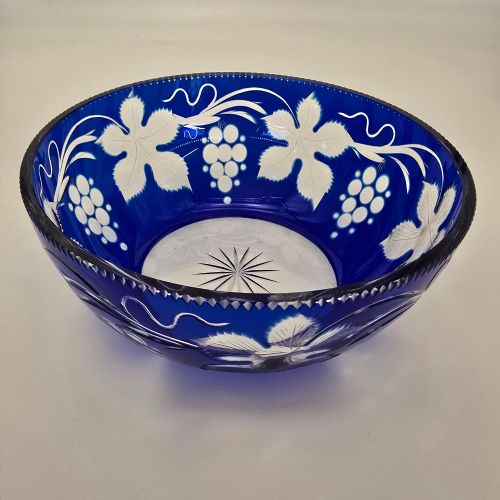
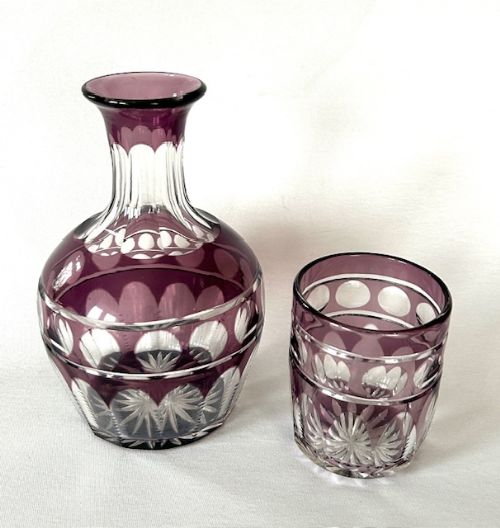


Bohemian Cased Glass
These bohemian cased glass pieces bring rich colour and layered depth to a room through traditional glassmaking.
Bohemian Cased Glass
When you search for bohemian cased glass, you encounter decorative objects built from multiple fused layers of coloured and clear crystal.
The most common forms on this page include nineteenth-century vases, scent bottles, and mantel lustres featuring distinct colour over crystal effects.
These items span the Victorian era, utilising rich cobalt, ruby, and peachblow hues applied over clear lead crystal.
How they were made
The primary technique involves fusing distinct layers of glass, such as ruby or cobalt over clear crystal, before cutting or engraving the outer layer.
Artisans enhanced these layered surfaces using gold leaf, enamel work, and cut crystal detailing.
Silver mounts and stoppers frequently complete scent bottles from the period, adding functional metalwork to the glass body.
Bohemian Cased Glass Retail Price Guide 2026
Typical asking prices for bohemian cased glass among the pieces listed under this phrase on Sellingantiques today, from the lower quarter to the upper quarter. They describe what is for sale here now, not the wider market.
Listings feature nineteenth-century and Victorian periods, utilising cobalt glass, ruby glass, gold leaf, and lead crystal.
What varies in quality
Quality rests in the precision of the glass cutting, which reveals the contrasting inner layers beneath the coloured exterior.
The refinement of the enamel work and the application of gold leaf dictate the visual sophistication of each piece.
The thickness and clarity of the lead crystal substrate create a heavier, more resonant object compared to simpler glassware.
Harrach·The Mousley Brothers·Charles May
The Bohemian Cased Glass Glossary
- Cased glass
- A vessel formed from two or more distinct layers of glass fused together during production. This technique allows artisans to cut through the outer layer to expose the contrasting colour underneath.
- Flash glass
- A thin layer of coloured glass applied over a body of clear crystal. It permits deep colour saturation while maintaining light transmission through the vessel walls.
- Mantel lustre
- A decorative ornamental vase fitted with hanging glass prisms. These pieces typically sit on a fireplace mantel to catch and reflect candlelight.
- Peachblow
- A shaded art glass technique transitioning from pale peach to pink or white. It appears on nineteenth-century vases within this category.
- Lead crystal
- Glass containing metal oxide that increases weight, brilliance, and workability. It provides the heavy foundation for many cut vessels on this page.
Bohemian Cased Glass: Frequently Asked Questions
What is bohemian cased glass?
It is glassware made in the historical Bohemia region using multiple fused layers of coloured and clear glass. This layered construction creates strong visual contrast when the outer surface is cut or engraved.
Artisans frequently added gold leaf, enamel decoration, or silver mounts to these vessels during the nineteenth century.
How do I date these pieces?
Dating relies on stylistic markers, Victorian registration marks, and accompanying silver hallmarks where present. Nineteenth-century examples often display distinct hand-cut panels and rich colour layers.
Later Victorian and Edwardian pieces sometimes incorporate detailed silver collars on scent bottles with specific Birmingham assay dates.
How were mantel lustres used?
Mantel lustres served as decorative garnitures on nineteenth-century fireplace mantels, often paired with matching vases. The hanging glass prisms were designed to refract candlelight and illuminate dark rooms.
They functioned primarily as ornamental centrepieces rather than utilitarian vessels for holding liquids or flowers.
How should I clean cased glass?
Cleaning requires lukewarm water and mild soap, avoiding harsh abrasives that might damage surface enamelling or gold leaf. Old silver mounts on scent bottles should be kept dry to prevent tarnishing.
Careful handling prevents chipping the delicate cut crystal edges on bowls, decanters, and vases.