






Bohemian Art Glass Urn
A bohemian art glass urn brings iridescent surfaces and fluid forms into a room, offering a striking focal point for any mantelpiece or side table.
Bohemian Art Glass Urn
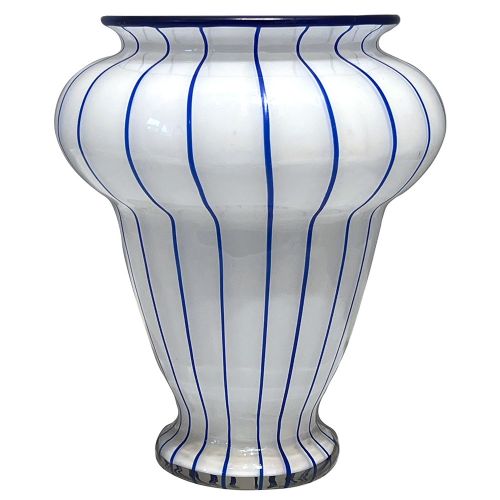
When you search for a bohemian art glass urn, you enter a world of vibrant colour, organic shapes, and experimental melting techniques. These vessels range from towering Victorian creations to sleek Art Deco forms, capturing the shifting aesthetic of Central European glassmaking.
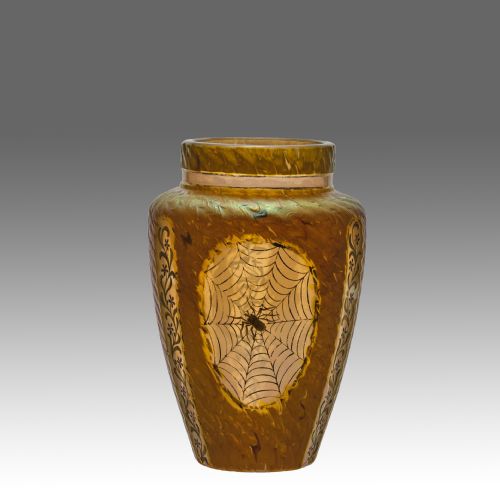
You are most likely to encounter vases and urns featuring iridescent finishes, enamel painting, or metallic overlays. The pieces date from the nineteenth century through to the early decades of the twentieth century, encompassing Victorian, Art Nouveau, and Secessionist movements.
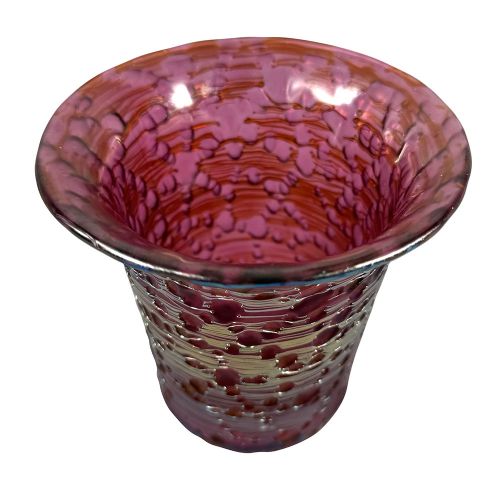
Makers utilised distinct decors such as Phänomen, Orbulin, and Ausfuehrung to create marbled and feathered surface patterns. These objects were conceived as ornamental showpieces rather than functional flower holders, designed to catch the light from every angle.
How they were made
Glassmakers manipulated molten material by rolling it over metallic oxides while hot to achieve an iridescent, oil-slick sheen. Artisans then blew the glass into moulds or shaped it by hand while hot, often incorporating pulled threads and applied trails.
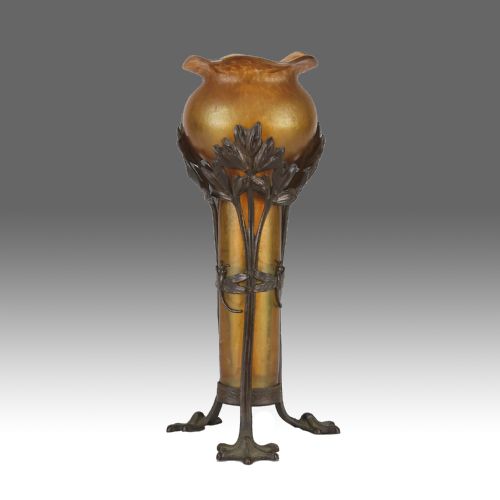
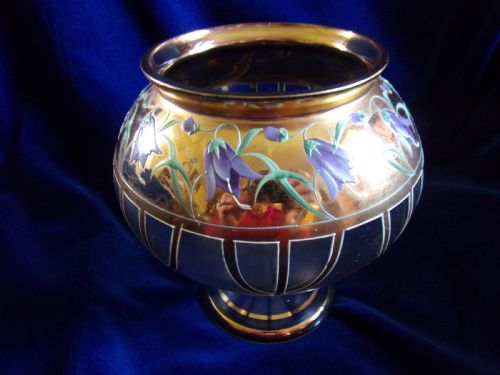
Many examples received additional embellishment through hand-painting with polychromatic enamels and applying heavy layers of gold leaf. Bronze, pewter, and sterling silver mounts were subsequently fitted around necks and bases to enhance the architectural presence of the vessel.
Bohemian Art Glass Urn Retail Price Guide 2026
Typical asking prices for bohemian art glass urn among the pieces listed under this phrase on Sellingantiques today, from the lower quarter to the upper quarter. They describe what is for sale here now, not the wider market.
Listings feature glass, iridescent glass, enamel, sterling silver, gold leaf, bronze, silver overlay, and amber glass across Victorian, Art Nouveau, Art Deco, and Vienna Secessionist styles.
What varies in quality
The sophistication of the optical effects and the depth of the iridescent sheen dictate the upper tier of quality. Superior examples display complex combed thread patterns integrated directly into the body rather than merely painted on the surface.
The integration of metalwork also separates standard production from exceptional pieces. Finely chased bronze or solid silver overlay mounts that complement the exact contours of the glass indicate a higher standard of craftsmanship.
Pallme Konig·Loetz·Kralik Glass·Loetz Witwe·Mary Gregory·Moser·Paul Heller·Booms glass
The Bohemian Art Glass Urn Glossary
- Iridescent glass
- Glass treated with metallic vapours while hot to produce a rainbow-like sheen on the surface. This technique was pioneered in Bohemia to mimic ancient buried glass.
- Silver overlay
- Sterling silver deposited chemically and mechanically onto the glass surface in decorative patterns. It creates a striking contrast between the dark metal and the glowing glass beneath.
- Phänomen
- A signature Loetz decor featuring wavy, combed lines pulled across the hot glass surface. It represents one of the most technically demanding methods of the Art Nouveau period.
- Hyalite glass
- An opaque, dense glass developed in black or red, resembling polished stone. It provides a solid, heavy base for enamelling and gilding.
- Peachblow
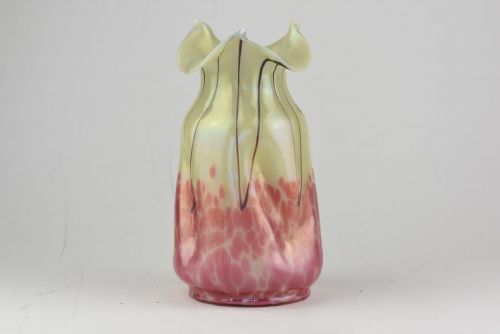
- A shaded art glass technique transitioning from peach to cream or yellow. It creates a soft, warm gradient across the body of the vase.
Bohemian Art Glass Urn: Frequently Asked Questions
How do I identify a Loetz piece?
Look for distinctive iridescent decors, unstructured organic forms, and characteristic pontil marks on the base. Many pieces also feature metal mounts that follow the fluid lines of the Art Nouveau style.
Closer inspection often reveals internal threading or combed patterns unique to Bohemian workshops of the early twentieth century.
Were these urns used for flowers?
Most bohemian art glass urns served strictly as decorative mantel or table ornaments rather than functional vases. Their delicate metallic overlays and complex internal structures made them unsuited for holding water.
Collectors prize them today for their sculptural qualities and the way their surfaces interact with natural light.
What is silver overlay?
Silver overlay is a decorative technique where sterling silver is applied directly onto the glass surface in intricate floral or geometric patterns. The metal grips the contours of the vessel securely.
This method combined the talents of glassblowers and metalworkers to create high-end luxury items during the Victorian and Edwardian eras.
How should I clean my glass urn?
Dust these delicate vessels gently with a soft, dry microfibre cloth to protect the iridescent surfaces and applied metalwork. Avoid using chemical cleaners or immersing mounted pieces in water.
Moisture can damage the adhesive holding metal mounts or degrade delicate enamel and gold leaf decorations.