



Bobbin Leg Stand
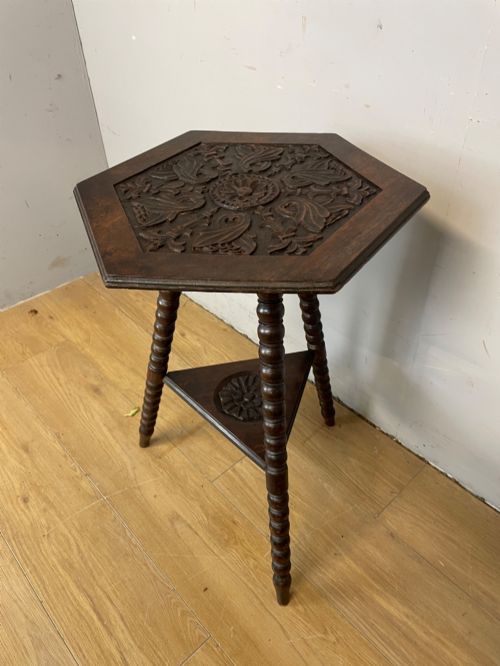
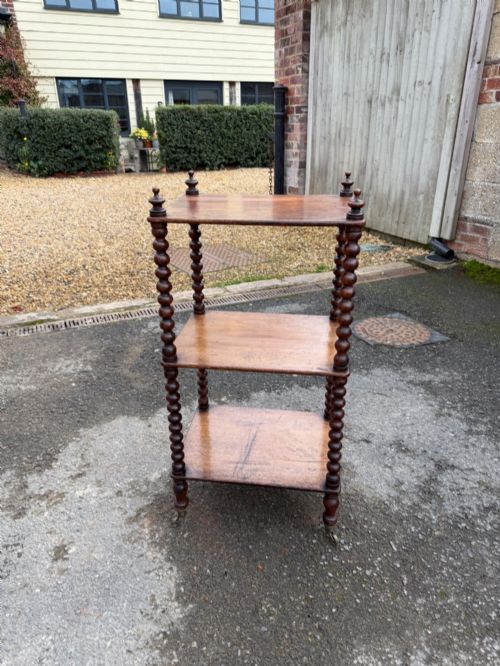
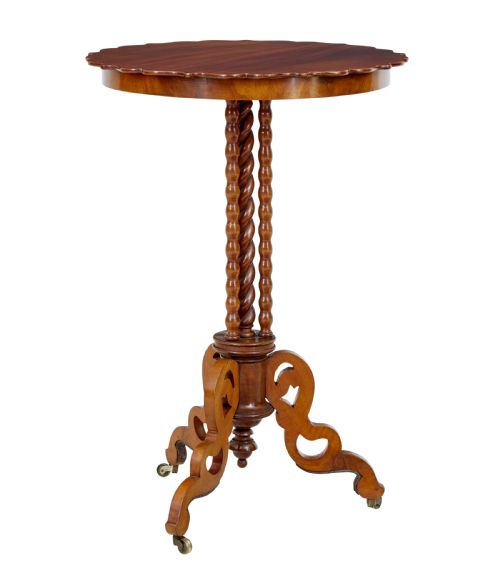
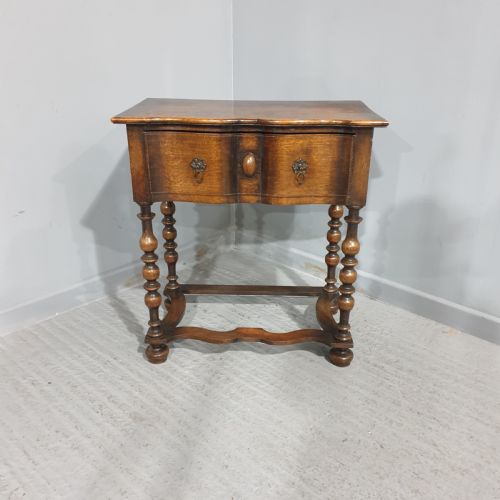
A bobbin leg stand brings tactile turned timber into a room, offering compact utility through distinctive spool-moulded supports.
Bobbin Leg Stand
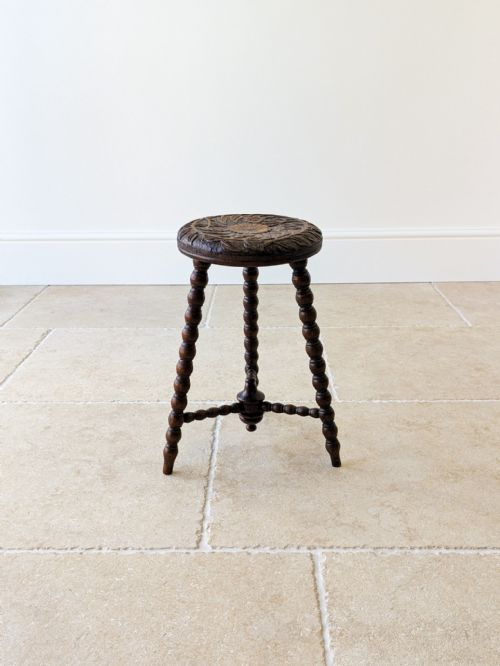
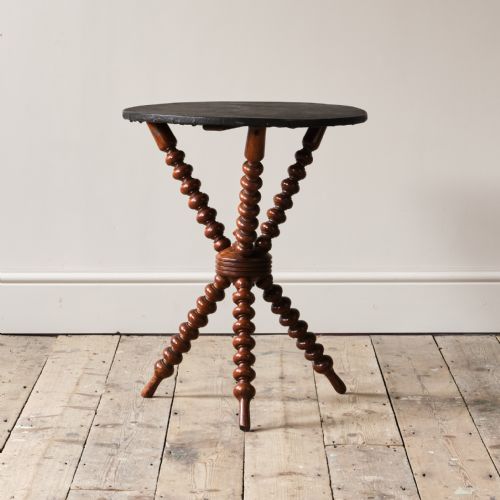
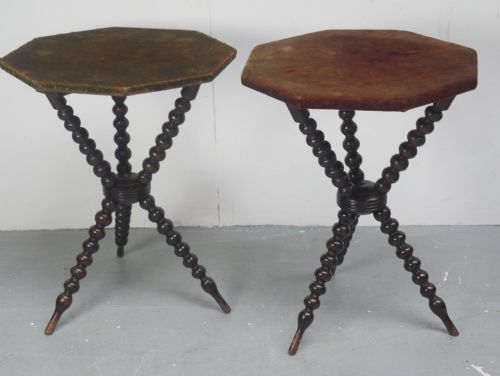
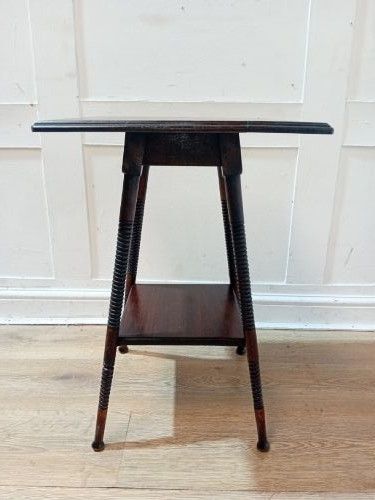
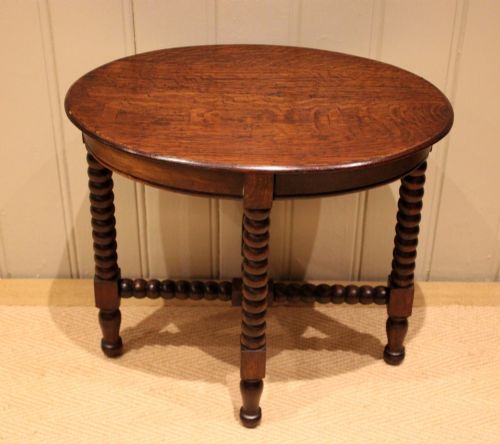
A bobbin leg stand takes many forms across this selection, appearing most frequently as side tables, occasional tables, and stools. These pieces draw on historical revivals and vernacular designs to provide sturdy small-scale furniture for everyday placement.
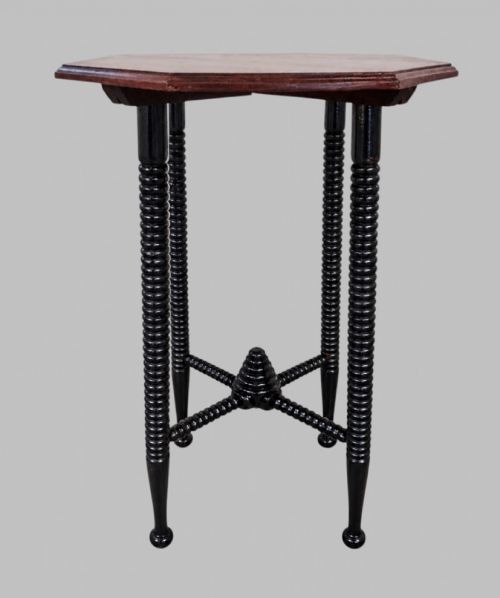
The aesthetic spans several eras, utilising styles such as Jacobean Revival, Arts and Crafts, and Aesthetic Movement. Buyers encounter formats ranging from round gypsy tables to rectangular hall and lamp tables.
Origins stretch from the seventeenth century up through the Victorian period and into the early twentieth century. Oak remains the primary timber met on this page, accompanied by mahogany, walnut, and ebonised finishes.
Materials and construction
Makers shaped solid hardwoods like oak and mahogany using traditional turning lathes to produce the characteristic spool or bobbin profiles. These turned sections form the structural legs and supports of the tables and stands.
Joinery relies on time-tested carpentry methods to unite the turned components with tabletops and stretchers. Surfaces occasionally incorporate secondary materials such as velvet textiles or brass details.
Bobbin Leg Stand Retail Price Guide 2026
Typical asking prices for bobbin leg stand among the pieces listed under this phrase on Sellingantiques today, from the lower quarter to the upper quarter. They describe what is for sale here now, not the wider market.
Listings feature oak as the dominant timber, alongside mahogany and walnut across nineteenth-century and early twentieth-century periods.
Assessing quality and character
Quality reveals itself in the precision of the turning work and the selection of timber grain. Sharply defined spool profiles and dense, well-figured oak or mahogany distinguish superior examples.
Proportion and stability dictate the standing of a piece within its type. Stands that balance delicate turned supports with robust framing demonstrate thoughtful design and careful execution.
Liberty of London·William Birch
The Bobbin Leg Stand Glossary
- Bobbin turning
- A form of lathe work where wood is shaped into a series of rounded spheres or discs resembling bobbins of thread. This technique defines the distinct legs seen on seventeenth-century and revival furniture.
- Gypsy table
- A lightweight occasional table, frequently featuring bobbin-turned legs and a cloth-draped top. These pieces gained popularity during the late nineteenth century for flexible domestic use.
- Occasional table
- A small, movable table designed for specific, intermittent tasks such as holding a lamp or book. They appear across various historical periods in numerous shapes and timbers.
- Jacobean Revival
- A nineteenth-century design movement that reinterpreted seventeenth-century English furnishings. Pieces in this style often feature heavy oak construction and turned structural elements.
- Aesthetic Movement
- A late nineteenth-century artistic current emphasising visual beauty over narrative function. Furniture from this context often employs ebonised finishes and clean structural lines.
Bobbin Leg Stand: Frequently Asked Questions
What is a bobbin leg stand?
A bobbin leg stand is a small piece of furniture, such as a side table, lamp table, or stool, supported by legs shaped into rounded spool-like segments on a lathe.
These pieces draw on historical furniture styles from the seventeenth century onward, providing compact surfaces for domestic spaces.
How were bobbin legs made?
Makers produced bobbin legs by mounting timber blanks on a lathe and turning them down with chisels to create uniform spherical or cylindrical repetitions along the shaft.
This method required steady hand-eye coordination to ensure the repeating wooden discs matched precisely in depth and contour.
Where should I place a bobbin leg stand?
These stands suit smaller spaces like hallways, corners, or beside seating where a compact surface is useful for a lamp, book, or small decorative item.
Their lightweight construction allows them to move easily between rooms as functional needs shift.
How do I date a bobbin table?
Dating relies on examining the timber species, joinery methods, and the overarching style context of the piece, such as Victorian revivalism or Arts and Crafts simplicity.
Original surface patination and tool marks also provide clues to whether a stand originates from the seventeenth century or a nineteenth-century revival workshop.