
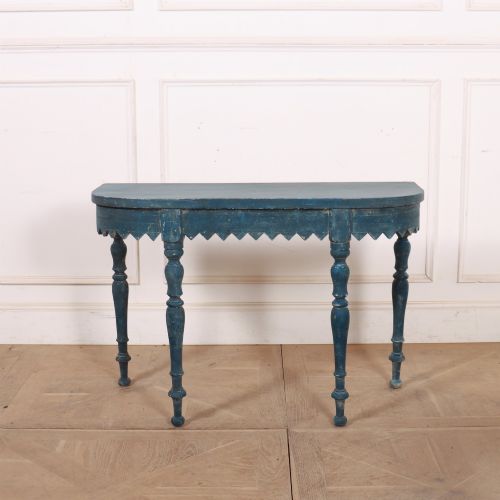


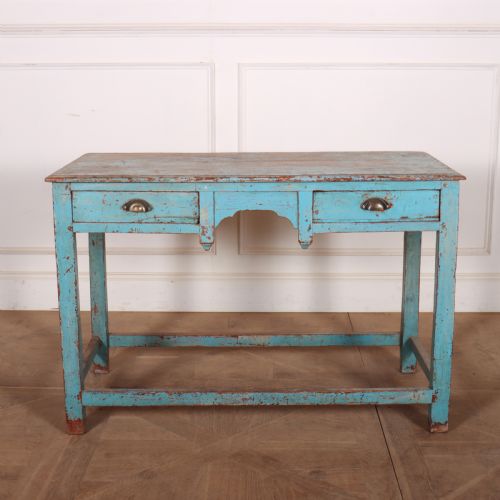


Blue Wooden Console
A blue wooden console brings painted timber and rustic utility into a room, offering surface space with regional charm.
Blue Wooden Console
A blue wooden console encompasses various supporting tables built from timber and finished with paint, ranging from English country pieces to Swedish folk examples. These items include side tables, serving tables, washstands, and dresser bases rather than strictly formal console tables.
The materials and origins span the eighteenth century, the Georgian era, the Regency period, and the nineteenth century, utilising pine, tree bark, and marble tops alongside brass details. Styles lean towards Gustavian, French provincial, English country, and rustic farmhouse aesthetics.
The blue wooden console you meet on this page most often takes the form of nineteenth-century painted pine tables or eighteenth-century lamp tables. Regional interpretations from Sweden, Italy, Spain, France, and England dominate the selection.
How they were made
Construction relies upon timber, specifically pine, shaped into trestles, drawers, and washstands using traditional joinery. Surfaces receive coats of paint, establishing the blue colour seen across English, Swedish, and continental pieces.
Detailing incorporates brass hardware and occasional marble surfaces, while tree bark provides rustic texture on specific forms. Painted finishes vary from straightforward applications on nineteenth-century pine to more structured Gustavian and French provincial designs.
Some tables feature tree bark alongside classical marble, proving that woodland textures and refined stone occasionally share the same piece of furniture.
What varies in quality
Construction integrity distinguishes pieces, separating straightforward utilitarian tables from items possessing finer proportion and detail. The execution of the painted finish and the integration of secondary materials like marble or brass influence the character of each console.
Age and regional origin shape the distinction between standard country workshop items and specific design influences, such as those referencing Gillows or Regency patterns. The survival of original paint surfaces and structural timber condition define the standing of individual tables.
The Blue Wooden Console Glossary
- Console table
- A table designed to stand against a wall, frequently fixed or supported by two front legs. These pieces provide surface space in hallways and living rooms.
- Dresser base
- The lower section of a traditional kitchen or dining room storage unit, featuring drawers and cupboards. They offer sturdy timber construction and ample surface area.
- Gustavian style
- The Swedish interpretation of French neoclassical design, characterised by restrained carving and pale painted finishes. This style appears frequently on nineteenth-century tables.
- Washstand
- A piece of furniture designed to hold a basin and jug for washing, often incorporating marble tops or lower shelves. They adapt well to modern usage as side tables.
- Pine
- A softwood utilised extensively for country furniture due to its availability and workability. It accepts paint readily, which accounts for its prevalence in blue finishes.
Blue Wooden Console: Frequently Asked Questions
What is a blue wooden console?
A blue wooden console is a painted timber table designed to sit against a wall, encompassing forms like side tables, serving tables, and washstands.
These pieces originate from various European traditions, including English country workshops and Swedish folk makers.
How do I date these tables?
Dating relies upon construction methods, timber type, and stylistic markers associated with periods like the Georgian era, the Regency period, and the nineteenth century.
Examining the paint surface and joinery helps determine whether a piece belongs to the eighteenth century or later decades.
Where were these tables used?
These tables served practical functions in hallways, dining rooms, and bedrooms as serving surfaces, washstands, or lamp tables.
Today, they function well in similar domestic spaces to display objects or provide surface storage.
What styles are available?
The available styles include English country, Gustavian, French provincial, rustic farmhouse, and Spanish regional designs.
Each style reflects the local cabinet-making traditions and aesthetic preferences of its origin.