




Blue White Tea Service
A blue white tea service brings porcelain and earthenware painted in cobalt into daily use.
Blue White Tea Service
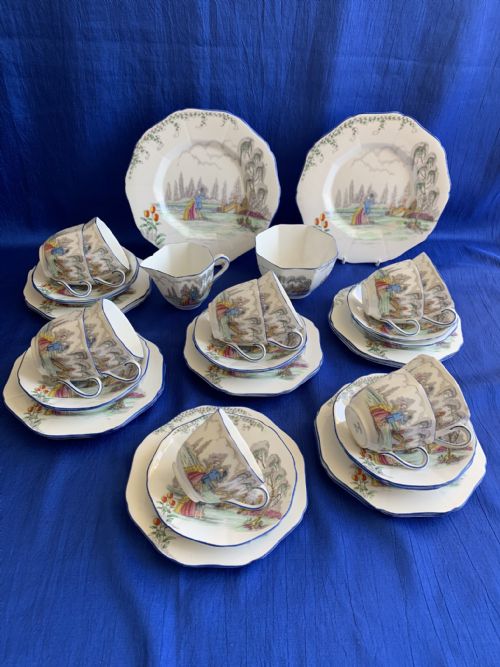
A blue white tea service comprises matched or assembled groupings designed for the serving of tea, drawing on periods from the eighteenth century through to the mid-twentieth century. Buyers encounter full sets alongside child's tea services, miniature dinnerware, and individual sugar boxes or teacups.
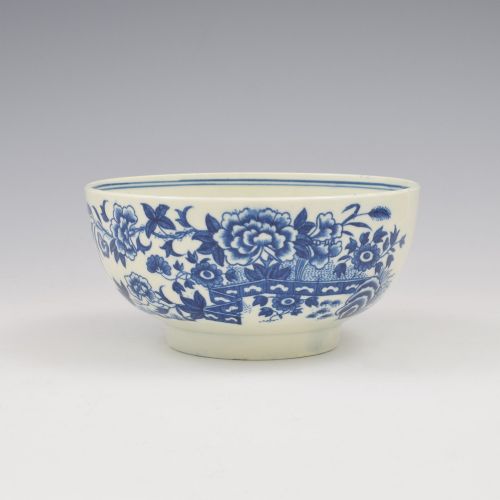
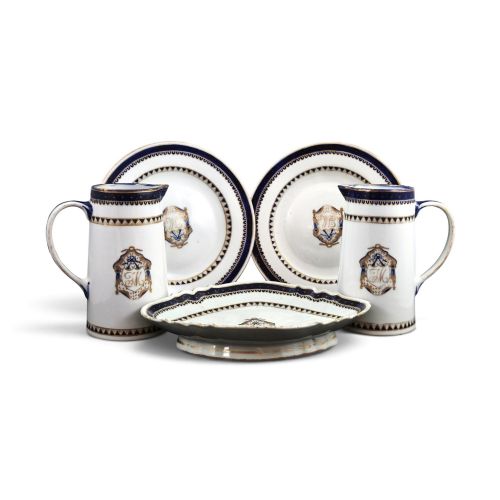
The styles range widely across these pieces, incorporating Chinese Export, Kangxi period, Georgian, Victorian, Edwardian, Regency, and mid-century English designs. Forms include teacups and saucers, sucriers, and teapots decorated in cobalt glaze, enamel, and gold leaf.
Materials and Techniques
Potters shaped these objects from porcelain, bone china, earthenware, and ceramic bodies. Cobalt glaze provided the foundational blue coloration, applied beneath or over the glaze before firing.
Makers integrated transfer printing, notably flow blue techniques, alongside hand-painted enamel and gold leaf detailing. Kiln work fused these pigments to the clay body across eighteenth-century and nineteenth-century production methods.
Blue White Tea Service Retail Price Guide 2026
Typical asking prices for blue white tea service among the pieces listed under this phrase on Sellingantiques today, from the lower quarter to the upper quarter. They describe what is for sale here now, not the wider market.
Nineteenth-century children received entire miniature tea services complete with microscopic teacups for practicing polite conversation.
Distinctions in Quality
The refinement of the ceramic body distinguishes standard wares from finer productions, moving from heavy earthenware to translucent porcelain and bone china. Finely potted tea services exhibit crisp edges, thin walls, and balanced forms.
Decoration quality depends on the clarity of the cobalt glaze and the precision of the transfer print or hand-painted brushwork. Superior sets maintain consistent pigment saturation without blurring or running into the surrounding glaze.
Copeland·Minton·Coalport·Derby·Ridgway·Copeland Spode·Sutherland
The Blue White Tea Service Glossary
- Cobalt glaze
- A deep blue metallic oxide used to decorate ceramic bodies before or during firing. It withstands high temperatures without losing its intense hue.
- Flow blue
- A nineteenth-century transfer printing technique where cobalt pigment intentionally bleeds into the surrounding glaze during the firing process. This creates a soft, hazy outline across the pattern.
- Sucrier
- A covered sugar bowl designed as part of a matching tea service. These pieces frequently feature specialised handles and matching lids.
- Bone china
- A type of porcelain incorporating animal bone ash into the paste. This composition yields a strong, bright white body with high translucency.
- Transfer printing
- A method of applying intricate designs to ceramics by engraving a copper plate, pulling the image on tissue paper, and pressing it onto the biscuit ware.
Blue White Tea Service: Frequently Asked Questions
How do I date a blue white tea service?
Dating relies on identifying the ceramic body, the manufacturing marks on the base, and the stylistic traits of the period. Porcelain and refined bone china often point to specific nineteenth or twentieth-century eras, while heavier earthenware can suggest earlier periods.
Changes in transfer printing techniques and cobalt shades also help narrow down the decade of manufacture. Comparing the form of the teacups and sugar bowls to known factory shapes provides further chronological context.
Can I use an antique tea service daily?
Most antique and vintage sets survive best with careful handling rather than heavy everyday use. Older glazes and ceramic bodies are susceptible to thermal shock and modern detergents.
Hand washing in lukewarm water with mild soap protects the cobalt glaze and any gold leaf details. Storing the pieces safely prevents chips to vulnerable rims and handles.
What is a child's tea service?
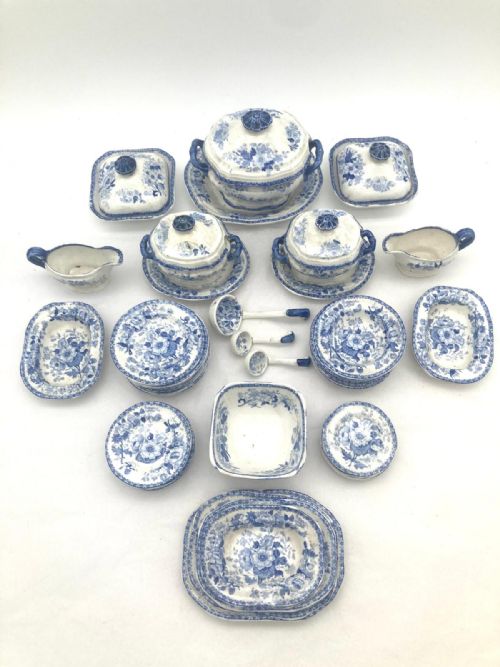
Child's tea services are scaled-down versions of full-sized tea sets, produced in porcelain or earthenware during the nineteenth century. Makers designed these smaller sets for juvenile use or display.
Despite their diminutive scale, they often utilised the same transfer printing and flow blue techniques found in adult services. Complete surviving sets of these miniature wares remain sought after by collectors.
Why does the blue colour blur on some pieces?
Blurring on flow blue pieces results from deliberate chemical vapours introduced into the kiln during firing. This technique caused the cobalt pigment to bleed into the white glaze.
On other wares, blurring can indicate an earlier transfer printing method or variations in kiln temperature. Collectors prize intentional flow blue for its atmospheric, watercolor-like depth.