
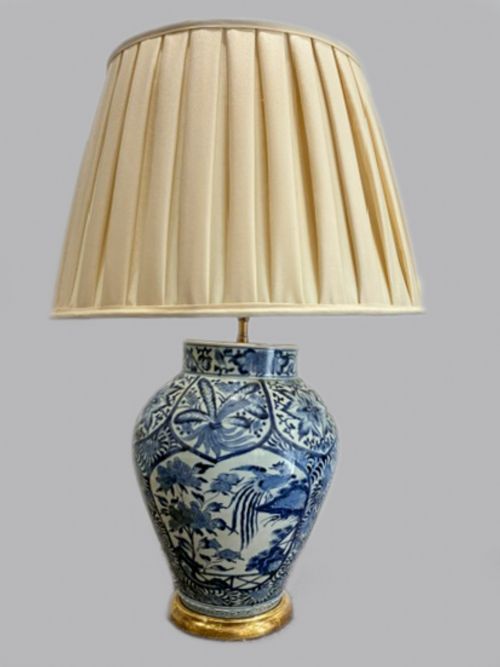
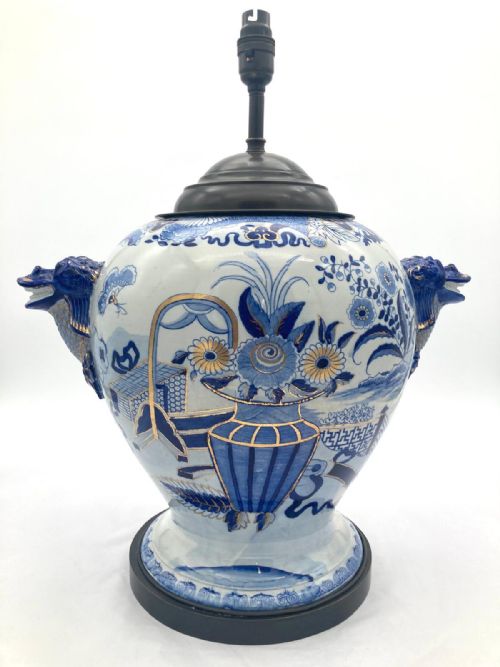
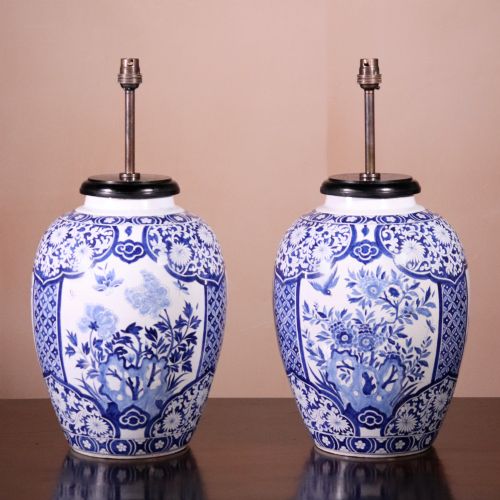
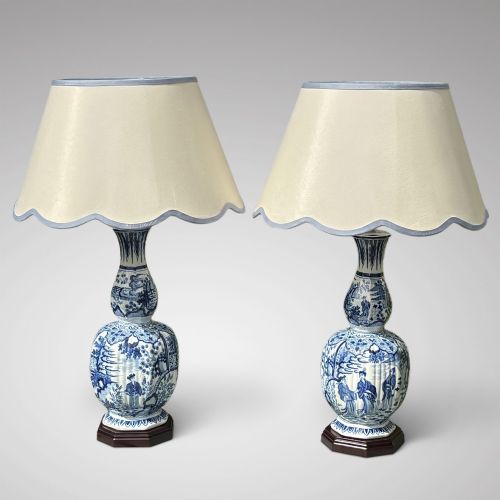


Blue White Ceramic Lamp
These blue white ceramic lamp examples bring centuries of hand-painted porcelain and earthenware into modern interiors.
Identifying blue white ceramic lamp forms
A blue white ceramic lamp transforms historic vessels into functional lighting, drawing on centuries of global design. When you search for a blue white ceramic lamp, you encounter table lamps fashioned from converted vases and specialised pottery.
The selections span 18th Century Dutch Delft wares and Chinese export styles, alongside later pieces from 1890 and the wider 19th Century. Formats include single statement pieces and matched pairs featuring double gourd profiles or traditional vase shapes.
Many of these bodies begin life as utilitarian vessels or decorative vases before receiving electrical fittings and mounts. The resulting table lamps bridge ancient ceramic traditions and domestic illumination.
Materials and construction
Makers construct these items using ceramic, earthenware, porcelain, brass, bronze, timber, wood, fabric and silk. Ceramic and porcelain bodies provide the primary painted surfaces, often finished with distinctive crackleware textures.
Mounts and structural additions utilise brass and bronze elements to secure the fittings, while timber and wood frequently form stable bases. Fabric and silk components complete the upper structures of the assembled table lamps.
Retail Price Guide 2026
Typical UK retail prices for blue white ceramic lamp, calculated from the Sellingantiques database of over a million retail prices indexed since 2003. This retail price guide relies exclusively on Sellingantiques data; no external sources or auction records are used, so the figures do not describe the wider market.
Several vases traded their original duties of holding flowers or wine centuries ago to spend retirement doubling as reading lights.
Judging quality in blue white ceramic lamps
Quality rests upon the harmony between the historic ceramic vessel and its modern conversion hardware. Superior examples display careful handling of the original Delft or Chinese blue and white glaze without compromising the integrity of the antique body.
The refinement of the secondary materials, such as bronze or brass mounts, distinguishes finer pieces from simpler conversions. Well-proportioned pairings of fabric or silk shades with the ceramic base demonstrate a more considered aesthetic balance.
The Blue White Ceramic Lamp Glossary
- Delft
- A tin-glazed earthenware originating in the Netherlands, known for its distinctive blue and white palette emulating Chinese porcelain.
- Chinoiserie
- European decorative style reflecting Chinese artistic influences, frequently seen in 18th Century and 19th Century motifs.
- Crackware
- A ceramic glaze intentionally patterned with a network of fine cracks, adding texture and visual depth to the surface.
- Double Gourd
- A traditional bottle vase shape formed by two rounded bulbous sections stacked vertically, resembling the fruit of the same name.
Frequently Asked Questions
How do I date a blue white ceramic lamp?
Dating relies upon examining the underlying ceramic body, glaze characteristics, and any associated metal mounts. Stylistic indicators such as 18th Century Dutch Delft or 19th Century Chinese crackleware provide clear chronological markers.
Secondary materials like brass or bronze fittings also offer clues regarding the period of conversion and assembly.
Are these original lamps or conversions?
The majority of these pieces began life as decorative vases, jars, or vessels before later conversion into table lamps. Historic porcelain and earthenware were frequently adapted to meet domestic lighting needs while preserving the antique body.
This practice ensures that each lamp retains authentic historic craftsmanship alongside modern electrical components.
How do I style a blue white ceramic lamp?
These lamps suit both traditional and contemporary interiors, serving as striking focal points on side tables or desks. Their classic blue and white palette pairs easily with neutral furnishings and natural wood tones.
Matched pairs work particularly well on larger surfaces such as sideboards or flanking a living room arrangement.
What materials are used in these lamps?
The primary bodies consist of ceramic, earthenware, and porcelain, often hand-painted in cobalt blue. Supporting elements incorporate brass, bronze, timber, and wood to stabilise the heavy ceramic forms.
Completing the fixtures, fabric and silk materials are utilised for the shades and internal wiring assemblies.