
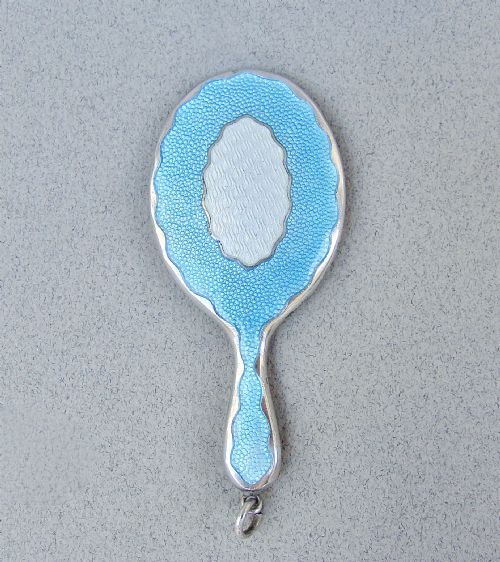


Blue Silver Compact
A blue silver compact brings together cool silver and vibrant enamel for a touch of portable elegance.
Blue Silver Compact
When searching for a blue silver compact, collectors encounter functional accessories designed for powder, rouge, and small keepsakes. These items span periods from the Edwardian era through the 1920s, 1930s, and into mid-century pieces.
The versions most frequently met on this page combine sterling silver or silver gilt with blue enamel surfaces. Alongside powder compacts, the selection includes related vanity items such as cigarette cases, pill boxes, miniature purse mirrors, and watch cases.
Origins vary across British workshops in cities like Birmingham, alongside continental European pieces and mid-century Italian creations. Each object reflects the changing aesthetic demands of its decade, shifting from intricate Edwardian detailing to geometric Art Deco lines.
Materials and construction
Makers utilised sterling silver, silver gilt, and .900 or .800 grade silver as the structural base for these items. Metals were shaped into boxes, cases, and compact frames, often paired with interior glass mirrors or suede linings.
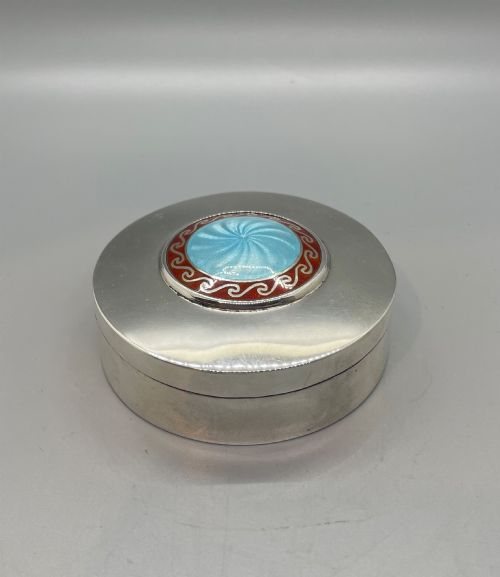
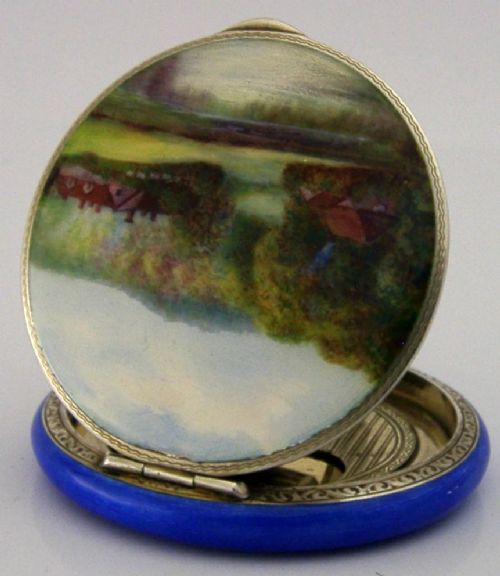
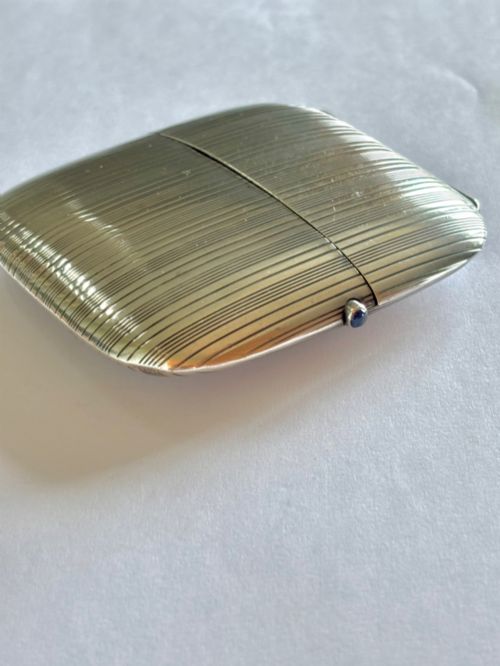
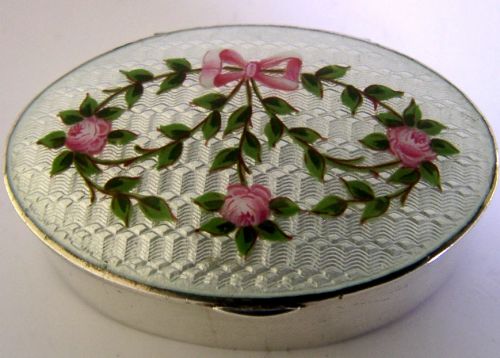
Guilloche and vitreous enamel techniques provided the distinctive blue colouration seen across the surface designs. Hand painting and gemstone or cabochon additions frequently enhanced the outer lids of these small accessories.
Current listings feature items from the Edwardian period, 1910, 1920, 1930, and 1950, utilising enamel, sterling silver, silver gilt, and gemstones.
Evaluating craftsmanship
Quality in these pieces rests on the precision of the guilloche engine-turning beneath the translucent enamel. Finer examples display crisp, uniform geometric patterns that catch the light evenly through the blue coating.
The integrity of the metalwork and the crispness of maker marks or hallmarks also distinguish the manufacturing standard. Well-preserved enamel surfaces without chips or extensive hairline fractures represent superior preservation and skill.
Henry Williamson·Henry Matthews·Evans·Giuliano Spinelli·Henry Perkins & Sons
The Blue Silver Compact Glossary
- Guilloche
- A decorative engraving technique where a mechanical instrument etches an intricate, repetitive pattern into metal. This patterned base is then typically covered with translucent enamel.
- Silver Gilt
- Silver that has been coated with a thin layer of gold on its surface. This treatment provides a warm golden tone while maintaining a silver base structure.
- Cabochon
- A gemstone shaped and polished with a smooth, rounded convex top rather than being faceted. These stones frequently serve as decorative clasps or focal points.
- Vitreous Enamel
- A material made by fusing powdered glass to a substrate by firing, usually at high temperatures. The resulting glossy coating provides durable and vibrant colour.
Blue Silver Compact: Frequently Asked Questions
What is a blue silver compact?
A blue silver compact is a small vanity case made from silver and finished with blue enamel, designed to hold cosmetic powder for touch-ups.
These accessories date primarily from the early twentieth century, including Edwardian and Art Deco designs produced by various silversmiths.
How do I care for silver and enamel?
Care involves gentle cleaning with a soft cloth to avoid scratching the delicate glass-based enamel surface.
Harsh silver dips should be kept away from the enamel portions to prevent chemical damage to the coloured layers.
How are periods told apart?
Periods are identified through stylistic cues and official hallmarks stamped into the metal.
Edwardian pieces often feature softer floral motifs, whereas 1920s and 1930s items lean into geometric Art Deco styling.
Were these items used daily?
These accessories served as daily essentials for women carrying cosmetics in handbags during the early to mid-twentieth century.
Compact mirrors and built-in powder wells allowed for convenient grooming away from the dressing table.