



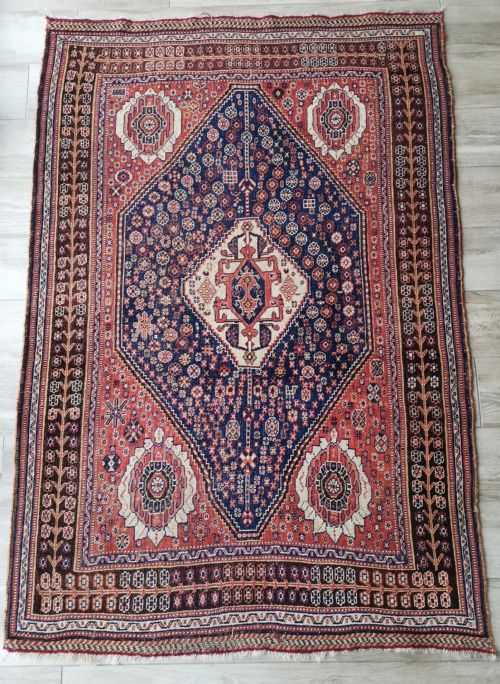


Blue Qashqai Rug
A blue qashqai rug brings the rich nomadic weaving traditions of south-west Persia directly into your interior spaces through deep indigo dyes and geometric motifs.
Blue Qashqai Rug
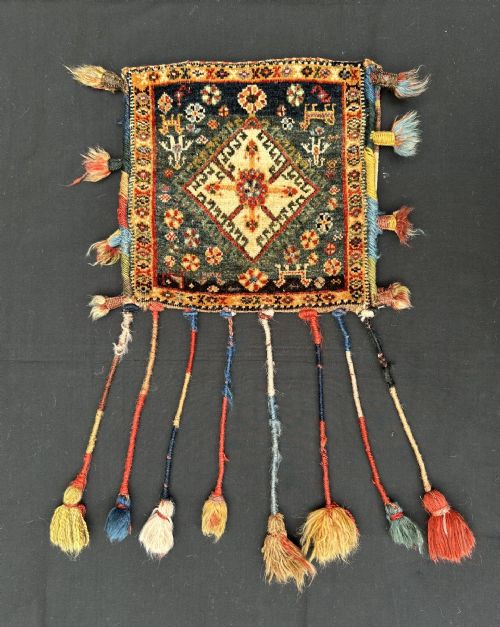
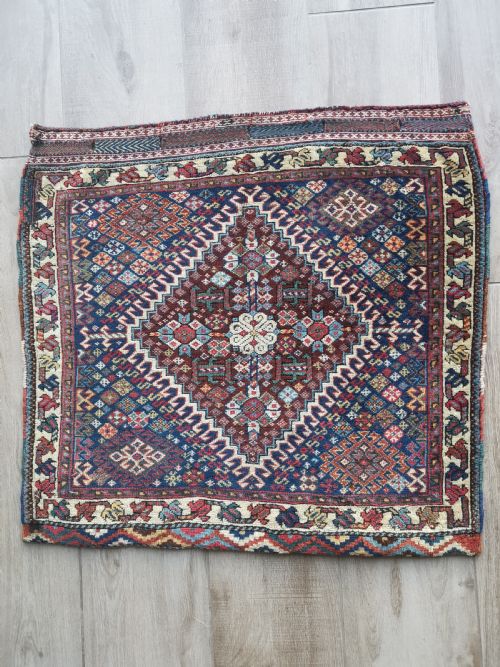
A blue qashqai rug represents the tribal artistry of the Qashqai confederacy, originating from the Fars province of Persia during the nineteenth and early twentieth centuries. These woven works range from compact saddlebag faces to substantial carpets and kelleh formats, created by nomadic and village weavers.
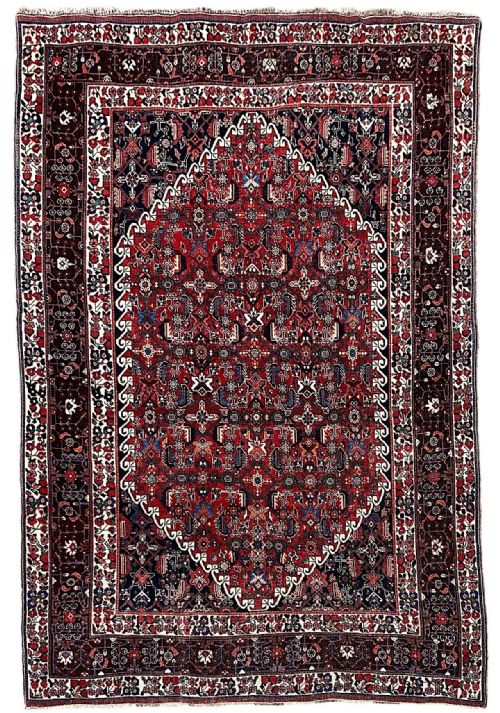
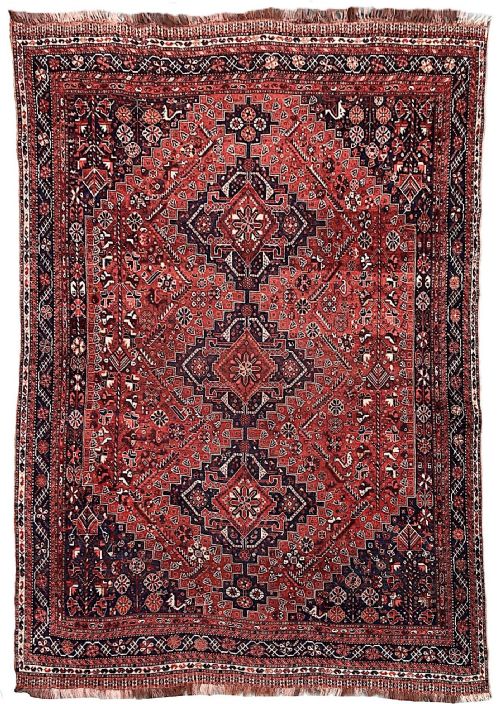
The most common examples on this page are floor rugs and larger carpets featuring deep indigo fields decorated with central medallions, geometric devices, and repeating tribal motifs. Alongside standard Qashqai productions, related pieces from the Khamseh, Luri, and Shiraz traditions frequently appear sharing similar aesthetic traits.
Format variations span square bagfaces intended for utilitarian storage to long runner-like formats and grand carpets measuring over three metres in length. Their construction reflects generations of passed-down tribal symbolism, including stylized peacocks, boteh patterns, and tree of life designs.
How They Were Made
Weavers constructed these textiles using hand-spun wool for both the soft pile and the foundational warps and wefts, creating a pliable yet resilient fabric. The reliance on natural dyes yielded a rich spectrum of indigo blues, terracotta reds, and earthy tones that age gracefully over time.
Each piece is hand-knotted on traditional horizontal ground looms set up by nomadic families in the south-west Persian highlands. This intensive manual labour results in varied knot densities that define the structural integrity and surface texture of every individual textile.
Blue Qashqai Rug Retail Price Guide 2026
Typical asking prices for blue qashqai rug among the pieces listed under this phrase on Sellingantiques today, from the lower quarter to the upper quarter. They describe what is for sale here now, not the wider market.
Listings span production dates from the 1880s through the 1930s, incorporating wool, cotton, and natural dyes.
What Varies in Quality
The distinction between ordinary and exceptional examples rests upon the handle of the wool, the depth and clarity of the natural dyestuffs, and the precision of the tribal drawing. Finer knotting allows intricate motifs like millefleurs or detailed medallions to emerge with striking graphic clarity.
State of preservation and pile retention heavily influence the standing of an individual rug, as heavy wear alters the visual impact of the design. Additionally, the complexity of the border systems and the inclusion of specific sub-tribal signatures elevate the desirability of certain pieces.
The Blue Qashqai Rug Glossary
- Bagface
- The decorative front panel of a nomadic saddlebag, woven with a dense knotting structure to withstand daily utility. These smaller formats often display concentrated tribal iconography.
- Medallion
- A central ornamental motif positioned in the middle of the rug field, serving as the focal point of the symmetrical or asymmetrical design. Qashqai examples frequently employ single, double, or triple medallion layouts.
- Boteh
- A stylised teardrop or almond-shaped motif representing a floral spray, cypress tree, or flame. This ancient Persian symbol appears frequently across various tribal rug traditions.
- Kelleh
- A long and narrow format of carpet traditionally suited to specific architectural spaces within Persian houses. They offer an elongated field for repeated medallion arrangements.
- Millefleurs
- A dense pattern composed of countless tiny flowers covering the background field. This intricate style requires exceptional weaving skill and patience from the artisan.
Blue Qashqai Rug: Frequently Asked Questions
How do I identify a true tribal piece?
Authentic tribal pieces display asymmetrical structures, hand-spun wool with subtle irregularities, and natural dyes that show abrash or tonal variation across the surface.
Look for traditional Fars province motifs such as stylized birds, peacocks, and geometric medallions rather than rigid, standardised factory designs.
Where were these textiles originally woven?
These carpets and rugs were produced by nomadic and confederated tribes, principally the Qashqai, Khamseh, and Luri peoples traversing the Fars province in south-west Persia.
Weavers worked on portable ground looms during seasonal migrations, utilising materials sourced directly from their own flocks.
How should I care for an antique rug?
Protect the textile by placing a quality breathable underlay beneath it to prevent slipping and reduce friction against hard flooring.
Vacuum gently with a suction-only attachment, avoiding traditional rotating brush bars that can damage the historical hand-spun wool pile.
What do the peacock motifs signify?
Peacocks and stylized birds woven into tribal rugs often symbolize royalty, beauty, protection, or paradise within Persian folklore and nomadic iconography.
These symbolic additions imbue the geometric fields with layers of cultural meaning passed down through generations of weavers.