


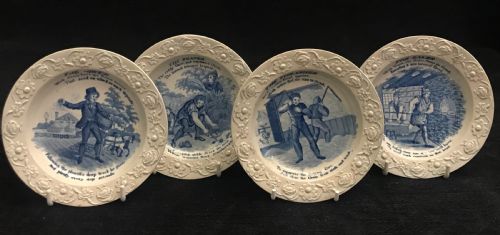

Blue Print China Plate
These blue print china plate examples bring crisp transfer-printed scenes to the table, offering a durable centrepiece for traditional serving.
Blue Print China Plate
A blue print china plate typically presents a narrative or architectural transfer-printed design against a white earthenware or pearlware body, originating mainly from nineteenth-century Staffordshire potteries. Collectors encounter various forms on this page ranging from large meat platters and serving dishes to modest child's plates and sets of dining plates.
The objects span multiple nineteenth-century periods, incorporating Georgian, Regency, and early Victorian aesthetics. Examples recorded here include specific pictorial subjects like the London Bridge pattern, the Cathedral Church Glasgow, and the Returning Woodman motif by Brameld and Company.
Buyers mostly find utilitarian tableware designed for both display and service, characterised by blue cobalt applications under a clear glaze. The forms vary from standard plates to expansive serving platters utilised for formal dining.
Manufacturing methods
Potters produced these wares using refined earthenware and pearlware bodies shaped by hand or moulded before receiving a cobalt oxide transfer print. The paper tissue method allowed intricate pictorial scenes to be applied directly onto the porous biscuit surface prior to glazing.
A transparent glaze sealed the cobalt transfer print during a high-temperature kiln firing, which vitrified the ceramic body and protected the blue pigment from fading. This glazing technique gave the finished plates their characteristic glossy sheen and smooth texture.
Blue Print China Plate Retail Price Guide 2026
Typical asking prices for blue print china plate among the pieces listed under this phrase on Sellingantiques today, from the lower quarter to the upper quarter. They describe what is for sale here now, not the wider market.
Nineteenth-century diners enjoyed deciphering elaborate pastoral scenes while eating, turning every meal into an impromptu art exhibition.
Assessing quality
Quality in these ceramics rests upon the clarity of the transfer print and the registration of the copperplate design onto the curved ceramic surface. Finer pieces display sharp lines without smudging, blurring, or overlapping transfer seams.
The refinement of the underlying earthenware or pearlware body dictates the overall grade of the piece, with lighter, thinner bodies representing superior manufacturing standards. Potteries such as Spode and Brameld achieved greater precision in both paste preparation and kiln temperature control.
Brameld and Co·Spode
The Blue Print China Plate Glossary
- Pearlware
- A refined earthenware body perfected by Josiah Wedgwood, featuring a bluish-white glaze that pooled in crevices to mimic Chinese porcelain.
- Transfer printing
- A method of applying engraved copperplate designs onto pottery using tissue paper and cobalt pigment.
- Earthenware
- A porous ceramic body fired at lower temperatures, requiring a vitreous glaze to ensure impermeability.
- Biscuit
- The initial state of fired unglazed pottery before the application of liquid glaze.
- Cobalt oxide
- A metallic colorant yielding an intense blue hue capable of withstanding high kiln temperatures.
Blue Print China Plate: Frequently Asked Questions
What are blue print plates?
These items are ceramic tableware decorated with cobalt blue designs applied via engraved copperplates. They served functional roles in nineteenth-century households.
Potteries produced them in vast quantities using earthenware and pearlware bodies, capturing picturesque landscapes, architectural landmarks, and literary scenes.
How were they used?
Households utilised these pieces for serving meals and displaying food at the dining table. Larger platters held joints of meat, while smaller plates served individual courses.
Despite their decorative transfer prints, they functioned as hard-wearing domestic utensils designed for daily dining and formal entertaining alike.
How to date them?
Dating relies on analysing the ceramic body composition, glaze characteristics, and the style of the printed pattern. Pearlware bodies and specific cobalt tones generally indicate earlier nineteenth-century manufacture.
Maker marks, where present on the reverse, provide definitive evidence of production periods and workshop origins.
How to live with them?
Displaying these ceramics on dresser rails or wall mounts highlights the intricate blue transfer patterns safely. Modern plate hangers secure them without causing damage.
Hand washing preserves the historic glaze and prevents the crazing often accelerated by mechanical dishwashers.