

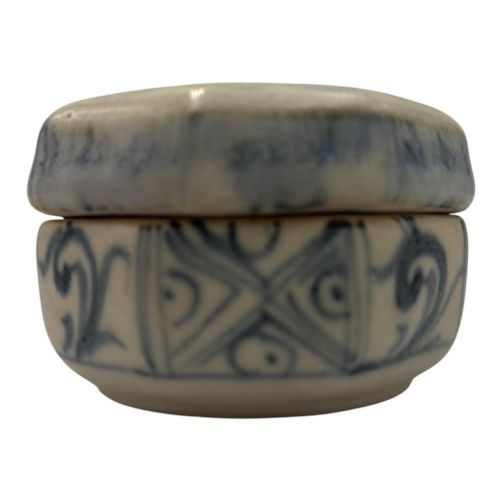


Blue Porcelain Trinket Box
A blue porcelain trinket box brings vibrant colour and fine craftsmanship to a dressing table, offering a secure home for small valuables.
Blue Porcelain Trinket Box
A blue porcelain trinket box encompasses small lidded vessels designed for jewellery, pins, and cosmetics, ranging from nineteenth-century French revival caskets to 1930s Art Deco powder bowls.
The pieces appearing on this page span several distinct eras, including eighteenth-century porcelain with gold raised detailing, nineteenth-century Limoges and Sevres pieces with ormolu mounts, and twentieth-century ceramic powder jars.
Buyers encounter various forms such as round boxes, oval pill boxes, boat-shaped dishes, and half-doll flapper girl powder boxes originating from France, Austria, China, and Japan.
Materials and construction
These items combine ceramic bodies and cobalt or painted blue glazes with metal mounts made from gilt bronze, ormolu, or gilt metal.
Decoration often includes hand-painted enamel details, gold leaf application, and raised gold work fired onto the porcelain surface before mounting in metal frames.
Blue Porcelain Trinket Box Retail Price Guide 2026
Typical asking prices for blue porcelain trinket box among the pieces listed under this phrase on Sellingantiques today, from the lower quarter to the upper quarter. They describe what is for sale here now, not the wider market.
Half-doll powder boxes allowed stylish 1930s dressing tables to conceal face powder beneath the skirts of ceramic ladies.
Assessing quality and execution
Quality rests on the crispness of the porcelain moulding, the depth and vibrancy of the blue glaze, and the precision of any hand-painted enamel or gilt detailing.
The finesse of the metalwork mounts, whether cast ormolu or gilt bronze, distinguishes standard production items from finer collaborative pieces involving ceramic studios and metalworkers.
Limoges·Sevres
The Blue Porcelain Trinket Box Glossary
- Ormolu
- Gilded bronze mounts applied to furniture, clocks, and porcelain vessels. This technique was widely utilised in nineteenth-century French workshops.
- Famille Verte
- A Chinese porcelain palette dominated by green enamel over a white or coloured ground. It frequently appears alongside blue ground decoration on nineteenth-century pieces.
- Imari
- A style of Japanese porcelain featuring underglaze blue and overglaze iron red, gold, and other colours. Items in this style were exported widely to Europe.
- Sevres
- A famous French porcelain manufactory producing high-status decorative items. Pieces bearing this name often feature rich blue glazes and elaborate gilt bronze mounts.
- Limoges
- A French city renowned for its porcelain production from the eighteenth century onward. Local factories produced numerous lidded dishes and trinket boxes.
Blue Porcelain Trinket Box: Frequently Asked Questions
How do I date a blue porcelain trinket box?
Dating relies on stylistic markers such as the heavy mounts of nineteenth-century French revival pieces versus the stylised figures of 1930s Art Deco powder jars.
Examining the glaze, base marks, and metal casting techniques provides further clues to the exact period of manufacture.
Were these boxes always used for jewellery?
While many served to store rings and small precious items, a significant portion functioned as powder boxes, pill containers, or desk accessories.
Powder jars and boxes were standard dressing table items in the early twentieth century for holding loose cosmetic powder.
How should I clean my porcelain box?
Dust gently with a soft, dry brush to protect delicate painted details, enamel work, and gold leaf. Avoid submerging metal-mounted pieces in water, as moisture can damage the adhesive securing the porcelain to the ormolu frame.
What is the difference between ormolu and gilt bronze?
Ormolu refers specifically to high-fineness gold applied to a bronze object using a mercury amalgamation process common in eighteenth and nineteenth-century France. Gilt bronze is a broader term for bronze treated with any gold-colouring method.
Are Japanese Imari boxes common?
Japanese Imari pieces appear occasionally alongside European porcelain, typically distinguished by distinct red and blue palettes and intricate patterns.
These export wares reflect the nineteenth-century European appetite for East Asian decorative arts.