

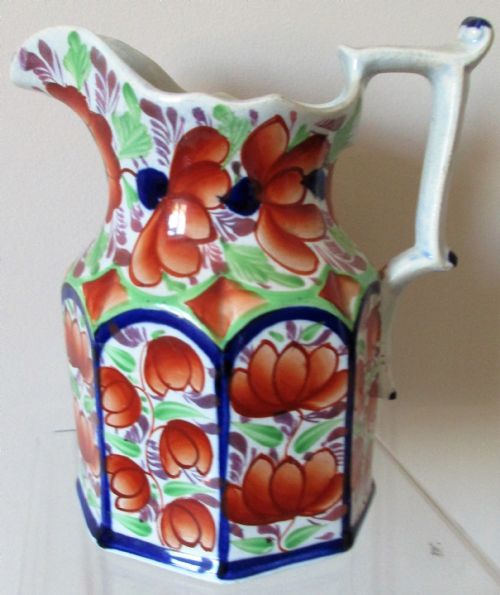


Blue Porcelain Milk Jug
A blue porcelain milk jug brings eighteenth-century tableware into daily use, offering hand-painted detail and classic forms.
Blue Porcelain Milk Jug
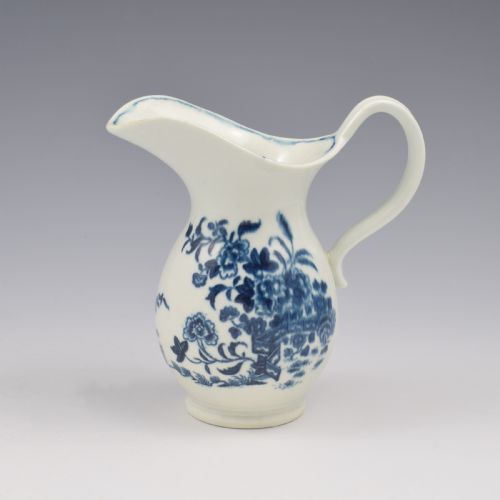
A blue porcelain milk jug is a small ceramic vessel designed for serving milk or cream at the tea table, appearing in forms such as sparrow beak jugs and water ewers. These pieces span the eighteenth century and the nineteenth century, including Georgian and Victorian periods.
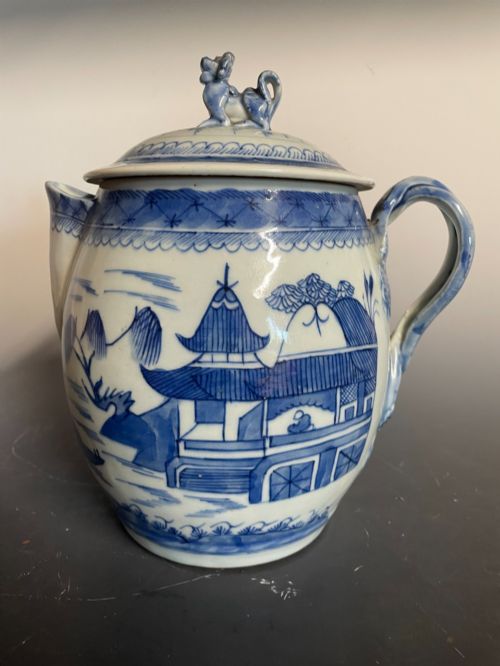
The versions most commonly met on this page range from early English soft-paste porcelain to Chinese export porcelain and later earthenware. Styles encompass Chinese export, Georgian, and Victorian designs, alongside specific patterns like the Fisherman pattern and the Gwent pattern.
Makers and factories represented include Dr Wall First Period Worcester, Keeling and Co, Masons, and Royal Davenport. Buyers will find both miniature pieces and standard tableware items intended for functional service or display.
Materials and construction
Makers utilised porcelain, soft-paste porcelain, and earthenware as the foundational bodies for these milk jugs. Glaze and enamel glaze were then applied to seal the ceramic and provide a smooth surface for decoration.
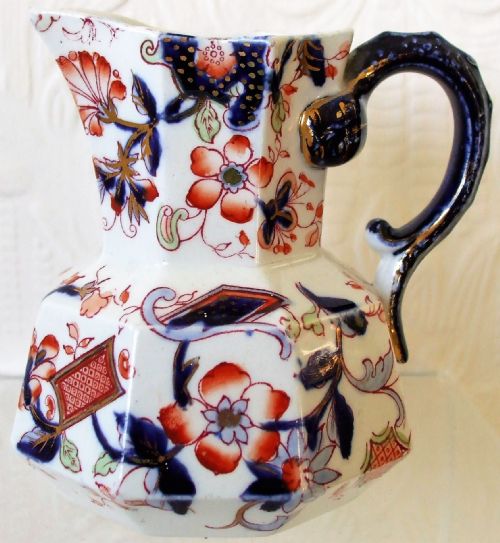
Decoration often involved underglaze blue painting, supplemented by gold leaf and gilding on select pieces. Artisans shaped these vessels into specialised forms, including the Hydra shape and sparrow beak profiles.
Blue Porcelain Milk Jug Retail Price Guide 2026
Typical asking prices for blue porcelain milk jug among the pieces listed under this phrase on Sellingantiques today, from the lower quarter to the upper quarter. They describe what is for sale here now, not the wider market.
Judging quality in milk jugs
Quality rests upon the crispness of the moulded form and the precision of the hand-painted blue decoration. Early soft-paste porcelain bodies exhibit a distinct translucency and weight that differs from later earthenware production.
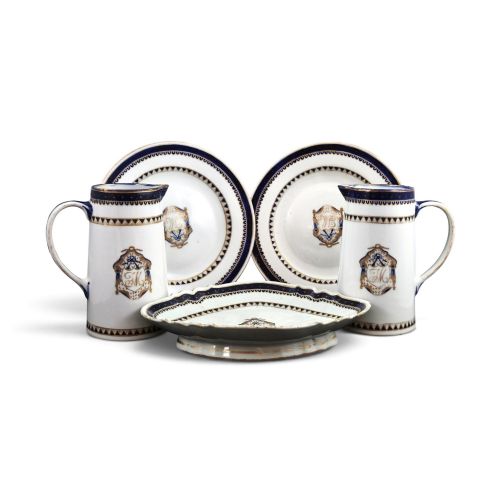
The application of gold leaf and gilding elevates certain examples, showing finer detail in motifs such as parrots pecking fruit or armorial monograms. Well-preserved glaze surfaces without heavy wear distinguish the finest survivals from standard domestic wares.
Keeling and Co·Masons·Royal Davenport
The Blue Porcelain Milk Jug Glossary
- Sparrow beak jug
- A small eighteenth-century cream or milk jug featuring a pinched spout resembling a bird's beak. This form is particularly associated with First Period Worcester porcelain.
- Soft-paste porcelain
- An artificial porcelain compound fired at lower temperatures than hard-paste porcelain. It produces a warm, slightly creamy glaze appearance common in early English factories.
- Hydra jug
- A vessel featuring a serpent-handled design inspired by classical antiquity. The shape was adopted by several nineteenth-century English potteries.
- Chinese export porcelain
- Porcelain manufactured in China specifically for the Western market. These pieces often combined traditional Chinese craftsmanship with European monograms or shapes.
Blue Porcelain Milk Jug: Frequently Asked Questions
What is a sparrow beak jug?
A sparrow beak jug is a small eighteenth-century cream or milk container characterised by a distinct pinched spout. The shape allowed for precise pouring into tea cups.
These jugs are frequently found in early English porcelain productions, particularly associated with Worcester factories from the period.
How do I date a blue jug?
Dating relies on identifying the ceramic body, glaze characteristics, and stylistic markers such as the Georgian or Victorian aesthetic. Soft-paste porcelain and specific factory marks point towards the eighteenth century.
Later nineteenth-century examples often utilise harder earthenware bodies and distinct transfer-printed or hand-painted patterns like Gaudy Welsh.
Were these jugs used daily?
Milk jugs and creamers formed a standard part of tea sets used for formal and domestic hospitality. Their survival in varied states reflects both active service on the tea table and careful preservation.
Miniature versions suggest specialised table settings or cabinet display rather than heavy everyday service.
What is Chinese export porcelain?
Chinese export porcelain refers to wares made in China during the eighteenth century for export to European markets. These pieces often feature blue underglaze painting adapted to Western tastes and service requirements.
They frequently display specific family monograms or customized heraldic designs commissioned by Western buyers.