



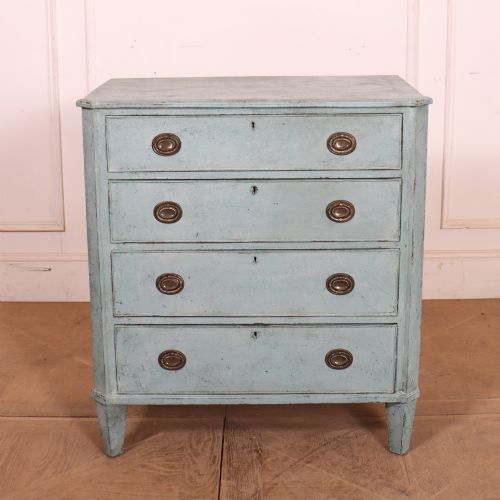


Blue Painted Drawers
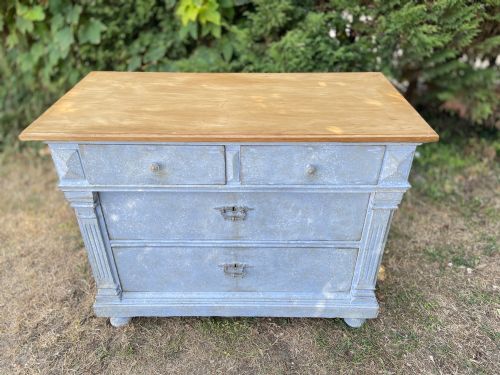
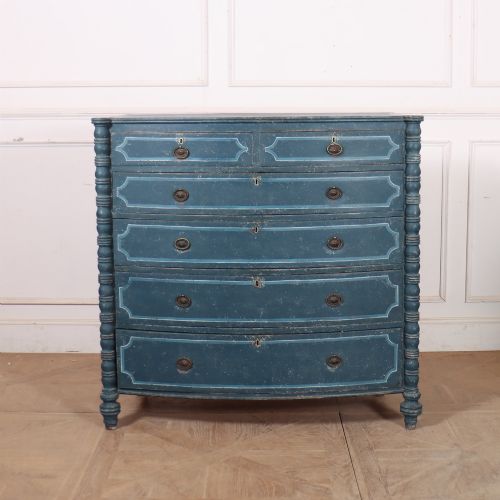
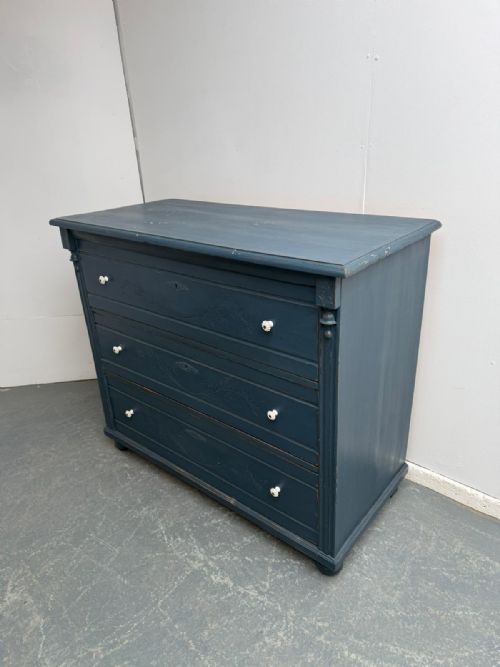
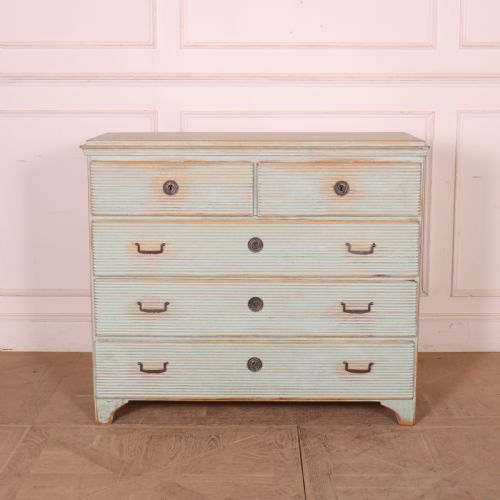
Blue painted drawers bring domestic history into a room through pigment applied to timber.
Blue Painted Drawers
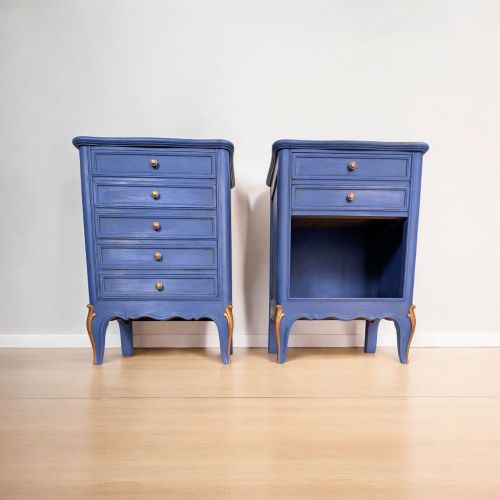
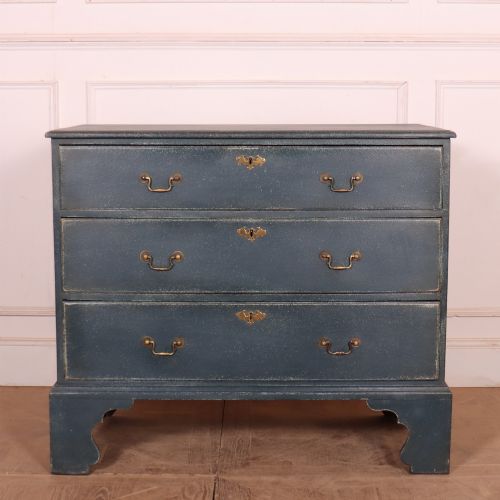
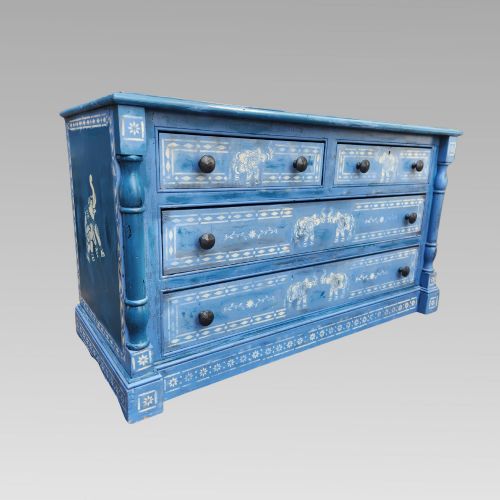
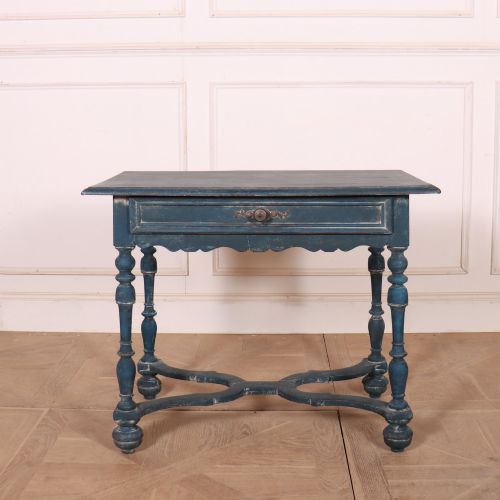
When searching for blue painted drawers, a buyer encounters practical storage items finished in blue pigments, ranging from chests of drawers and commodes to dressers and bedside cabinets.
The pieces appearing most frequently across these listings originate from the eighteenth and nineteenth centuries, taking the form of pine or oak carcases given layers of blue paint.
Origins stretch across English country workshops and continental European centres, taking in Swedish Gustavian, Dutch, and French provincial traditions.
How they were made
Constructed primarily from pine, oak, and general timber, these pieces rely on traditional joinery such as dovetails for drawer construction and pegged frames for carcases.
Surfaces were prepared with primers before receiving coats of blue paint, sometimes built up in layers or finished with decorative techniques like faux marble tops or carved detailing.
Blue Painted Drawers Retail Price Guide 2026
Typical asking prices for blue painted drawers among the pieces listed under this phrase on Sellingantiques today, from the lower quarter to the upper quarter. They describe what is for sale here now, not the wider market.
A nineteenth-century washstand brings a splash of old blue paint to a quiet corner.
What varies in quality
Quality rests upon the integrity of the original timber structure and the survival state of the painted surface, distinguishing items that retain authentic early finishes from those with later repainting.
Proportion and the subtlety of the blue pigment application also divide standard utility items from finer continental commodes and regional country pieces with sophisticated decorative schemes.
The Blue Painted Drawers Glossary
- Commode
- A low cabinet or chest of drawers, typically continental in origin and dating from the eighteenth or nineteenth century. They often feature serpentine fronts or decorative commode commode hardware.
- Gustavian
- The Swedish neoclassical style spanning the late eighteenth and early nineteenth centuries, characterised by restrained lines and pale or muted painted finishes. It draws inspiration from French Louis XVI design.
- Dresser base
- A lower sideboard component of a kitchen or dining room dresser, equipped with rows of drawers and cupboards beneath a solid timber top. These pieces served practical domestic storage needs.
- Pine
- A softwood commonly utilised for country furniture across Britain and Scandinavia, prized for its receptiveness to painted decoration. It formed the carcase of many utilitarian chests and cupboards.
- Serpentine
- A curved furniture front characterised by a convex centre flanked by concave ends, creating a gentle wave shape. This contour appears frequently on eighteenth-century commodes.
Blue Painted Drawers: Frequently Asked Questions
What periods do these pieces date from?
The pieces span the eighteenth and nineteenth centuries, taking in Georgian, Victorian, and continental European eras.
Craftsmen built them from solid timbers before applying traditional blue paint finishes.
Are the blue painted finishes original?
Many items retain old or original painted surfaces applied decades or centuries ago, while others show historic layers.
Examination of the pigment helps reveal how the surface evolved over time in domestic settings.
Where were these chests and commodes made?
Origins are diverse, including English country workshops, Swedish provincial towns, and Dutch or Austrian centres.
Regional differences appear in the hardware, timber selection, and framing details.
How do I care for a painted wooden surface?
Protect the finish by keeping the piece away from direct sunlight and maintaining stable room humidity.
Dust gently with a dry cloth and avoid harsh chemical cleaners that might soften old paint.