




Blue Mountain Art
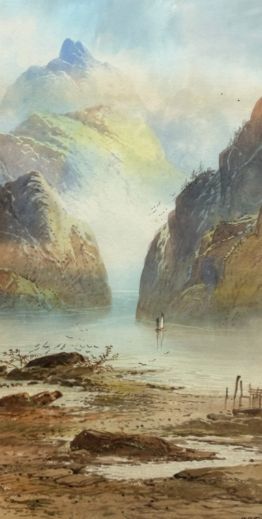
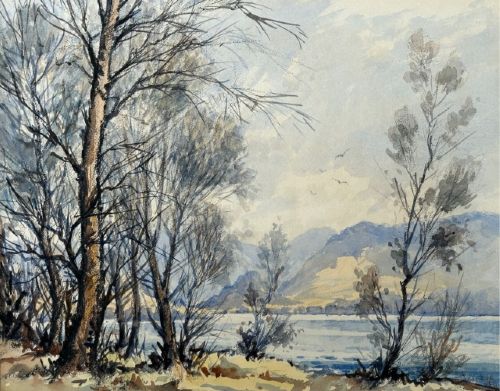
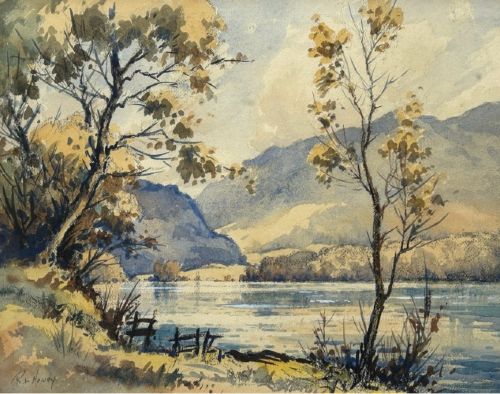
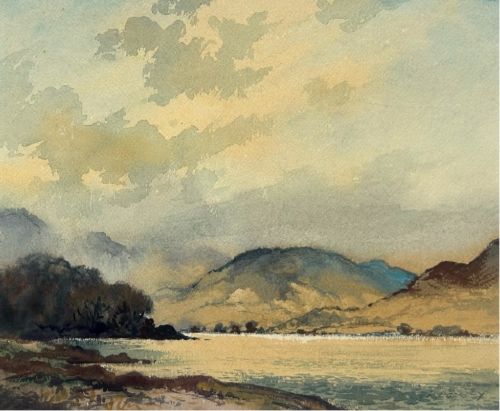
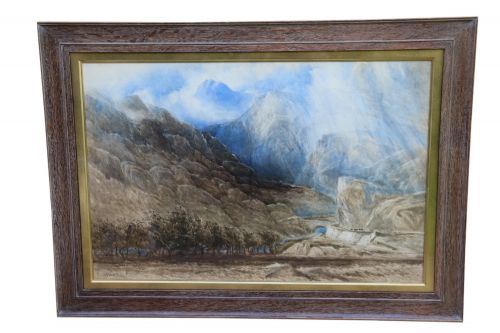
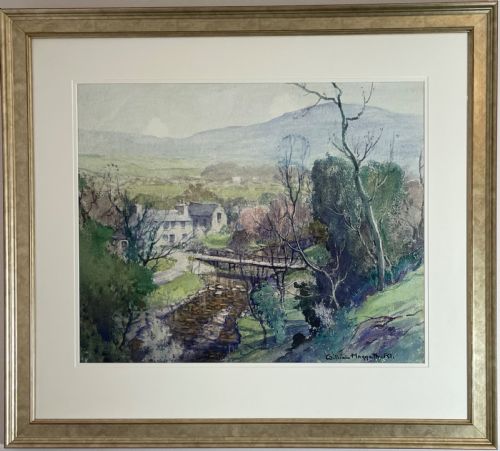
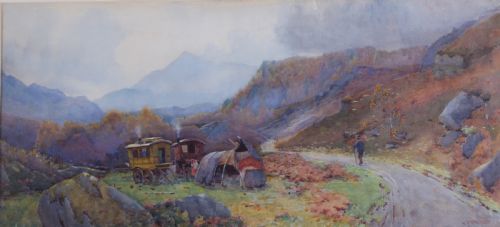
These blue mountain art pieces capture dramatic peaks and valleys through traditional watercolours and oil paintings.
Blue Mountain Art
When you search for blue mountain art, you encounter landscape paintings depicting dramatic peaks, lakesides, and valleys from various periods. These works span the nineteenth century through the mid-twentieth century, capturing British, European, and wider geographical scenes.
The pieces you meet most often on this page are watercolour paintings on paper, alongside oil paintings on canvas. Artists document specific locations such as Scottish lochs, Welsh passes, and the English Lake District with careful observation.
Styles range from Victorian romanticism and traditional British approaches to mid-century British impressionism. Works appear singly or occasionally as pairs and sketch albums.
Materials and methods
Artists create these landscapes using watercolour pigment on paper or oil paint on canvas, frequently employing wood frames to house the finished works. Gouache and ink also appear within the selection, adding opaque highlights or defined outlines to the compositions.
Watercolour pieces rely on fluid washes applied to paper supports, capturing atmospheric light over mountainous terrain. Oil paintings on canvas utilise heavier pigment layers and rich textures to build depth within the depicted scenery.
Artists documented mountain views across Britain and Europe, including Welsh passes, Scottish lochs, Swiss peaks, and Spanish ports.
Variations in quality
Quality rests upon the artist's ability to handle light, atmosphere, and topographical scale within the chosen medium. Stronger works demonstrate confident brushwork and precise control over pigment transparency, particularly in watercolours.
Condition of the paper or canvas surface, along with the preservation of original pigments, separates superior examples from faded or heavily restored pieces. Works bearing clear signatures by established landscape painters command greater attention.
William Henry Earp·Robert Leslie Howey·Henry Martin Pope·John Grenville Fennell·William Hoggatt·C Caldwell·John Syer·YA MING·Thomas Lound·James H Hulse·Hirst Walker RBA·NOEL HARRY LEAVER·SAMUEL TOWERS·Milton Drinkwater·J.D. Walker·Willie Stephenson·John William Gilroy·PERCY LANCASTER·HUBERT SATTLER
The Blue Mountain Art Glossary
- Watercolour painting
- A work created using water-soluble pigments applied to paper. This medium allows for translucent washes that capture shifting weather and light.
- Oil on canvas
- A painting technique using pigments bound in a drying oil applied to a stretched fabric support. This method permits rich textures and deep colour saturation.
- Gouache
- An opaque water-based paint containing pigment mixed with a binding agent and white filler. It provides solid, flat areas of colour and sharp highlights.
- Victorian romanticism
- An artistic movement focusing on emotion, awe of nature, and sublime landscapes. It heavily influences nineteenth-century depictions of rugged mountain terrain.
- Mid-century British school
- A grouping of artists working in Britain during the middle decades of the twentieth century. Their output reflects evolving modernist approaches to traditional landscape subjects.
Blue Mountain Art: Frequently Asked Questions
What is blue mountain art?
These pieces comprise historical paintings and watercolours depicting mountainous landscapes from the nineteenth and twentieth centuries. Artists render peaks, lakes, and valleys using traditional mediums on paper and canvas.
The selection captures specific geographical regions across Britain, Europe, and beyond. Each piece reflects the artistic conventions of its respective period, from Victorian romanticism to mid-century approaches.
How were these landscapes displayed?
Owners typically housed these watercolours and oil paintings in traditional wood frames designed to protect the paper or canvas. Such framing shielded the delicate pigments from dust and physical handling while mounted on walls.
Many works remained in private collections or albums before entering the wider market. Their original presentation often included protective glass for works on paper.
How do I care for a watercolour?
Watercolours require placement away from direct sunlight to prevent the fading of delicate pigments on paper. Maintaining stable indoor humidity levels also protects the paper support from warping or deterioration.
Professional framing with acid-free mounts ensures the paper remains separated from the glass. This simple precaution prevents moisture accumulation and preserves the integrity of the painting.
How do I identify the period?
Dating relies on stylistic markers, framing techniques, and signatures linked to recorded historical artists. Victorian works often feature detailed realism and dramatic atmospheric effects, while mid-century pieces display broader brushwork.
Inscriptions on the reverse of the canvas or paper frequently record titles, locations, and dates. Comparing these details against known artist working spans clarifies the era of creation.