





Blue Guilloche Enamel Pendant
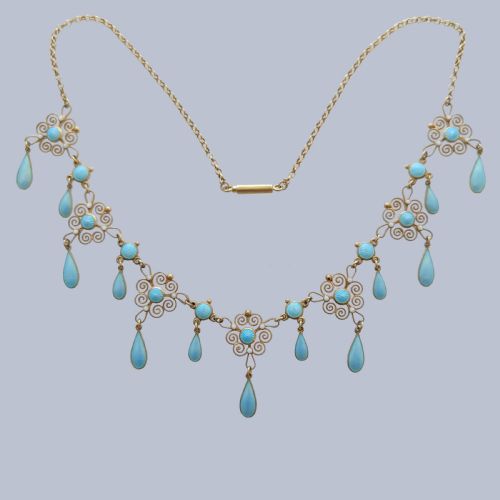
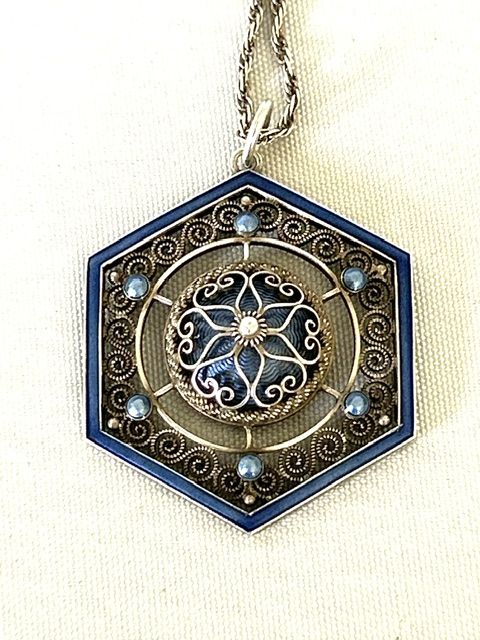
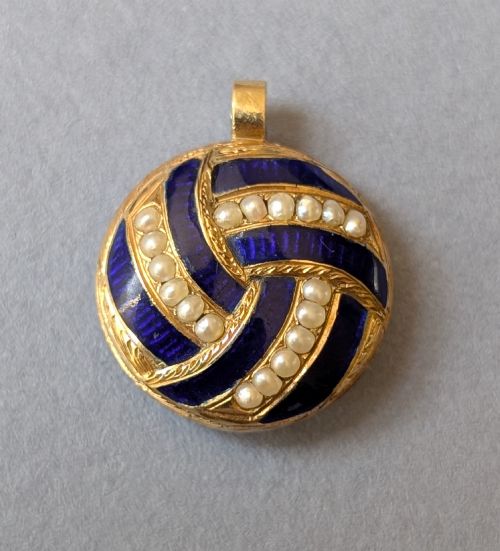
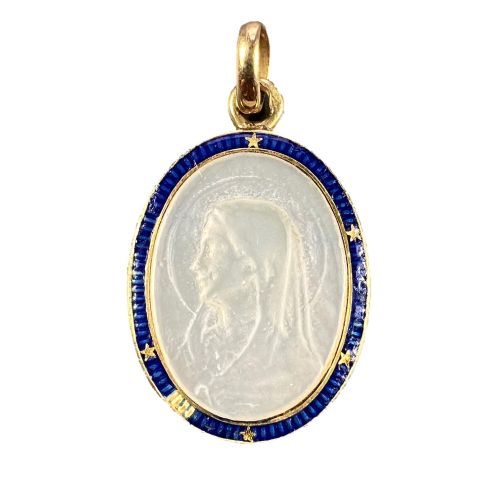
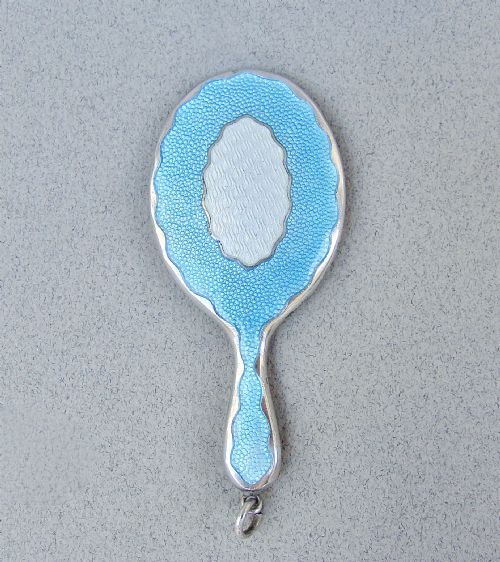
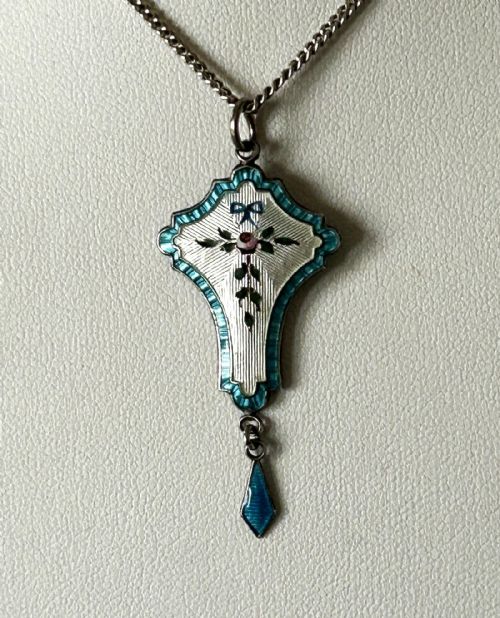
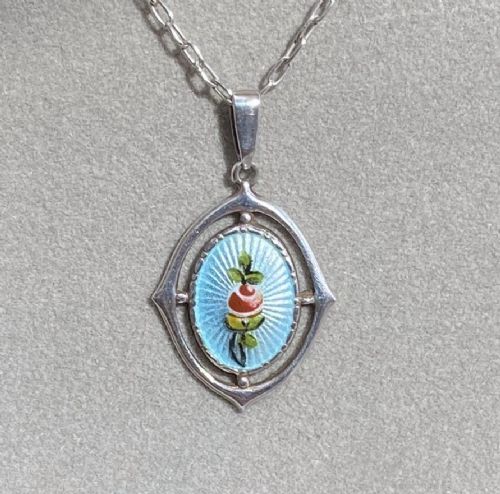
A blue guilloche enamel pendant brings machined geometric patterns beneath translucent blue glass, catching the light in a way painted pieces cannot.
Blue Guilloche Enamel Pendant
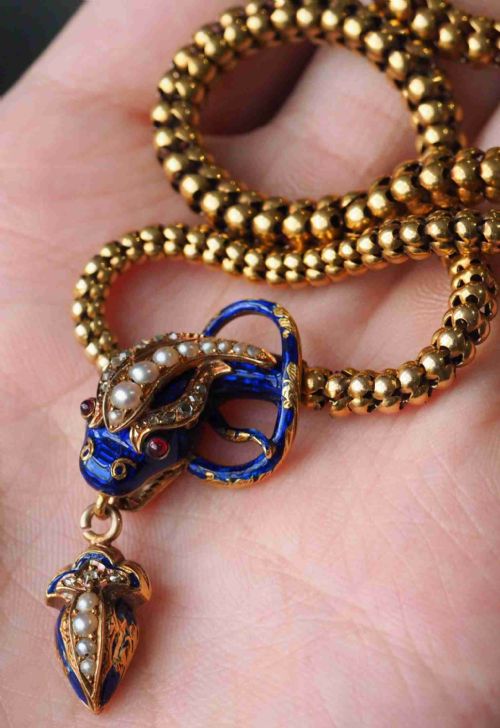
A blue guilloche enamel pendant combines precious metal with patterned engine turning beneath translucent coloured glass. You will most frequently encounter silver and sterling silver examples dating from the Edwardian era and the Art Deco period, alongside occasional Victorian gold pieces.
The objects take various forms including round pendants, heart-shaped lockets, and miniature compacts adapted for wear. Many incorporate subsidiary elements such as pearls, diamonds, or suspended charms.
These items originate from workshops across Britain, Scandinavia, and continental Europe, spanning the eighteenth century through to the nineteen-thirties. The surviving pieces reflect both mass production in silver and bespoke luxury in high carat gold.
Materials and technique
Craftsmen used a rose engine lathe to cut precise, repeating geometric patterns into a metal base, usually silver or gold. This mechanical engraving created a textured surface designed to reflect light through subsequent layers of glass.
Vitreous enamel, composed of powdered glass mixed with metal oxides for colour, was applied in wet layers and fired in a kiln. The translucent blue enamel allowed the underlying machine-turned pattern to remain visible through the glassy surface.
Blue Guilloche Enamel Pendant Retail Price Guide 2026
Typical asking prices for blue guilloche enamel pendant among the pieces listed under this phrase on Sellingantiques today, from the lower quarter to the upper quarter. They describe what is for sale here now, not the wider market.
One tiny eighteenth-century box survives as a gold and enamelled vinaigrette, ready to hold sweet-smelling sponges for past centuries.
Distinctions in quality
The crispness of the underlying engine-turned pattern dictates much of the visual depth, as deeper, sharper cuts catch the light more effectively than worn or shallow markings. The clarity and even thickness of the vitreous enamel layer further separate standard production from superior work.
Materials elevate certain pieces, moving from silver frames to fifteen carat and eighteen carat gold settings, sometimes enhanced with diamonds or pearls. Maker attribution also plays a role, with documented Scandinavian and British workshops achieving greater prominence than unmarked items.
Marius Hammer·Henry Williamson·Henry Matthews·Henry Perkins and Sons·Charles Horner
The Blue Guilloche Enamel Pendant Glossary
- Guilloche
- A decorative technique where a mechanical lathe engraves a precise, repetitive pattern into metal. This forms the shimmering base beneath translucent enamel layers.
- Vitreous enamel
- Glass powder fused to a metal surface through high-temperature kiln firing. It provides a durable, glossy coloured coating.
- Pendant
- An ornament suspended from a chain or cord worn around the neck. These range from simple charms to opening lockets.
- Sterling silver
- An alloy consisting of ninety-two point five percent silver and seven point five percent other metals, typically copper. It provides structural strength for jewellery mounts.
- Art Deco
- A design style spanning the nineteen-twenties and nineteen-thirties characterised by sleek geometric shapes and streamlined forms. It heavily influenced enamel compacts and pendants of the era.
Blue Guilloche Enamel Pendant: Frequently Asked Questions
How do I care for a blue guilloche enamel pendant?
Vitreous enamel is essentially glass and requires gentle handling to prevent chipping or scratching against hard surfaces. Clean the piece using a soft cloth and warm soapy water, avoiding harsh chemical dips or ultrasonic cleaners that can damage the metal settings.
Store pendants individually in lined boxes or soft pouches to protect the delicate glass surface from rubbing against other jewellery. Remove the necklace before swimming, showering, or engaging in physical work.
What periods do these pendants come from?
The pieces span from the late eighteenth century through the Victorian and Edwardian eras into the Art Deco period of the nineteen-thirties. Victorian examples frequently feature high carat yellow gold and mourning motifs.
Edwardian and Art Deco pieces lean towards silver mountings paired with vibrant blue translucent enamel over engine-turned geometric backgrounds. Each era employs distinct weight and mounting styles that help identify the date of manufacture.
Are these pieces made of solid gold or silver?
The listings show a split between sterling silver and high carat gold, including fifteen carat and eighteen carat yellow gold. Silver pieces frequently date from the Edwardian and Art Deco periods, often bearing Birmingham assay marks.
Gold pieces appear more frequently in Victorian and continental European items, sometimes incorporating pearls and diamonds alongside the enamel work. Hallmarks stamped on the jump rings or bezels generally confirm the metal purity.
Can I open these pendants to store photographs?
Certain forms function as lockets or miniature compacts designed to open on a hinge, while others are solid face pendants. Locket versions typically retain interior frames or glass panels intended for small keepsakes or portraits.
Inspect the hinge and clasp mechanism carefully before attempting to open an antique locket to ensure the metal has not seized. Solid drop pendants and non-opening charms remain sealed and serve purely as decorative ornaments.