


Blue Guilloche Case
A blue guilloche case brings intricate engine-turned metalwork beneath translucent enamel, offering a tactile pocket piece from the early twentieth century.
Blue Guilloche Case
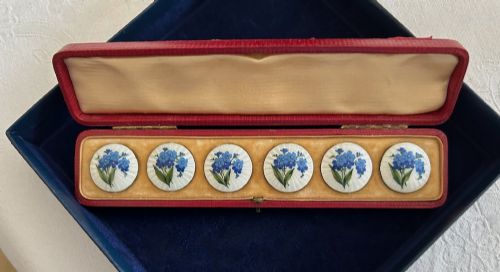
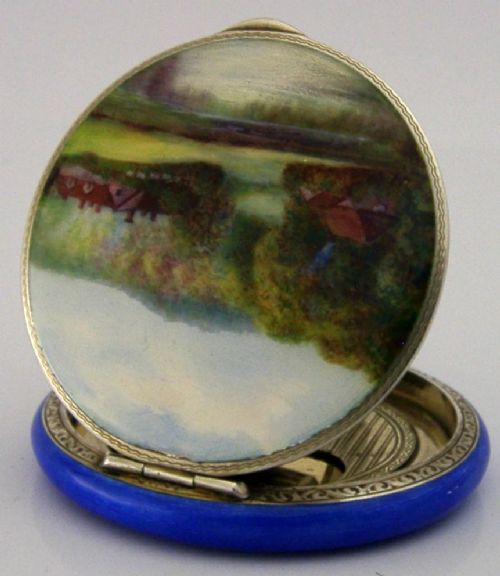
When you search for a blue guilloche case, you encounter small personal accessories intended for daily use in the pocket, bag, or dressing room. These items span various forms including powder compacts, card or cheroot cases, cigarette cases, and boudoir timepieces.
The pieces on this page originate predominantly from the Edwardian period, the 1910s, 1920s, 1930s, and 1940s, with occasional examples reaching back to the nineteenth century. Most surviving examples display the distinct geometric styling of the Art Deco era.
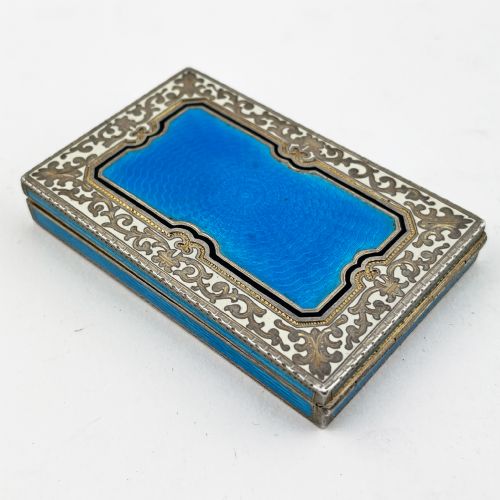
The version you are most likely to meet on this page is a sterling silver or silver-gilt compact or cigarette case featuring machined patterning beneath blue enamel. These practical items combine secure closures with decorative metal surfaces designed to catch the light.
What varies in quality
The crispness of the underlying engine-turned engraving dictates the initial visual depth of the piece. Superior examples exhibit precise, uniform geometric lines that interact sharply with the transparent enamel layer above.
The condition and purity of the vitreous enamel separate standard production items from finer workshop output. Well-preserved pieces maintain a smooth, uninterrupted glossy surface without thermal stress marks or extensive restoration in the coloured glass layers.
Some cases were built solely to hold a few cheroots, proving that Edwardian smokers demanded elegance even for a quick five-minute puff.
Henry Matthews·Henry Perkins And Sons·A E Poston And Co Ltd·William Neale And Son Ltd·Robert Chandler
The Blue Guilloche Case Glossary
- Guilloche
- A decorative technique where a mechanical lathe engraves precise geometric patterns into metal. This patterned metal serves as the textured base beneath translucent enamel.
- Vitreous Enamel
- A material made by fusing powdered glass to a metal substrate at high temperature. It provides the smooth, coloured glossy coating seen on these cases.
- Sterling Silver
- An alloy consisting of silver and other metals, typically copper, standardly containing a high purity proportion. It forms the primary precious metal body for many antique compacts and cigarette cases.
- Silver-Gilt
- Silver that has been coated with a thin layer of gold on its surface. This treatment adds a warm metallic glow to the interior or exterior of the case.
- Powder Compact
- A small portable container fitted with a mirror and designed to hold cosmetic face powder. These accessories often feature elaborate enamel lids.
Blue Guilloche Case: Frequently Asked Questions
What is a blue guilloche case?
A blue guilloche case is a metal accessory decorated with mechanical engraving beneath a translucent blue enamel coating. These items include powder compacts, cigarette holders, and card cases.
They emerged strongly during the Edwardian and Art Deco periods as functional personal items finished with decorative metalwork.
How do I care for silver and enamel?
Store these pieces away from direct sunlight and extreme temperature shifts to protect the glass enamel from stress. Handle them carefully to prevent surface impacts.
Clean the silver portions gently with an appropriate soft cloth, avoiding harsh chemical dips that can seep beneath the enamel edges.
How are Art Deco cases different?
Art Deco pieces display sharp geometric lines, streamlined forms, and symmetrical sunburst patterns in the engine-turned metalwork. They favour chrome, gilt metal, and stark colour contrasts.
Earlier Edwardian examples lean towards softer floral motifs and traditional sterling silver constructions.
What were these cases used for?
Owners carried them daily for personal grooming, holding cosmetics, cigarettes, visiting cards, or cheroots. Boudoir timepieces sat upon dressing tables to tell the time.
Each item combined utility with fashionable materials suited to early twentieth century social habits.