


Blue Gemstone Target Ring
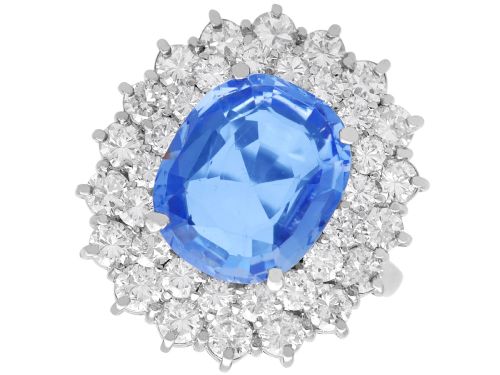
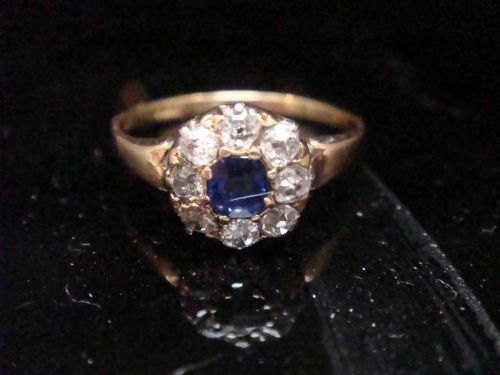
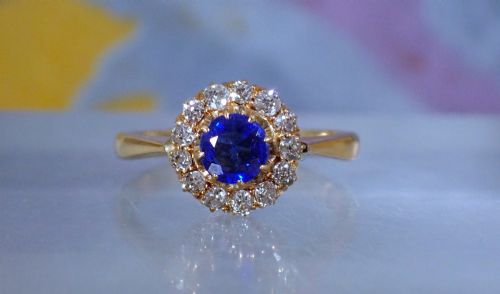
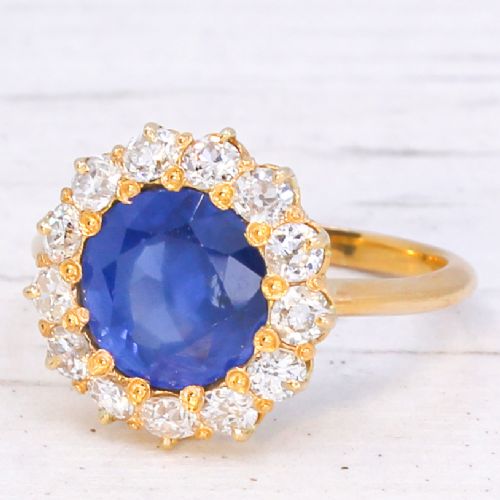
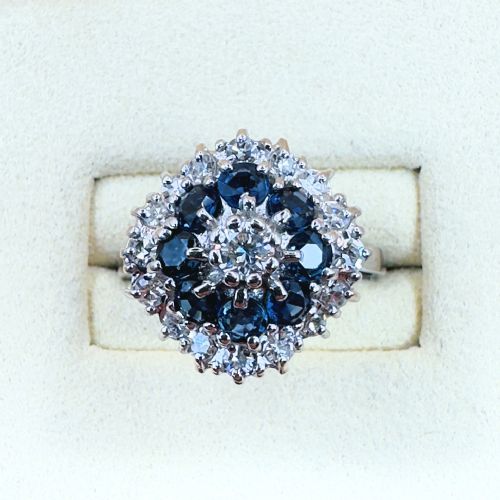
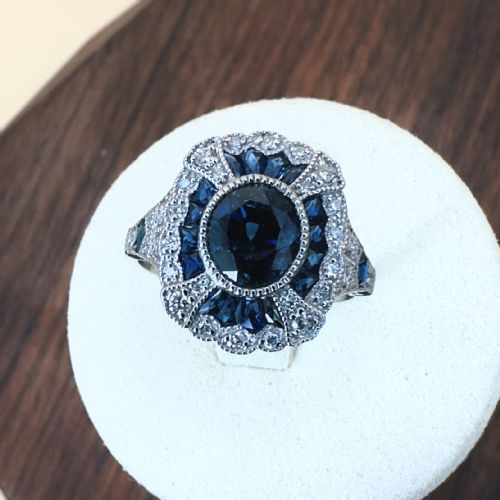
A blue gemstone target ring draws the eye with its concentric arrangement of diamonds and sapphires, offering a striking geometric geometry.
Blue Gemstone Target Ring
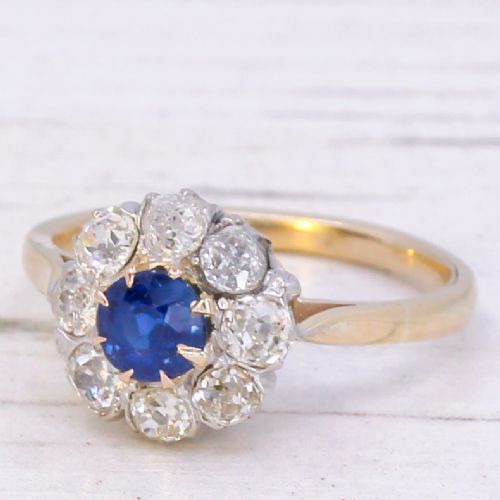
A blue gemstone target ring focuses attention on a central sapphire or aquamarine surrounded by concentric rows of diamonds, creating a distinct circular motif often termed a halo or cluster. These pieces emerge across the Victorian, Edwardian, and Art Deco periods, extending through the 1930s, 1940s, 1950s, and 1960s.
The most frequent form on this page pairs a deep blue sapphire with old cut diamonds in an 18ct gold or platinum setting. Alongside traditional sapphires, occasional variants feature aquamarine or turquoise set into symmetrical daisy or clover patterns.
How they were made
Goldsmiths utilised platinum and 18ct gold, often combining yellow gold shanks with platinum topped settings to showcase the stones against a bright white metal. This dual metal technique is particularly prominent in pieces from the Edwardian and Art Deco eras.
Gemstones are shaped using traditional cutting methods, including old cut, rose cut, and cabochon techniques for the central sapphires and aquamarines. Pave settings and close-set claws secure the surrounding diamonds in precise geometric arrangements.
Materials span platinum, 18ct yellow gold, and 18ct white gold, set with diamond, sapphire, aquamarine, and turquoise.
What varies in quality
The distinction between tiers rests upon the clarity and origin of the central sapphire, alongside the weight and facet crispness of the surrounding diamonds. Natural unheated Burmese stones command greater attention than synthetic alternatives.
Handwork precision in the platinum settings defines the finer examples, where millgraining and metalwork remain sharp and uniform under magnification. Proportion between the central stone and the outer border determines the visual harmony of the piece.
The Blue Gemstone Target Ring Glossary
- Target ring
- A ring featuring concentric circles of gemstones surrounding a central stone, creating a bullseye visual effect.
- Old cut diamond
- A hand-faceted diamond cut popular before modern brilliant cuts, characterised by a smaller table and high crown.
- Cabochon
- A gemstone shaped and polished with a smooth convex surface rather than faceted.
- Millgrain
- A decorative border of tiny raised metal beads along the edge of a setting.
- Cluster ring
- A ring design where a central stone is surrounded by a group of smaller stones.
Blue Gemstone Target Ring: Frequently Asked Questions
How do I date a target ring?
Dating relies on the structural materials and cutting styles evident in the mounting. Edwardian examples often employ platinum-topped yellow gold with delicate pierced work.
Later Art Deco and mid-century pieces favour clean geometric lines, heavier platinum usage, and different diamond facet proportions.
Are all the sapphires natural?
Most stones seen are natural, though certain Edwardian examples incorporate synthetic sapphires which were common in high-end manufacturing of that decade.
Descriptions specify whether stones are unheated or carry specific geographic origins like Burma.
Can these rings be resized easily?
Resizing depends on the band material and whether the shoulders feature intricate engraving or channel-set stones. Solid 18ct gold and platinum shanks generally allow a jeweller to adjust the circumference without disturbing the target head.
Consult a specialist goldsmith to ensure the structural integrity of the outer halo remains intact during alteration.
What is the difference between a halo and a target ring?
While both styles encircle a central gemstone with smaller diamonds, a target ring specifically creates distinct concentric rings resembling a bullseye.
This precise geometric layering is a hallmark of Art Deco design, whereas standard halo clusters may take floral or daisy shapes.