

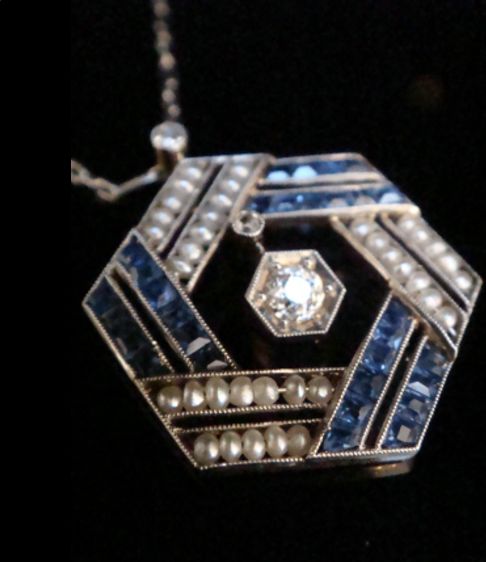
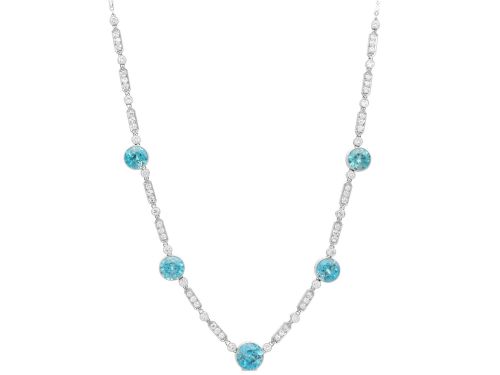


Blue Gemstone Platinum Pendant
A blue gemstone platinum pendant offers a cool, brilliant presence at the collar, combining crisp white metal with deep sapphires or pale aquamarines.
Blue Gemstone Platinum Pendant
A blue gemstone platinum pendant brings together durable white precious metal and striking blue stones, spanning periods from the Victorian era through Edwardian designs and the 1920 and 1930 Art Deco styles up to the 1950s. The selection on this page centres on pendants, necklaces, and convertible brooch pendants that showcase large central gems.
Buyers will encounter substantial aquamarines alongside deep sapphires, often accented with sparkling diamonds in varied drop and cluster formations. These pieces range from delicate Edwardian work to bold mid-century geometric arrangements set primarily in heavy platinum.
How they were made
Makers utilised dense platinum to construct fine, strong settings that could securely hold large stones with minimal visible metal. This strong white metal allowed for intricate pierced work and delicate claws that maximised light entry into the central aquamarines and sapphires.
Diamonds were integrated as secondary accent stones around the main blue gems, complementing the icy tone of the platinum framework. Some hybrid pieces combined platinum settings with 18ct yellow gold components to anchor the overall necklace structure.
Blue Gemstone Platinum Pendant Retail Price Guide 2026
Typical asking prices for blue gemstone platinum pendant among the pieces listed under this phrase on Sellingantiques today, from the lower quarter to the upper quarter. They describe what is for sale here now, not the wider market.
One exceptional antique brooch pendant carries an aquamarine weighing over forty-two carats, turning a simple neckpiece into a formidable wearable paperweight.
What varies in quality
The distinction between tiers rests upon the scale and clarity of the central blue gemstone, particularly in massive aquamarines and Ceylon sapphires. Superior examples feature stones with exceptional transparency and depth of colour that command the entire composition.
Execution of the surrounding diamond work and the fineness of the platinum smithing further separate standard items from exceptional survivals. The balance between the weight of the primary blue gem and the delicacy of the metal mount dictates the overall visual success.
The Blue Gemstone Platinum Pendant Glossary
- Platinum
- A dense, naturally white precious metal prized for its strength and ability to hold secure settings for precious stones. It remains a defining material for fine twentieth-century jewellery.
- Aquamarine
- A pale blue to light green variety of beryl frequently cut into large oval or rectangular steps. It appears prominently in twentieth-century pendant designs.
- Ceylon Sapphire
- A sapphire originating from Sri Lanka, historically noted for a vibrant and luminous blue shade. These stones form the focal point of several antique pendants.
- Art Deco
- A design style of the 1920 and 1930 periods characterised by geometric precision and clean lines. Pieces from this era often feature symmetrical gemstone arrangements.
- Cluster
- An arrangement of smaller stones gathered tightly around a larger central gem. This setting style maximises overall sparkle at the neckline.
Blue Gemstone Platinum Pendant: Frequently Asked Questions
What periods do these pendants come from?
The pieces span the Victorian era, the Edwardian period, the 1920 and 1930 Art Deco movements, and mid-century designs from around 1950.
Each era brings distinct mounting styles, moving from organic motifs to strict geometric layouts.
How do I care for platinum and aquamarine?
Platinum is exceptionally durable and resists tarnishing, requiring only occasional gentle cleaning with warm soapy water to maintain its lustre.
Aquamarines are hard stones but benefit from avoiding harsh chemical exposure and violent impacts against hard surfaces.
Are these pieces strictly pendants?
The selection includes dedicated pendant necklaces alongside versatile hybrid pieces that function as both brooches and pendants.
Some items arrive attached to complete necklaces or form part of matching drop earring sets.
What metals are used besides platinum?
While platinum forms the primary white metal framework for the stone settings, some examples incorporate 18ct yellow gold within the broader necklace structure.
This combination was utilised to provide structural warmth and secure chain linkages.