




Blue Gem Cluster Ring
A blue gem cluster ring offers a brilliant central stone framed by sparkling diamonds, drawing the eye with rich colour and timeless form.
Blue Gem Cluster Ring
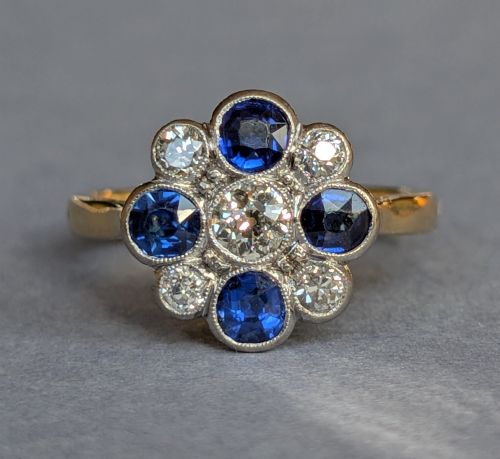
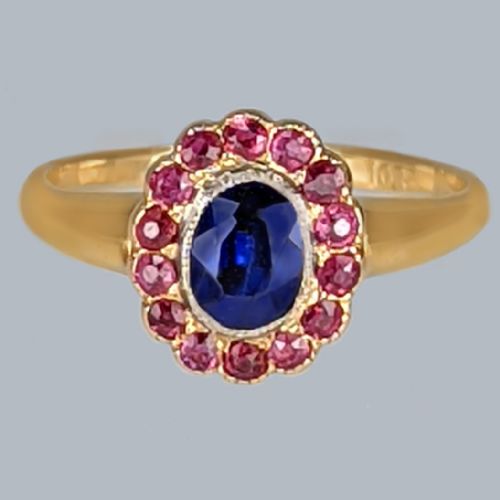
A blue gem cluster ring brings together a central sapphire or other blue stone surrounded by a border of smaller diamonds or gems. These pieces span several eras, including Victorian, Edwardian, Art Deco, and mid-century designs.
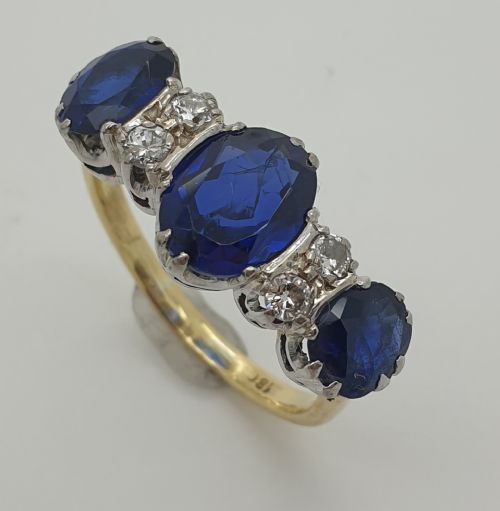
Most examples found here utilise 18ct gold, yellow gold, or platinum as the primary metal setting. The central stones range from deep natural sapphires to synthetic sapphires and basalts, often shaped in oval, pear, or emerald cuts.
Dress rings and engagement rings make up the main forms within this selection. Buyers will encounter both authentic period pieces and items created in distinct historical styles.
Materials and Construction
Goldsmiths constructed these rings using durable precious metals such as platinum and 18ct gold to securely hold the cluster formation. Gemstones are meticulously set into these metal frames to maximise light exposure and visual impact.
Lapidaries shaped the central blue gems into varied cuts, including oval, pear, and emerald profiles, whilst surrounding them with brilliant or rose-cut diamonds. Each stone is positioned to enhance the overall symmetry and brilliance of the cluster.
Judging Quality and Craftsmanship
The standard of a cluster ring depends heavily on the clarity and depth of colour in the central blue gem, alongside the matching quality of the surrounding diamonds. Superior examples display harmonious proportions between the centre stone and its border.
Metalwork refinement dictates the distinction between standard and exceptional pieces, particularly in the delicacy of the claws and the integrity of the setting. Well-preserved mountings maintain their structural strength and secure every stone firmly in place.
The Blue Gem Cluster Ring Glossary
- Cluster ring
- A ring featuring a prominent central gemstone encircled by a group of smaller stones, typically diamonds. This arrangement maximises surface sparkle and presence on the hand.
- Basaltic sapphire
- A sapphire originating from alkali basalt terrains, often noted for deep, saturated blue tones. These stones carry distinct geological characteristics.
- Platinum
- A dense, durable, and naturally white precious metal used extensively in fine jewellery settings. It provides secure support for delicate gemstone arrangements without needing rhodium plating.
- Rose-cut diamond
- An antique diamond cut featuring a flat base and a faceted dome comprising a number of triangles. This cut produces a softer, broader reflection of light compared to modern brilliant cuts.
- Synthetic sapphire
- A laboratory-created gemstone sharing the identical chemical and physical properties of a natural sapphire. These materials gained widespread use in jewellery during specific periods.
Blue Gem Cluster Ring: Frequently Asked Questions
What defines a cluster ring?
A cluster ring groups multiple smaller stones tightly around a larger central gem to create a unified focal point. This design maximises visual impact and perceived stone size.
The style became popular across various historical periods, adapting its shape from floral motifs to geometric Art Deco patterns.
How do I care for my ring?
Precious metals and gemstones require gentle cleaning with warm water, mild soap, and a soft brush. Regular inspection of the settings helps prevent stone loss.
Storing the piece separately protects the softer gems and metal from scratching against harder items.
Are synthetic sapphires genuine?
Synthetic sapphires possess the exact physical, optical, and chemical composition as stones mined from the earth. They are genuine sapphires created in a laboratory rather than extracted from a deposit.
Jewellery makers utilised synthetic stones extensively in certain historical eras for their clarity and consistent colour.
What periods do these rings span?
The pieces available here cross several decades and eras, ranging from Victorian and Edwardian examples to Art Deco and mid-century creations. Each period brings distinct metal choices and cutting styles.
Design characteristics often reflect the prevailing aesthetic tastes of their specific decade of manufacture.