





Blue Flower Oil Painting
A blue flower oil painting brings botanical colour and interior calm to a room, drawn from periods spanning the eighteenth century to the mid-century.
Blue Flower Oil Painting
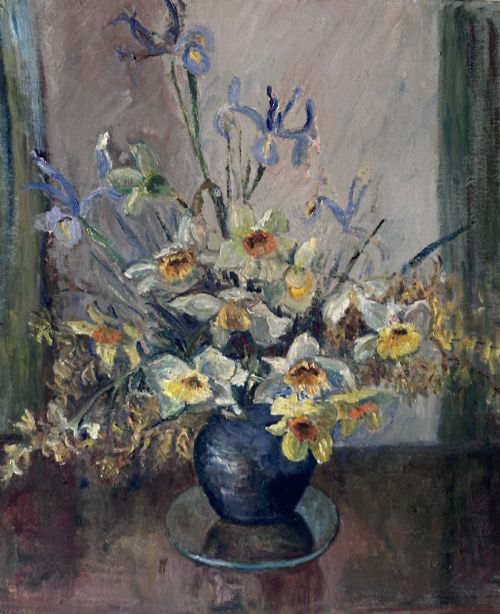
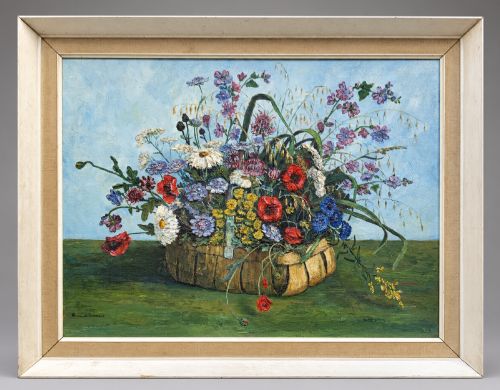
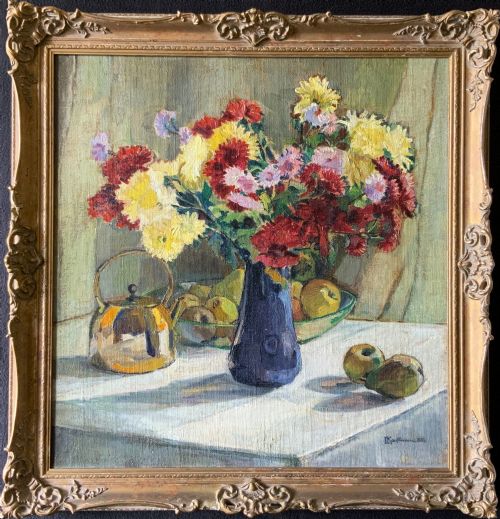
A blue flower oil painting captures floral subjects rendered in oil paint on canvas or board, often depicting vases of summer flowers, water lilies, or garden interiors. These works range from seventeenth-century portraits holding flowers to vibrant twentieth-century still life studies and impressionist garden scenes.
Buyers meeting this search phrase most frequently encounter twentieth-century examples, particularly pieces from the nineteen-thirties and nineteen-fifties executed in impressionist or art deco styles. These works typically feature domestic floral arrangements, such as anemones, morning glory, or summer blooms positioned on windowsills and within interiors.
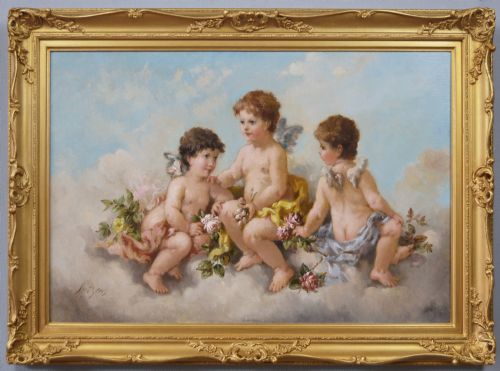
The selection also includes earlier portraiture and genre scenes where blue flowers serve as a symbolic token or decorative attribute. Works span British, French, and Scottish origins, reflecting diverse regional approaches to botanical subjects across centuries.
How they were made
These works rely primarily on oil paint applied to stretched canvas or wooden board, utilising the rich pigment load and slow-drying qualities characteristic of the medium. Artists built up texture and depth through layered brushwork, capturing the play of light upon petals and foliage.
Many pieces incorporate decorative wooden framing, frequently finished in gilt or giltwood to complement the painted composition. The technical execution varies from pointillist dotting and luminist effects to fluid impressionist strokes and precise seventeenth-century portraiture techniques.
Blue Flower Oil Painting Retail Price Guide 2026
Typical asking prices for blue flower oil painting among the pieces listed under this phrase on Sellingantiques today, from the lower quarter to the upper quarter. They describe what is for sale here now, not the wider market.
Listings feature works executed on canvas and wood using oil paint, accompanied by decorative gilt and giltwood frames.
What varies in quality
Quality in these works rests upon the dexterity of the brushwork and the artist's command of light, colour harmony, and spatial depth within the interior or garden setting. Stronger pieces display confident handling of pigment, particularly in rendering the complex tones of blue petals against contrasting backgrounds.
The integrity of the original support, whether canvas or board, and the harmony between the painting and its period frame influence the overall standard. Works by recognised artists or distinct regional schools command greater interest through their documented provenance and stylistic conviction.
Robert Byng·Owen Bowen·Stuart Armfield·Margaret Evangeline Wilson·Charles Augustus Henry Lutyens·Robert Levrac-Tournières·John Burns Robertson·W.R.E. Goodrich
The Blue Flower Oil Painting Glossary
- Still life
- A painting depicting inanimate subject matter, typically commonplace objects such as flowers in a vase. This genre allows artists to focus on colour, composition, and light.
- Impressionism
- A style of painting that uses small, thin brush strokes and open composition to emphasise accurate depiction of light and its changing qualities. It appears frequently in twentieth-century floral studies.
- Giltwood
- Wood that has been covered with a thin layer of gold leaf or gilt paint. It is commonly found on decorative frames housing antique paintings.
- Luminism
- An American and European painting style characterised by effects of light in landscape and still life, focusing on atmospheric clarity and soft tonal gradations.
- Pointillism
- A technique of painting in which small, distinct dots of colour are applied in patterns to form an image. This method creates vibrant optical mixtures from a distance.
Blue Flower Oil Painting: Frequently Asked Questions
What is a blue flower oil painting?
A blue flower oil painting is a work executed in oil paint featuring floral subjects, ranging from still life arrangements in vases to garden scenes and portraiture.
These pieces capture botanical specimens alongside domestic interiors, utilising styles from the baroque period to mid-century modernism.
How old are these paintings typically?
The works span multiple centuries, with examples originating from the eighteenth, nineteenth, and twentieth centuries.
Twentieth-century pieces from the nineteen-thirties and nineteen-fifties appear most often, alongside occasional earlier portraits and genre scenes.
Where were these artworks created?
The paintings originate from various European traditions, including British, French, and Scottish schools of art.
Artists working within these regions recorded both domestic interiors and garden landscapes, such as French water lily ponds.
What materials support the paint?
Artists used stretched canvas and wooden board as the primary supports for their oil paint applications.
Many of these works are presented in decorative wooden frames finished in gilt or giltwood.
How do I live with one?
These paintings suit domestic spaces seeking botanical colour, interior warmth, and historical character.
They pair well with traditional and mid-century interiors, benefiting from stable wall locations away from direct sunlight.