



Blue Enamel and Pearl
Blue enamel and pearl pieces bring together lustrous nacre and rich vitreous glass, spanning Georgian, Victorian, and Edwardian periods.
Blue Enamel and Pearl
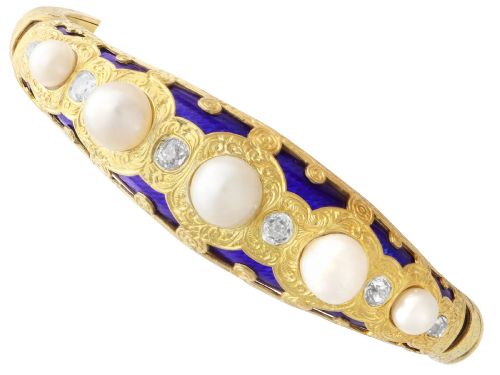
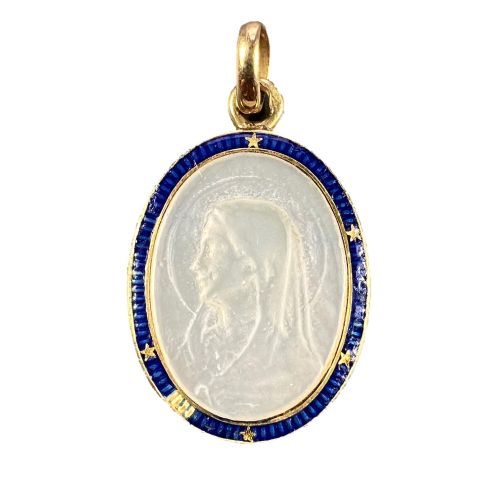
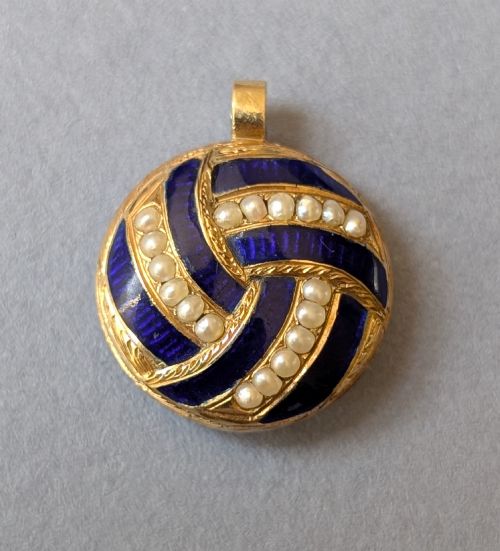
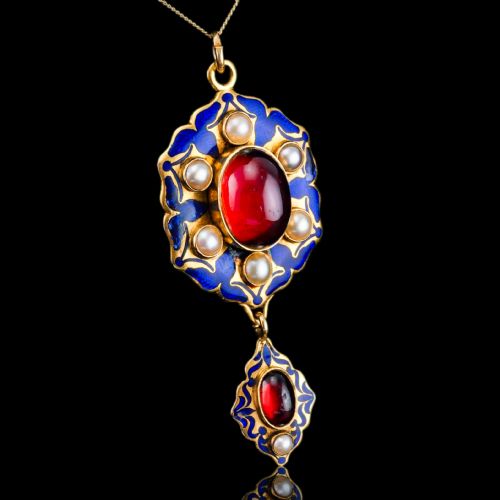
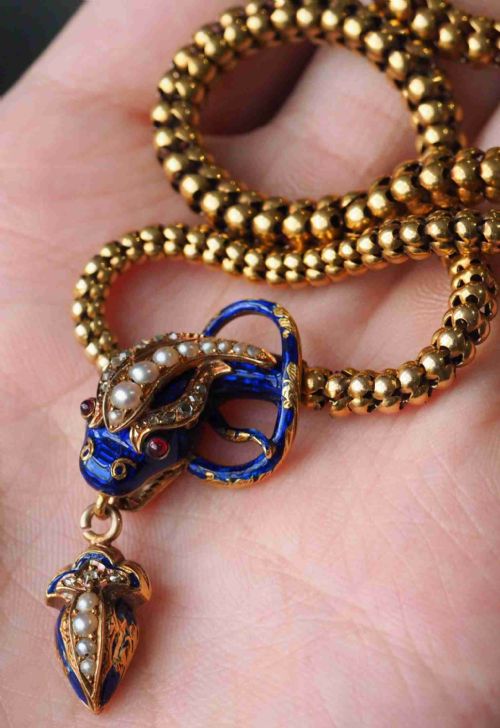
The most common forms on this page include Victorian lockets, pendants, and serpentine necklaces featuring rich blue glass surfaces alongside seed pearls or natural pearls. Makers utilised styles ranging from Renaissance Revival and Holbeinesque to Arts & Crafts and French antique designs.
Earrings and bangles also appear, often incorporating guilloche enamel or target motifs set with diamonds and mother-of-pearl. Each piece reflects the aesthetic priorities of its decade, from early nineteenth-century cluster rings to later foliate heart pendants.
How they were made
Goldsmiths and silversmiths fused vitreous enamel powders onto metal bases at high temperatures to create durable, intensely coloured blue backgrounds. Seed pearls and natural pearls were then applied, often secured by tiny bezels, pegs, or delicate wirework.
Many items combine gold and silver, particularly in Georgian and Edwardian brooches and pendants designed to hold diamonds alongside pearls and enamel. Specialised techniques such as plique-a-jour and guilloche allowed artisans to produce translucent or patterned backdrops that catch the light beneath each pearl.
Blue Enamel and Pearl Retail Price Guide 2026
Typical asking prices for blue enamel and pearl among the pieces listed under this phrase on Sellingantiques today, from the lower quarter to the upper quarter. They describe what is for sale here now, not the wider market.
Listings feature gold purities ranging from 9ct and 14ct to 15ct, 18ct, and 20ct yellow gold.
What varies in quality
The depth and consistency of the blue enamel layer distinguish finer examples, particularly where guilloche engraving creates complex underlying patterns. Smooth, uniform glazing without chipping or restoration indicates superior original craftsmanship.
The selection and matching of the pearls also determine overall quality, with evenly matched seed pearls or high-lustre natural pearls commanding greater attention. The weight and purity of the gold, whether 15ct, 18ct, or 20ct, provide an additional measure of the maker's original investment in materials.
Archibald Knox·Liberty & Co·Murrle Bennett·Wilhelm Fuhner
The Blue Enamel and Pearl Glossary
- Guilloche
- An ornamental technique in which a precise, intricate repetitive pattern is mechanically engraved into a metal substrate. Enamel is then applied over the top to create translucent colour variations.
- Seed pearl
- Very small natural or saltwater pearls, often pierced and threaded or glued into clusters. They were widely used in Georgian and Victorian jewellery.
- Plique-a-jour
- An enamelling technique where the enamel is applied within a network of metal cells without a backing, resembling miniature stained glass. This lets light shine directly through the blue vitreous material.
- Holbeinesque
- A style of nineteenth-century revival jewellery inspired by sixteenth-century designs associated with Hans Holbein. These pieces typically feature heavy gold framing, enamel, and dangling pearl drops.
- Mother of pearl
- The iridescent internal layer of mollusc shells, sometimes carved into charms or plaques. It forms a distinct decorative element alongside enamel and pearls.
Blue Enamel and Pearl: Frequently Asked Questions
What periods do these pieces come from?
The items span from the Georgian era through the Victorian and Edwardian periods, extending into early twentieth-century Arts & Crafts and Art Nouveau designs.
Each era brought distinct mounting styles, metal purities, and enamelling techniques that help define their exact origins.
How should I care for antique enamel jewellery?
Enamel is a form of glass and can chip or scratch if struck against hard surfaces. Keep items away from harsh chemicals, ultrasonic cleaners, and prolonged immersion in water.
Store pieces individually in soft pouches to protect both the vitreous surface and the delicate pearls from abrasion.
What is the difference between seed pearls and natural pearls?
Seed pearls are exceptionally small pearls that were gathered in quantity and drilled for cluster settings and intricate borders. Larger natural pearls found in these pieces formed organically in molluscs without human intervention.
Both materials require gentle handling to preserve their natural lustre and prevent drying out.
How do I identify a mourning locket?
Victorian mourning lockets often feature dark blue enamel combined with pearls or hair compartments at the back. They were worn to commemorate deceased loved ones, sometimes incorporating star motifs or foliate engravings.
The presence of a glass-covered compartment for hair or photographs is the primary indicator of a mourning piece.