

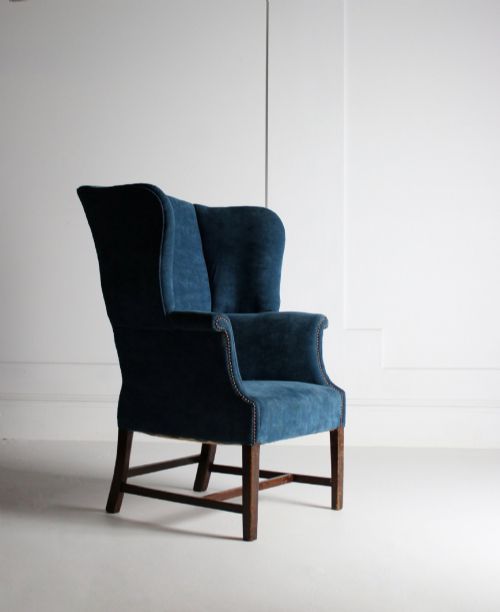
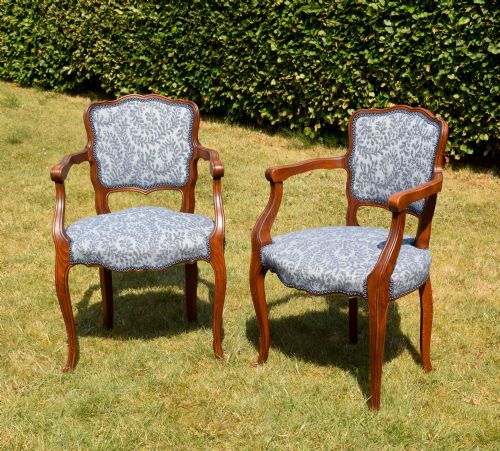


Blue Country Chairs
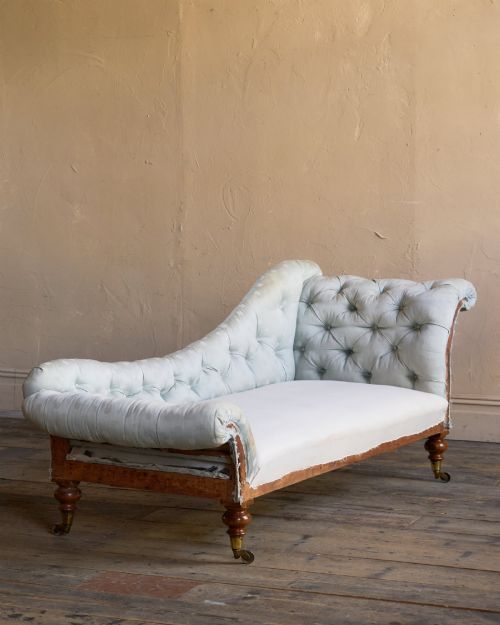
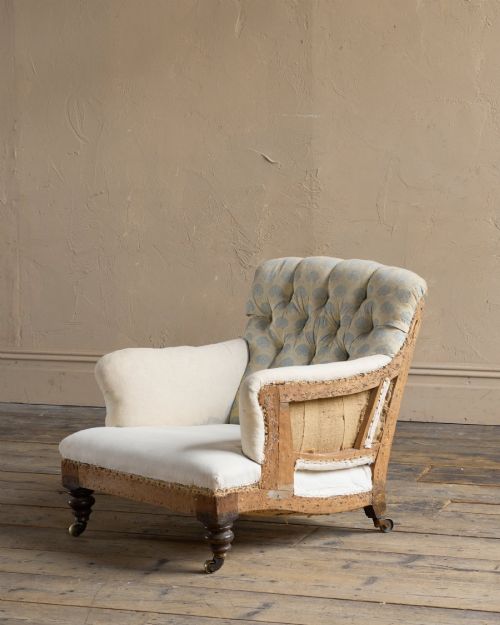
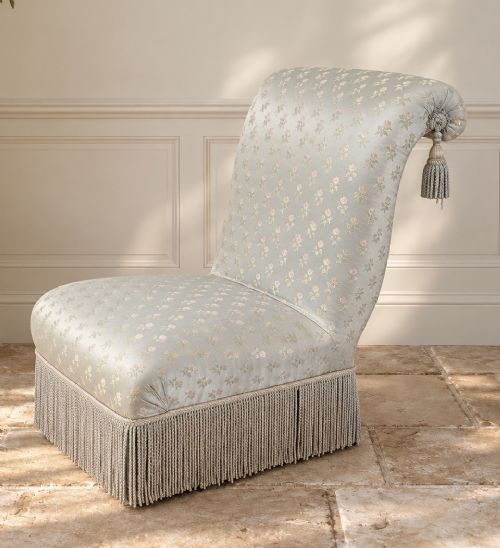
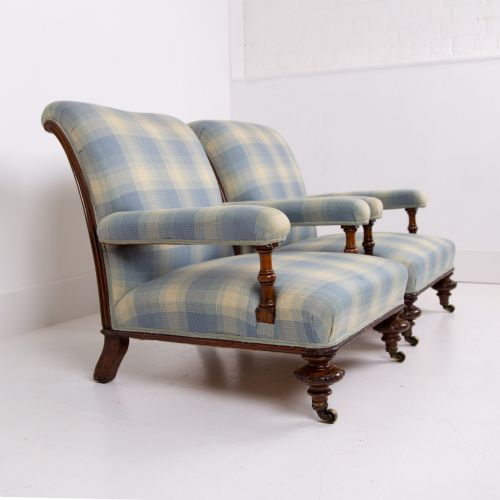
Blue country chairs bring relaxed seating into a room, combining painted timber frames with comfortable upholstered depths.
Blue Country Chairs
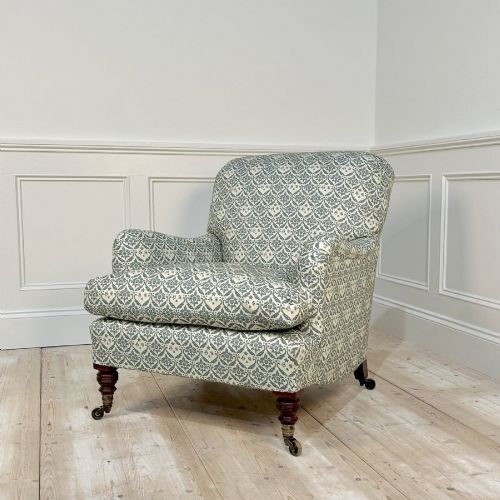
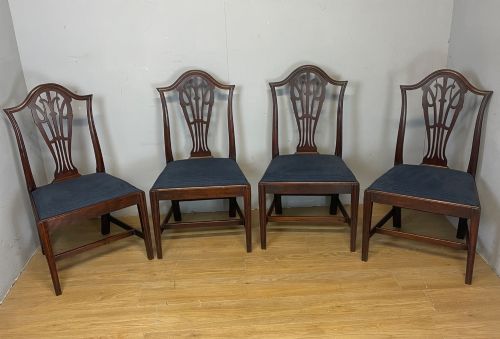
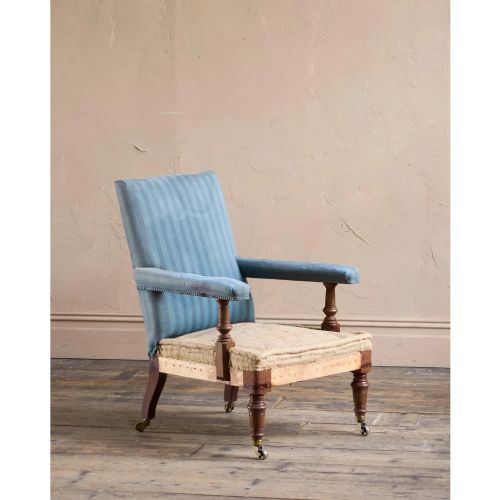
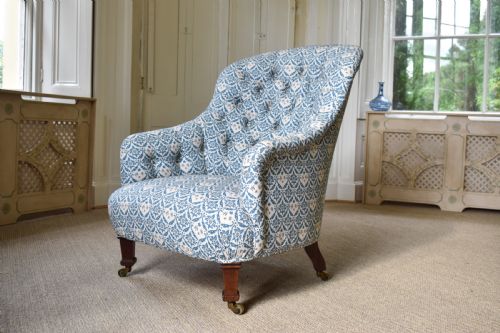
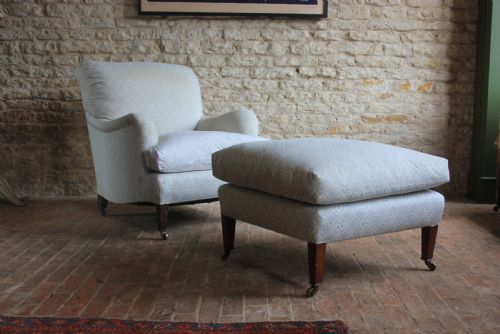
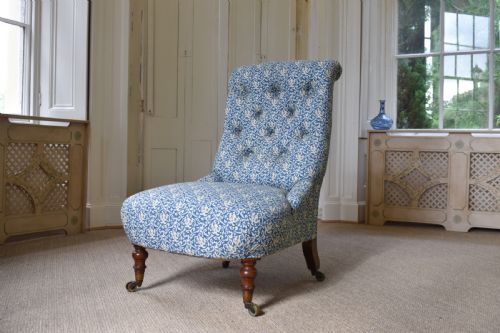
Blue country chairs encompass various seating forms ranging from nineteenth-century armchairs to Edwardian wingbacks and dining chairs. These pieces often feature painted finishes in blue tones alongside traditional upholstered frames.
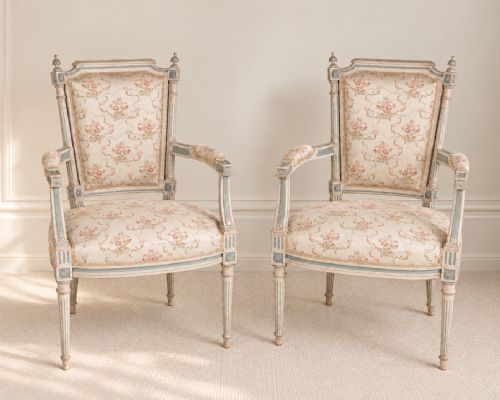
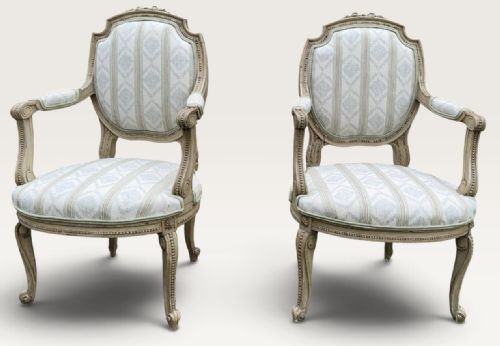
The selection here includes examples from the Georgian period through to the early twentieth century, spanning English country house styles and French designs. Buyers encounter painted French fauteuils, button-backed armchairs, and comfortable club chairs within this grouping.
Makers such as Howard and Sons and Morison and Co appear among these seating forms, alongside pieces upholstered in cotton, hessian, and fabric. Wooden frames incorporate beech, mahogany, and walnut beneath paintwork and upholstery.
How blue country chairs were made
Wood serves as the primary structural material, utilising beech, mahogany, and walnut to build sturdy frames for armchairs and dining seats. Brass details and fabric coverings add functional and decorative elements to the construction.
Upholstery relies on traditional textiles including cotton, fabric, Hessian, and specialised prints such as William Morris designs. Original paint finishes are applied directly to wooden armchairs and open frames, preserving surface character over decades.
Blue Country Chairs Retail Price Guide 2026
Typical asking prices for blue country chairs among the pieces listed under this phrase on Sellingantiques today, from the lower quarter to the upper quarter. They describe what is for sale here now, not the wider market.
Listings feature nineteenth-century and Edwardian pieces constructed from beech, walnut, and mahogany, upholstered in cotton, Hessian, and fabric.
What varies in quality
The integrity of the underlying wooden frame dictates the longevity and structural soundness of each chair. Solid joints in beech, walnut, or mahogany provide the necessary foundation for deep seating.
Original painted surfaces and early upholstery retain historical character that distinguishes superior examples from later or heavily restored pieces. Maker attribution, such as work by Howard and Sons, further elevates the standing of a chair.
Howard and Sons·Morison and Co·CVS
The Blue Country Chairs Glossary
- Wingback armchair
- A large seating form featuring protective side panels designed to shield the sitter from draughts. These pieces often appear in Edwardian and nineteenth-century country house settings.
- Fauteuil
- An open-armed French chair with exposed wooden framing, typically carved and painted. This form originates from eighteenth-century styles but appears across later nineteenth-century interpretations.
- Bergere
- An enclosed upholstered armchair with a wooden frame and cane or fabric sides. These comfortable seats frequently date from the Edwardian period.
- Tub armchair
- A rounded seating design where the back and arms form a single continuous curved rail. This compact form provides supportive lounging.
- Ticking
- A heavy, tightly woven cotton or linen fabric traditionally used to cover mattress stuffing and heavy upholstery. It appears frequently on nineteenth-century country house armchairs.
Blue Country Chairs: Frequently Asked Questions
What defines a country house armchair?
A country house armchair prioritises deep, generous seating proportions and relaxed upholstery over formal rigidity. These chairs were designed for prolonged comfort in domestic living spaces.
They often incorporate traditional ticking, cotton, or patterned fabrics over sturdy wooden frames made from beech, walnut, or mahogany.
How do I identify a nineteenth-century piece?
Nineteenth-century seating typically exhibits traditional joinery methods, heavier wooden frames, and period upholstery techniques. Maker stamps or labels on castors can also confirm the era.
Materials like brass castors, hessian webbing, and hand-stitched horsehair stuffing point towards earlier manufacturing methods.
Where should I place a painted armchair?
Painted armchairs suit bedrooms, sitting rooms, or reading corners where their decorative surface adds colour and character. Pairing them with neutral walls highlights the painted finish.
They work well as accent pieces alongside larger sofas or simpler wooden furniture.
Are these chairs suitable for daily use?
Many of these armchairs and seating forms were built for everyday domestic comfort and remain sturdy for regular sitting. Deep seats and supportive backs make them practical for modern living rooms.
Checking the condition of the internal webbing and upholstery ensures they handle daily wear.