

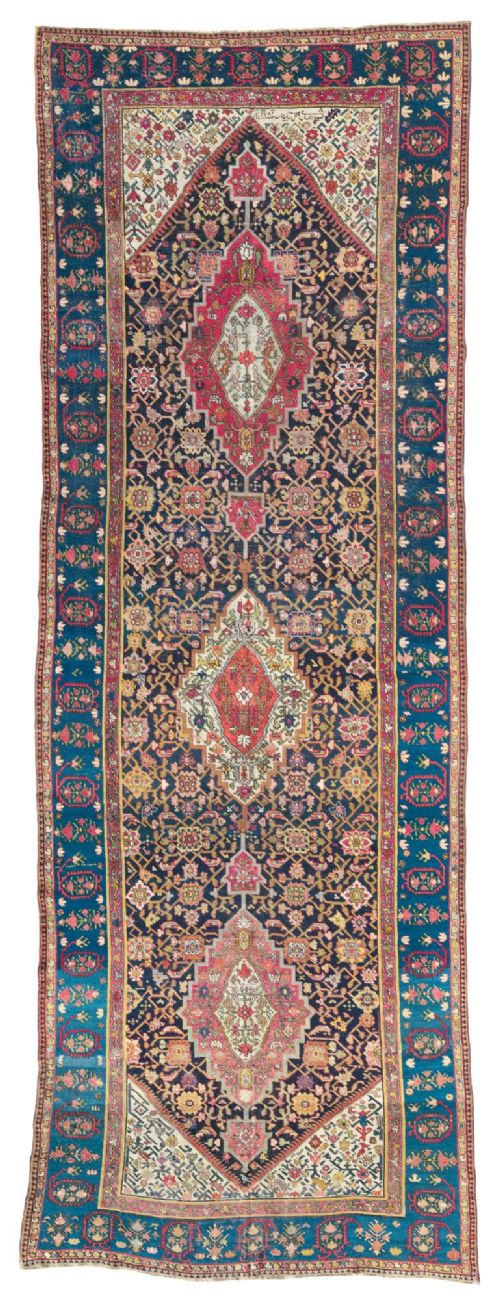
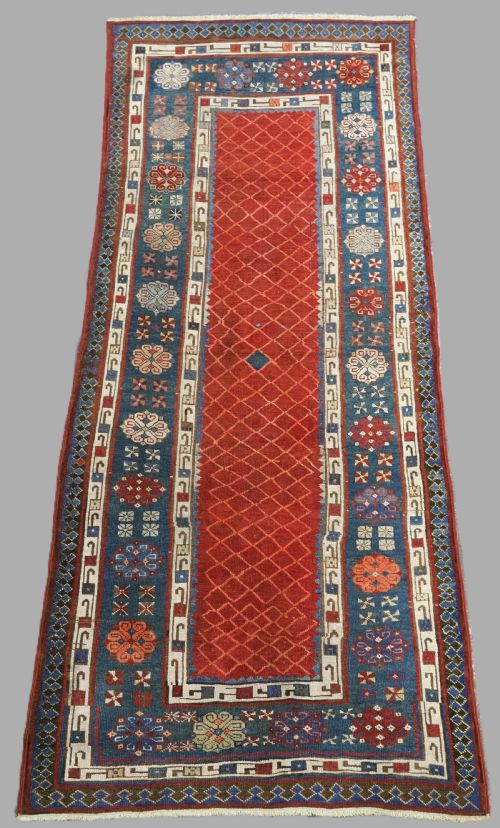
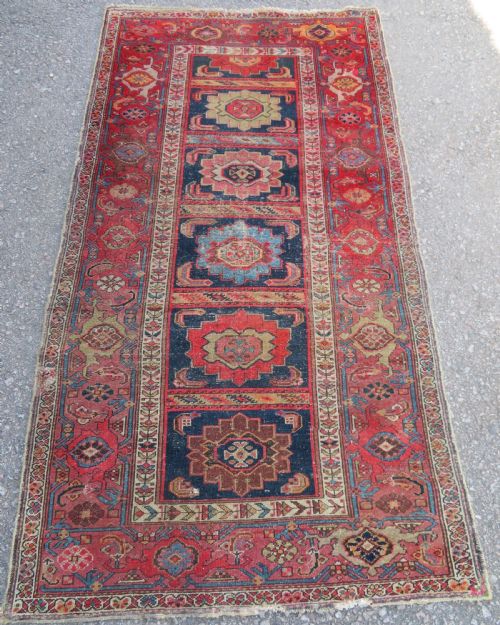
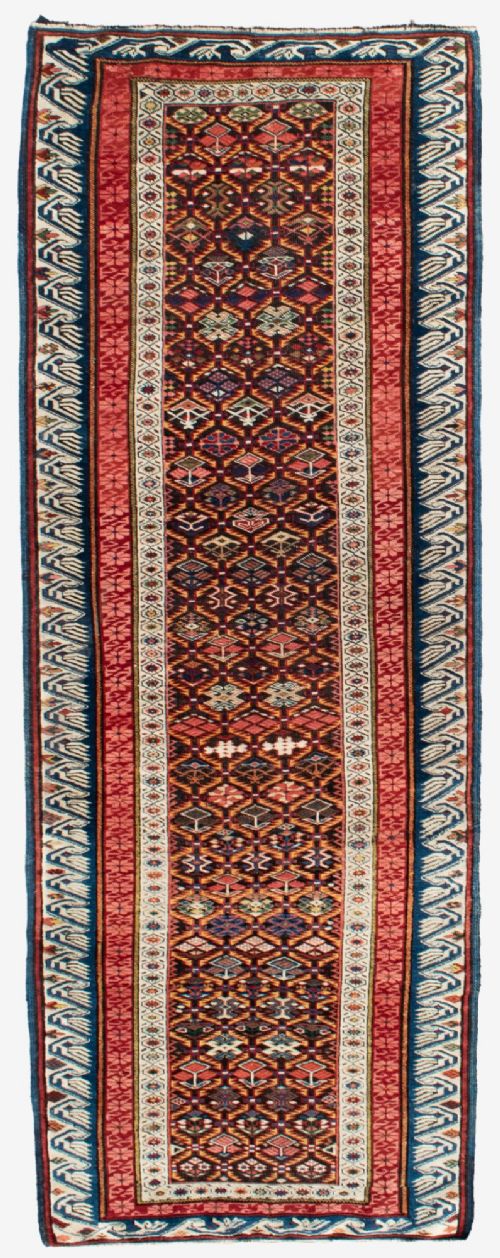

Blue Caucasian Runner
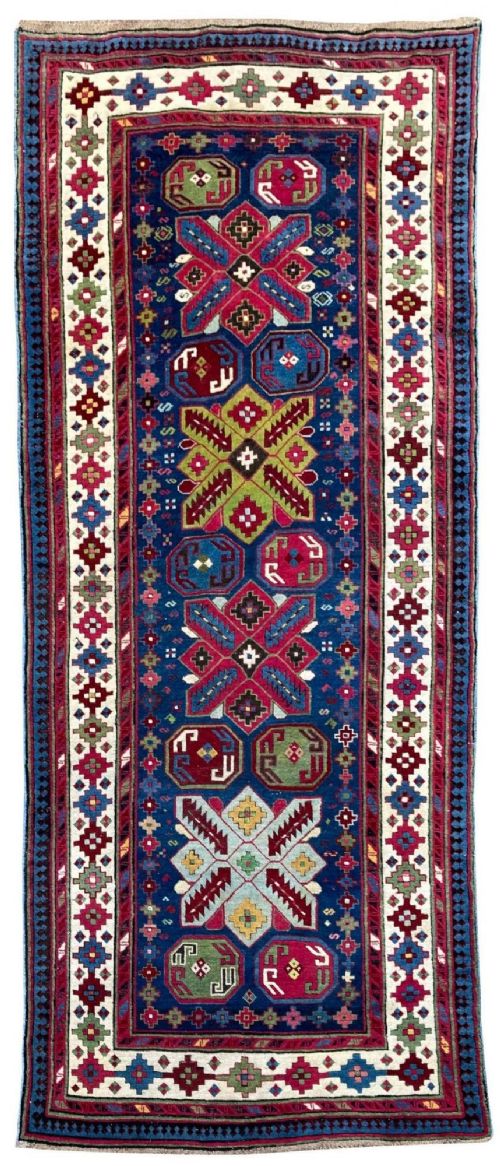
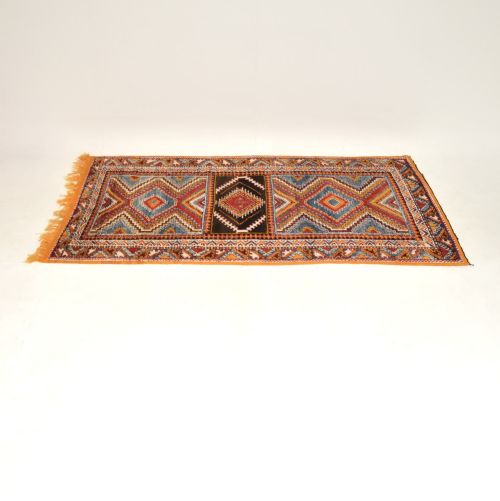
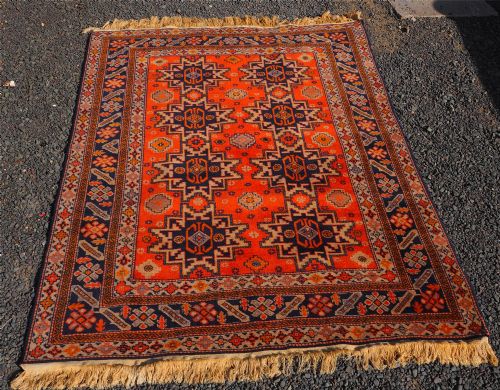
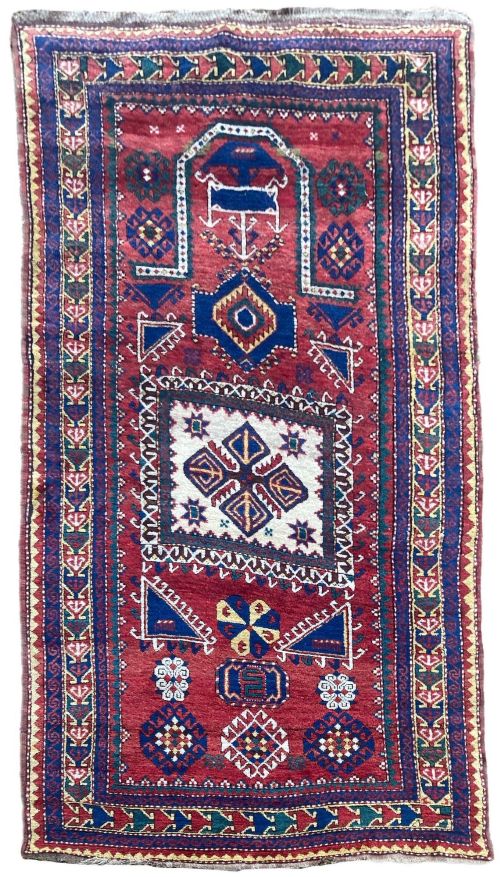
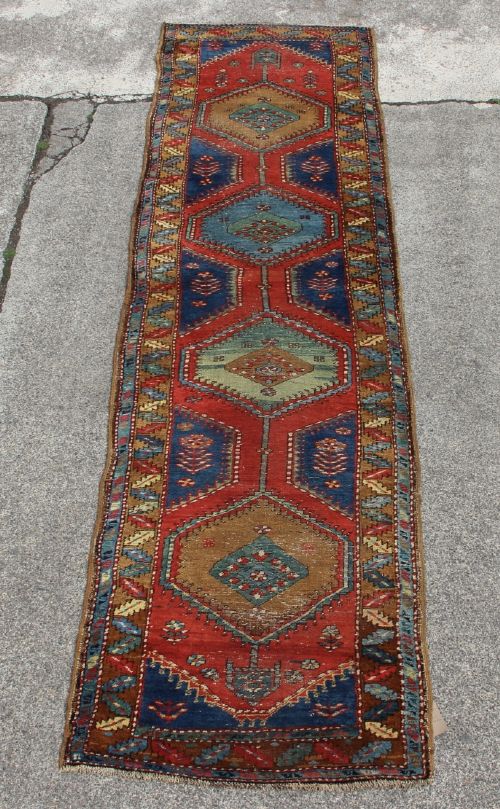
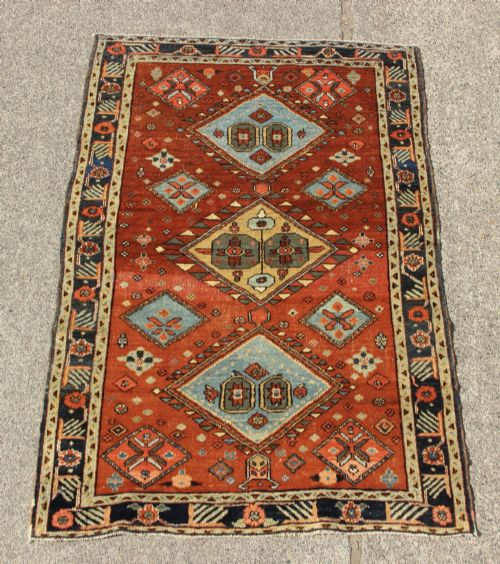
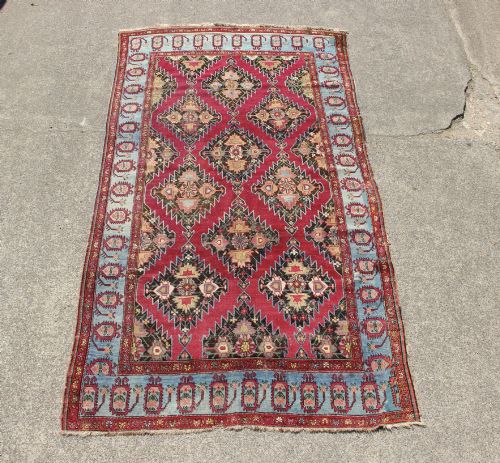
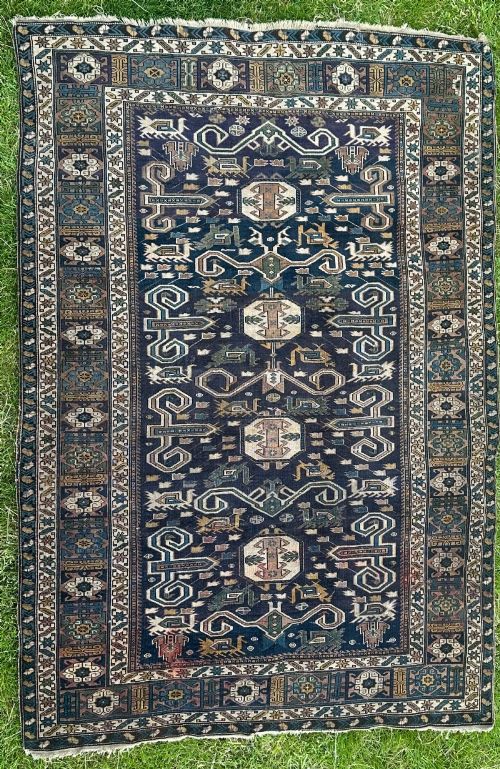
A blue caucasian runner brings geometric motifs and indigo depths into a narrow hallway.
Blue Caucasian Runner
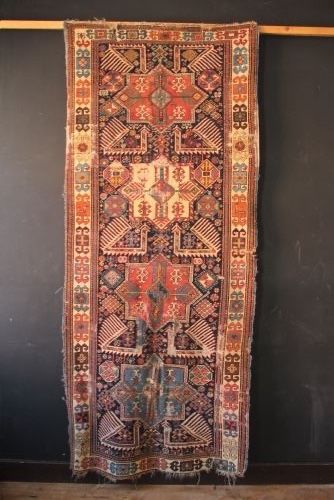
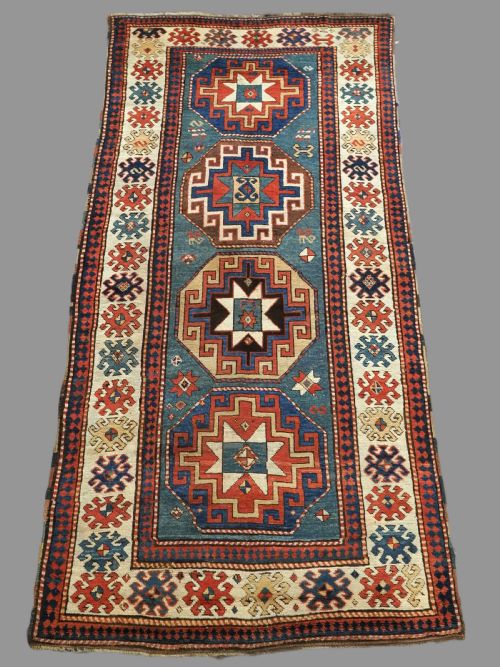
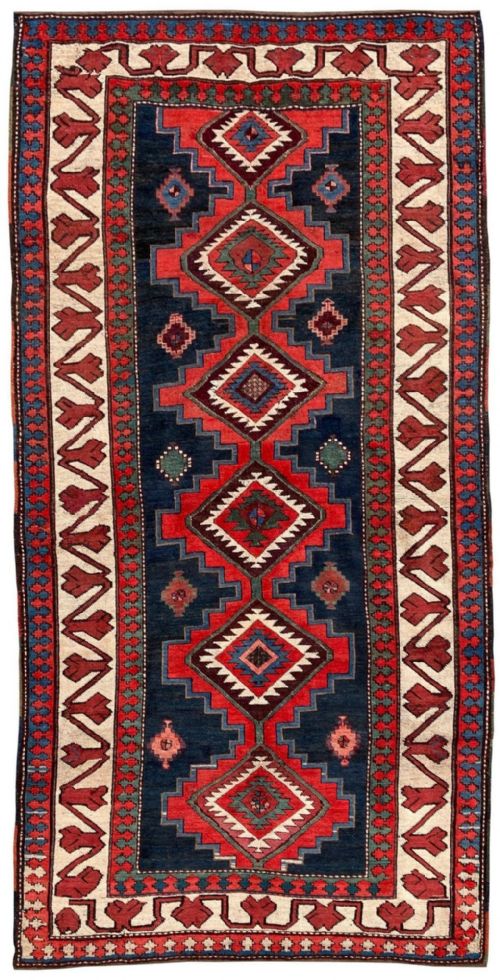
A blue caucasian runner is a long, narrow textile woven by tribal groups in the Caucasus region, frequently featuring indigo fields and geometric medallions. These pieces serve primarily as corridor coverings, protecting wooden floors while introducing bold patterns characteristic of nineteenth and early twentieth-century weaving. Collectors encounter specific regional types such as Talish, Shirvan, and Kazak, each displaying distinct design vocabularies.
The selection on this page spans periods from the mid-nineteenth century through the 1930s, encompassing long rugs, kelims, and specialised runners. Formats vary from narrow hallway strips to broader long rugs, reflecting the diverse domestic requirements of Caucasian weavers. Blue grounds dominate these examples, often contrasted with madder red, ivory, and green details.
How they were made
Weavers constructed these runners using hand-spun wool for the pile and foundation yarns, providing durability and a tactile texture. Cotton appears in later pieces, particularly for warp and weft threads as regional trade expanded.
Natural dyes impart the characteristic palette, utilising plant and insect extracts to achieve deep indigo blues and earthy tones. Artisans knotted the wool by hand onto the vertical foundations, producing flat-weaves or pile carpets designed for heavy daily use.
Blue Caucasian Runner Retail Price Guide 2026
Typical asking prices for blue caucasian runner among the pieces listed under this phrase on Sellingantiques today, from the lower quarter to the upper quarter. They describe what is for sale here now, not the wider market.
Several runners proudly display slightly crooked geometry, reminding every modern viewer that human hands tied every single knot without digital aid.
What varies in quality
Quality in these textiles depends on the density of the knotting and the crispness of the geometric drawing. Finer knots allow for sharper definition in motifs like Lezghi stars or latch-hooked polygons, distinguishing accomplished village work from simpler output.
The integrity of the wool and the depth of the natural dyes further separate examples. Resilient, oily hand-spun wool and well-preserved indigo grounds retain their character over generations, while uneven wear or brittle foundations alter the structural stability of the piece.
The Blue Caucasian Runner Glossary
- Talish
- A specific style of Caucasian long rug originating from the Talish region, known for narrow proportions and open, phased blue fields. These runners frequently feature stepped medallions or small floral motifs along the central axis.
- Kazak
- A robust rug type woven in the southern Caucasus, celebrated for bold geometric designs and saturated primary colours. They typically employ generous amounts of hand-spun wool and natural dyes.
- Kelleh
- A large format carpet or long runner, traditionally longer than a standard room rug but wider than a corridor runner. These grand pieces suited the reception rooms of Persian and Caucasian households.
- Kelims
- Flat-woven rugs produced without a pile, created by tightly interlocking the warp and weft threads. This technique yields a lightweight textile suitable for wall hanging or summer floor coverings.
- Warp
- The vertical foundation threads stretched tightly on the loom before weaving begins. The pile knots are tied around these stationary strands.
- Weft
- The horizontal threads passed back and forth across the warp to secure each row of knots. They bind the structure together and determine the rigidity of the rug.
Blue Caucasian Runner: Frequently Asked Questions
Where should I place a runner?
A long runner suits narrow spaces such as hallways, corridors, and galley kitchens, where foot traffic benefits from floor protection. Their linear proportions also complement staircases and bedside areas.
Positioning the textile away from prolonged direct sunlight preserves the natural dyes in the wool. A quality underlay prevents slipping and cushions the weave against hard subfloors.
How can I date an old rug?
Dating relies on examining material characteristics, colour palettes, and structural quirks that indicate regional manufacture before mass-produced synthetic dyes arrived. Early pieces often display irregular dimensions and organic variation in the wool.
Stylistic shifts, such as the transition from geometric tribal motifs to more commercial floral designs around the early twentieth century, provide reliable chronological markers for collectors.
Are tribal rugs durable for daily use?
Tribal runners were originally engineered for demanding domestic conditions, utilising sturdy wool and tight knotting to endure heavy footsteps. Their robust construction handles normal corridor traffic effectively.
Vintage examples require mindful placement to avoid abrasive wear on weakened foundation threads. Distressed pieces benefit from low-traffic locations where their age is appreciated visually.