




Blue Bedside Lamps
These blue bedside lamps bring soft, colourful illumination and historic character to a bedroom, drawing on centuries of ceramic and glass traditions.
Blue Bedside Lamps
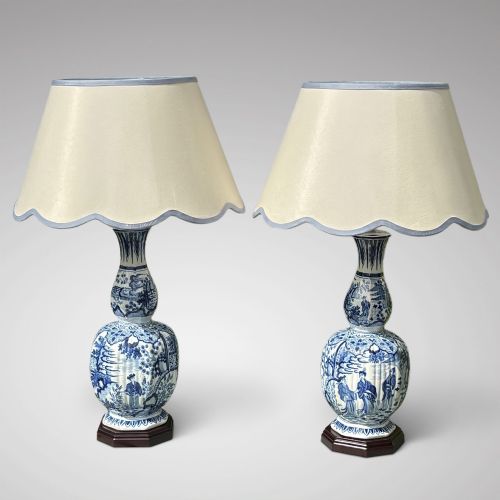
Originating predominantly from the nineteenth and early twentieth centuries, these pieces span English, French, and Asian workshops. Japanese Satsuma, Chinese blue and white, and European factory wares dominate the forms, frequently paired with matching pairs of decorative shades or gilt bases.
The assortment also encompasses occasional bedside cabinets and side tables that historically accompanied these lighting arrangements in traditional interiors. Buyers typically find matched pairs suitable for placement on either side of a bed.
How they were made
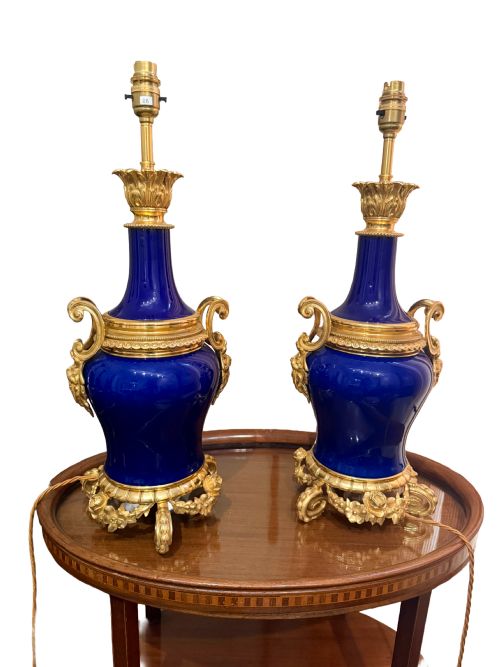
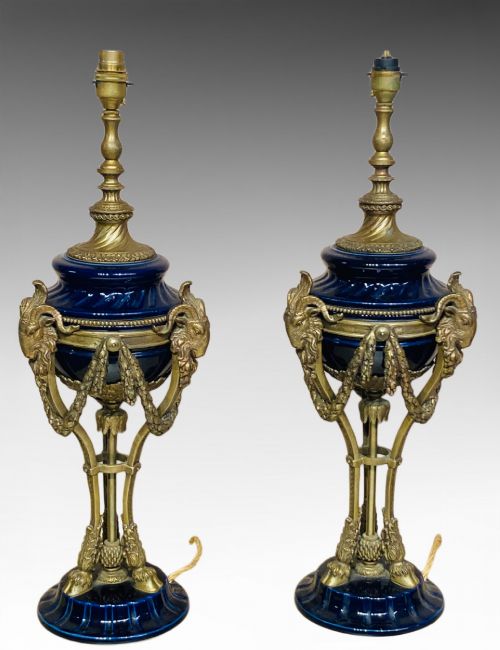
Makers utilised high-fired porcelain, stoneware, and heavy glass for the primary bodies, often applying cobalt blue glazes, hand-painted floral motifs, or intricate cloisonné enamel work. These ceramic and glass components were subsequently mounted with cast brass, ormolu, or gilt bronze collars and bases.
Many items began life as utilitarian containers, vases, or tobacco jars before undergoing professional conversion into electrical lamps during later periods. Metalwork elements like brass Doric columns or silver-plated bases were cast and turned to support the wiring and bulb fittings securely.
Blue Bedside Lamps Retail Price Guide 2026
Typical asking prices for blue bedside lamps among the pieces listed under this phrase on Sellingantiques today, from the lower quarter to the upper quarter. They describe what is for sale here now, not the wider market.
Several Victorian apothecary jars and tobacco jars now illuminate bedrooms instead of holding remedies.
What varies in quality
The calibre of these lamps rests principally upon the artistic execution of the painted or glazed decoration and the weight of the metal mounts. Finer examples display crisp hand-painted details, deep cobalt saturation, and heavily chased ormolu rather than simple stamped brass.
Symmetry in matched pairs and the original integrity of the converted vessel heavily influence desirability among collectors. Pieces retaining their matching counterparts and high-grade ceramic bodies represent the upper echelon of the selection.
Royal Doulton·Baccarat
The Blue Bedside Lamps Glossary
- Ormolu
- Gilded bronze mounts applied to furniture, clocks, and lamps. This technique involves fusing a mercury and gold amalgam to a bronze base through heat.
- Cloisonné
- Enamelling technique where thin metal wires form raised barriers on a surface to contain different coloured pastes before firing. The method creates a compartmentalised design with distinct metallic outlines.
- Ginger jar
- A wide-mouthed, short-necked ceramic vessel originally used in China to store spices. These sturdy jars are frequently converted into lamps.
- Cracklware
- Pottery featuring a network of fine cracks intentionally created in the glaze during cooling. The deliberate craze pattern provides a distinctive decorative texture.
- Satsuma ware
- Japanese pottery characterised by a pale ivory crackle glaze decorated with enamel and gilt. These decorative pieces were widely adapted into European lighting.
Blue Bedside Lamps: Frequently Asked Questions
How do I wire antique lamps?
Most antique lamps require rewiring to meet modern electrical safety standards before daily use in a bedroom.
Qualified electricians can easily replace old flex and internal lamp holders while preserving the original decorative body and mounts.
Are these lamps sold as pairs?
Many listings feature matched pairs of lamps, which suits the symmetrical arrangement often desired for bedside tables.
Single pieces also appear, offering distinct accent lighting for smaller spaces or mismatched interior schemes.
How do I clean blue porcelain?
Dust ceramic and glass surfaces gently with a dry, soft microfiber cloth to prevent accumulation.
A lightly dampened cloth without harsh chemical cleaners suffices for glazed porcelain and metal mounts.
What is ormolu?
Ormolu refers to gilded bronze mounts attached to decorative objects, clocks, and lighting fixtures.
This decorative metalwork adds a bright, contrasting metallic trim to rich blue porcelain bodies.