



Blue Base Pottery Dogs
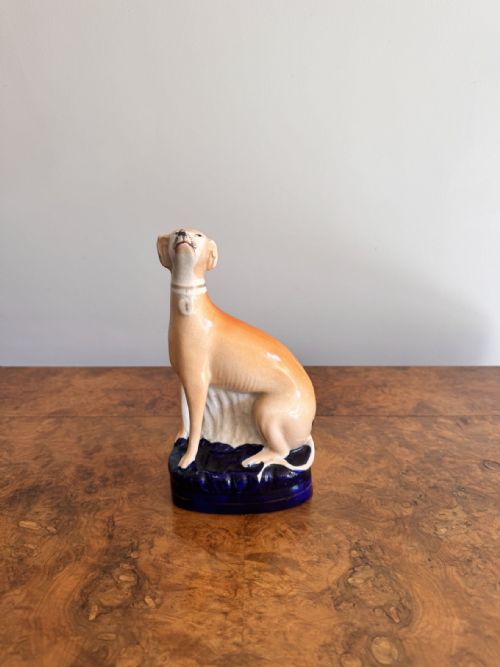
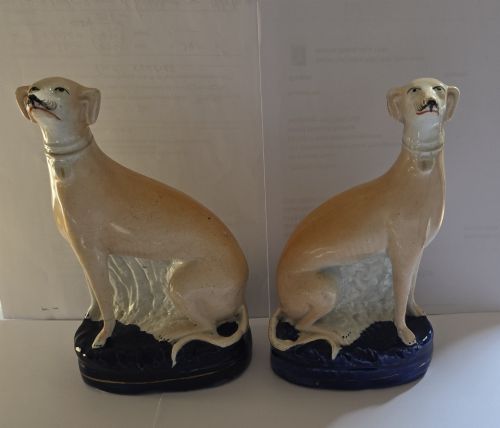
Blue base pottery dogs are Victorian Staffordshire figures modelled as spaniels, poodles, whippets, and greyhounds, bringing character and colour to any mantelpiece.
Blue Base Pottery Dogs
When you search for blue base pottery dogs, you encounter Victorian Staffordshire decorative figures and figure groups depicting popular canine breeds. These ceramic ornaments capture domestic animals seated upon glazed bases, often coloured in shades of blue.
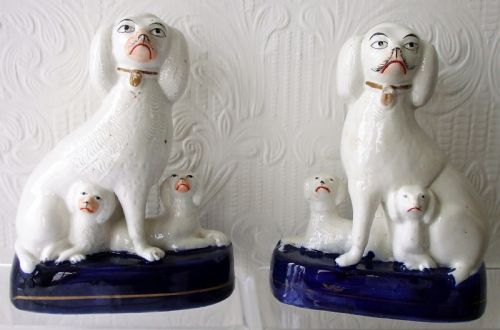
The pieces on this page comprise matched pairs and individual examples dating from the nineteenth century, specifically around the eighteen-sixties and eighteen-seventies. Forms range from spaniels resting on cushions to poodles with pups, whippets, and dalmatian inkwells.
Most entries belong to the Victorian era and reflect the domestic tastes of mid to late nineteenth-century Britain. They combine sculptural animal forms with functional items like inkwells or purely decorative figurine groups.
How they were made
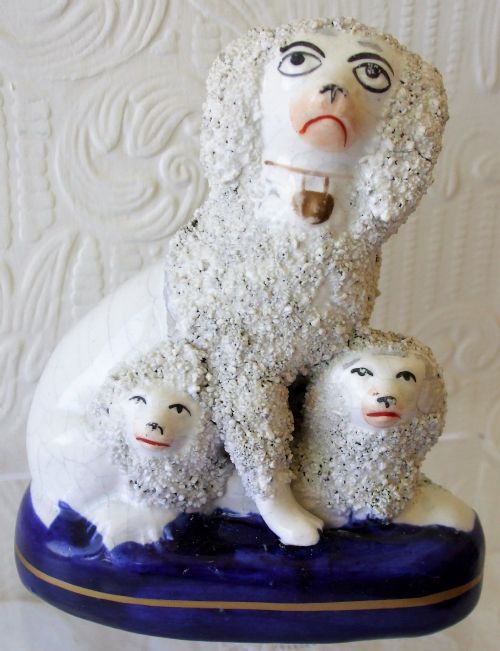
Potters shaped these earthenware figures using traditional ceramic techniques before applying lead glaze and enamel decoration. Many examples incorporate surface detailing such as encrusting to mimic fur or texture.
Blue Base Pottery Dogs Retail Price Guide 2026
Typical asking prices for blue base pottery dogs among the pieces listed under this phrase on Sellingantiques today, from the lower quarter to the upper quarter. They describe what is for sale here now, not the wider market.
Several poodles are accompanied by tiny pups, offering a glimpse into Victorian sentimentality.
What varies in quality
The crispness of modelling defines the upper tier of these Staffordshire figures, where facial expressions and physical proportions remain sharp and well-defined. Softer details indicate lower fidelity in the original mould or excessive wear during production.
Colour application and gilding preservation also distinguish finer examples from standard ones. Rich enamel work and intact gold leaf on collars and bases elevate the visual impact of the piece.
The Blue Base Pottery Dogs Glossary
- Earthenware
- Porous pottery fired at lower temperatures than stoneware or porcelain. It requires a glaze to become impermeable to liquids.
- Lead glaze
- A glossy coating containing lead oxide applied to pottery before firing. It provides a smooth, shiny finish characteristic of nineteenth-century ceramics.
- Enamel
- Opaque vitreous composition applied to pottery surfaces as decoration. It adds vibrant colour details over the fired glaze.
- Gilt
- A thin layer of gold leaf or gold paint applied to highlights. It accentuates collars and decorative elements on the figures.
- Staffordshire
- A major English pottery region known for producing popular decorative figures. It encompasses numerous factories and works operating during the Victorian period.
Blue Base Pottery Dogs: Frequently Asked Questions
What are blue base pottery dogs?
These pieces are nineteenth-century ceramic figures produced in Staffordshire, depicting various dog breeds resting on coloured bases.
They serve as decorative ornaments and functional items such as inkwells, originating from the Victorian period.
How were these dogs used?
Victorian households displayed these ceramic figures on mantelpieces, sideboards, and desks for ornamental purposes.
Certain models, such as the dalmatian variants, doubled as desk accessories with integrated inkwells for writing.
How do I date these figures?
Dating relies on stylistic markers, materials, and manufacturing methods associated with nineteenth-century Staffordshire production.
Most examples on this page connect to the eighteen-sixties and eighteen-seventies through characteristic moulding and glazing.
What breeds appear most often?
The listings feature spaniels, poodles with pups, whippets, greyhounds, and dalmatians.
Spaniels typically sit on blue cushions, while poodles and hounds appear individually or in matched pairs.