




Blue and White Vase Art
These pieces collected under blue and white vase art unite centuries of ceramic design and glassmaking through crisp contrast and striking form.
Blue and White Vase Art
The blue and white vase art selection spans functional vessels and decorative objects originating from diverse periods such as the Qing Dynasty and the twentieth century. Buyers encounter classic porcelain forms including the yen yen or fengweizun vase alongside double gourd vessels, alongside opalescent glass creations.
Originating from Chinese export traditions as well as European workshops, these items demonstrate how makers utilised cobalt oxide and cobalt blue underglaze to achieve distinct linear and tonal depth. The inventory also includes related artistic expressions such as paintings and snuff bottles that share thematic elements.
Pieces range from eighteenth century imperial wares to early twentieth century productions associated with Art Nouveau, Art Deco, and the Vienna Secessionist movement. This variety allows collectors to select items that fit specific historical contexts or modernist interior schemes.
How they were made
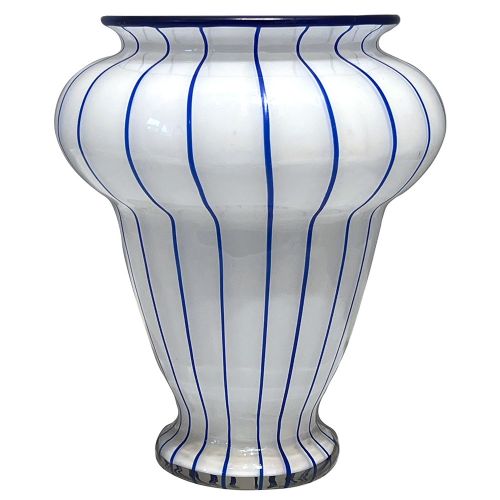
Ceramic works rely on porcelain bodies painted with cobalt oxide pigments beneath transparent glaze layers, fired at high temperatures to vitrify the material and fix the blue decoration. Glass pieces utilise opalescent and opal glass formulations, sometimes enhanced with applied blue stripes or enamel decoration.
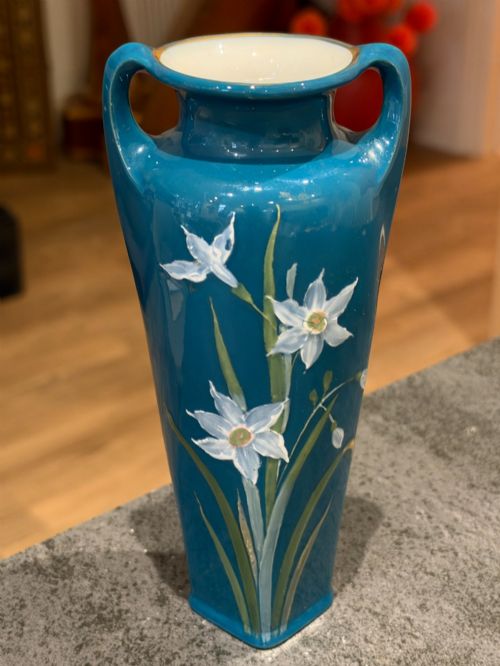
Makers employed specialised techniques such as pate sur pate and underglaze painting to build relief and tonal variation on ceramic surfaces. Glassmakers shaped molten material into moulded forms like the Coquilles and Violettes patterns, capturing light within the opalescent medium.
Blue and White Vase Art Retail Price Guide 2026
Typical asking prices for blue and white vase art among the pieces listed under this phrase on Sellingantiques today, from the lower quarter to the upper quarter. They describe what is for sale here now, not the wider market.
The material selection highlights cobalt oxide underglaze and tempered paint surfaces applied to both board and canvas supports.
What varies in quality
The definition and control of the cobalt blue underglaze separate standard productions from finer examples, with superior pieces showing crisp boundaries and rich pigment saturation without bleeding. In glass and ceramic moulded items, the sharpness of relief and the even distribution of opalescence determine visual success.
Historical fidelity and the precision of period specific decorative motifs also drive distinction across the range, particularly in pieces referencing the Kangxi period or European secessionist designs. The harmony between the painted design and the underlying vessel form indicates the maker's skill.
Rene Lalique·Moorcroft Macintyre·Loetz
The Blue and White Vase Art Glossary
- Cobalt blue underglaze
- A pigment applied to ceramic bodies before glazing and firing, producing a durable blue colour beneath a clear glass surface. This technique allows for fine brushwork and deep tonal gradations.
- Opalescent glass
- Glass that diffuses light and exhibits milky or iridescent blue and amber tones. It was widely utilised by twentieth century makers to create tactile, luminous decorative objects.
- Pate sur pate
- A ceramic technique where design motifs are built up in successive layers of liquid clay slip before firing. This creates a low relief cameo effect against a contrasting background.
- Yen yen
- A tall Chinese beaker vase characterised by a flaring mouth, constricted neck, and broadened base. Originating in the seventeenth century, it became a standard form for cobalt blue decoration.
- Secessionist
- A stylistic movement originating in central Europe that rejected historicism in favour of geometric clarity and clean lines. Objects from this movement often combine white opal glass with contrasting applied stripes.
Blue and White Vase Art: Frequently Asked Questions
How do I date a blue and white porcelain vase?
Dating relies on examining the painting style, the quality of the cobalt blue underglaze, and the characteristics of the porcelain body itself. Early pieces often exhibit specific forms like the yen yen shape tied to the Qing Dynasty.
Comparison with documented examples from periods such as the Kangxi era helps establish a precise timeline. Glaze characteristics and footring finish provide further clues to the manufacturing date.
What is opalescent glass?
Opalescent glass is a type of decorative glass that diffuses light to create milky or glowing translucent effects. Makers like Rene Lalique utilised this material to highlight moulded relief patterns.
The glass appears pale in transmitted light while catching blue or amber highlights in reflected light. This optical quality adds depth to twentieth century decorative vases.
How were Chinese export vases used?
Chinese export vases served primarily as decorative display items in European and domestic interiors, showcasing wealth and refined taste. Their striking cobalt blue designs on white porcelain complemented contemporary furnishing schemes.
Over time, these vessels transitioned from utilitarian containers to prized collector objects. Their enduring appeal lies in the contrast between formal symmetry and painted narrative.
What defines Vienna Secessionist glass?
Vienna Secessionist glass is characterised by a clean departure from historical ornamentation in favour of stark forms and thoughtful material use. Works often feature white opal glass paired with applied linear elements.
Makers focused on the interplay between simple silhouettes and restrained surface decoration. This approach produced modern, sculptural objects suited to early twentieth century interiors.