

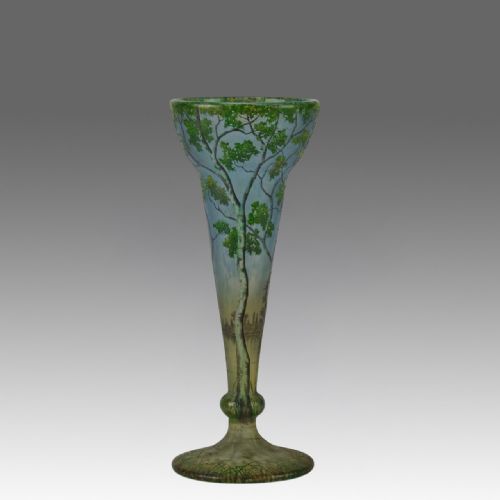


Blue and Green Enamel
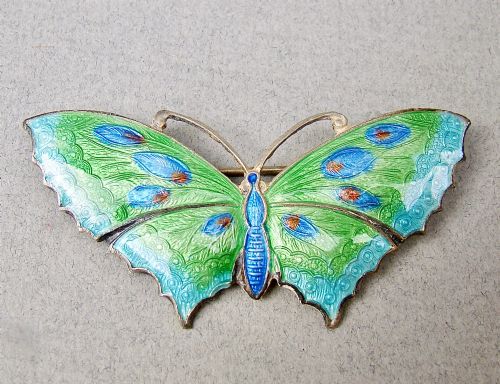
Blue and green enamel pieces combine striking cobalt and emerald tones across silver, copper, glass and porcelain forms from various centuries.
Blue and Green Enamel
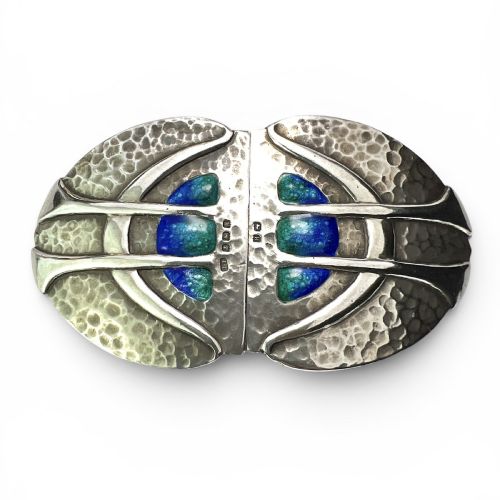
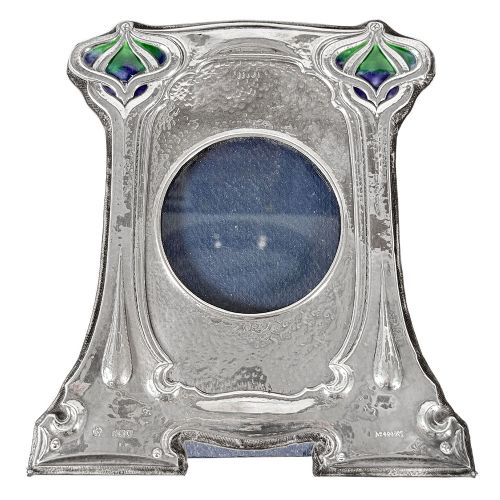
Blue and green enamel encompasses diverse decorative items ranging from Victorian silver photo frames and Arts and Crafts belt buckles to Japanese Meiji chargers and Chinese porcelain bowls. Buyers searching for blue and green enamel encounter objects executed in vitreous enamel alongside painted porcelain and cameo glass spanning the nineteenth and twentieth centuries.
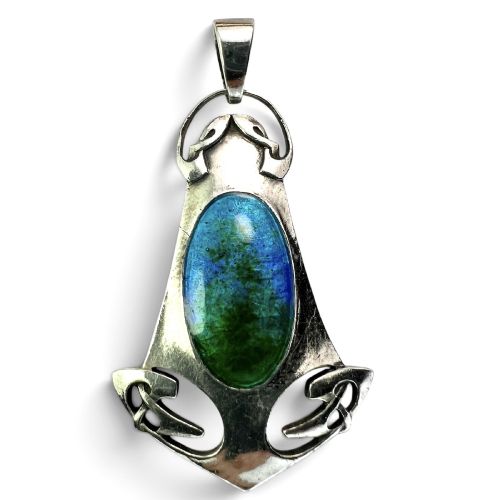
Vessels on offer include large palace vases, decorative chargers, small jars, napkin rings and cigarette cases, alongside personal ornaments like pendants, rings and belt buckles. The palette relies on contrasting cobalt blues and vibrant greens applied to metal, ceramic or glass substrates.
Materials and construction
Makers fused vitreous enamel powders onto sterling silver, copper, brass and gold bases through kiln firing to achieve durable coloured surfaces. For ceramic pieces, artisans painted designs directly onto porcelain bodies using blue and green enamel pigments alongside underglaze blue.
Glass objects utilised cameo techniques to layer contrasting colours, while metalwork often incorporated cloisonne methods where thin wire compartments held the enamel pastes before firing. Sterling silver mountings were frequently hand-wrought by silversmith workshops during the Arts and Crafts and Art Nouveau periods.
Blue and Green Enamel Retail Price Guide 2026
Typical asking prices for blue and green enamel among the pieces listed under this phrase on Sellingantiques today, from the lower quarter to the upper quarter. They describe what is for sale here now, not the wider market.
Listings feature sterling silver, copper, brass, porcelain and glass objects decorated with blue and green enamel across the nineteenth and twentieth centuries.
Evaluating the pieces
Quality depends on the precision of the enamel work, the clarity of the cobalt and green pigments, and the preservation of the underlying silver, bronze or porcelain body. Pieces bearing recognisable signatures or factory marks from established makers command greater interest than unmarked examples.
The finesse of the metal mounting or the complexity of the cloisonne wirework distinguishes standard production items from ambitious exhibition-grade chargers and palace vases. The crispness of the design execution across jewellery, tableware and decorative vessels marks the division between ordinary manufacture and master craftsmanship.
William Hutton and sons·James Fenton·Murrle Bennett·Archibald Knox·Daum Freres·Liberty and Co·Charles Horner·Minton
The Blue and Green Enamel Glossary
- Vitreous Enamel
- Glass powder fused to a metal substrate at high temperature. This technique produces a hard, glossy surface that retains its rich blue and green coloration over centuries.
- Cloisonne
- Metalwork decoration where flat wires are soldered to a metal base to form cells, which are then filled with enamel paste and fired. The resulting grid outlines the intricate patterns seen on chargers and vases.
- Doucai
- A Chinese porcelain technique combining underglaze blue outlines with overglaze enamel washes in contrasting colours such as green and red. It appeared during the Ming dynasty and continued through later imperial reigns.
- Cameo Glass
- Glassware formed by fusing layers of different colours and then carving away portions to create a raised design. Makers like Daum Freres utilised this method for landscape vessels.
- Arts and Crafts
- A design movement valuing hand-craftsmanship and traditional materials over industrial mass production. Objects from this tradition often feature hammered sterling silver paired with vibrant enamel panels.
Blue and Green Enamel: Frequently Asked Questions
How do I clean enamelled silver?
Clean silver components gently with a soft cloth while avoiding harsh liquid dips that can seep beneath or damage the enamel surface.
Store items away from direct sunlight and damp environments to protect the integrity of the coloured glass paste.
What is cloisonne enamel?
Cloisonne involves soldering thin metal wires onto a copper or bronze base to create small compartments for coloured glass powders.
The piece is then fired in a kiln and polished down to reveal the distinct metal outlines separating the blue and green hues.
How do I date an enamel piece?
Examine the hallmarks on silver mounts or the maker signatures stamped on the reverse of metalwork and ceramic bases.
Stylistic indicators such as Art Nouveau whiplash lines or Arts and Crafts hand-hammering also help narrow down the decade of manufacture.
Can I use antique enamel bowls for food?
Historic decorative chargers and antique vessels are best reserved for display rather than daily dining use.
Older enamels and porcelain glazes may contain components unsuited for modern culinary contact or acidic foods.