

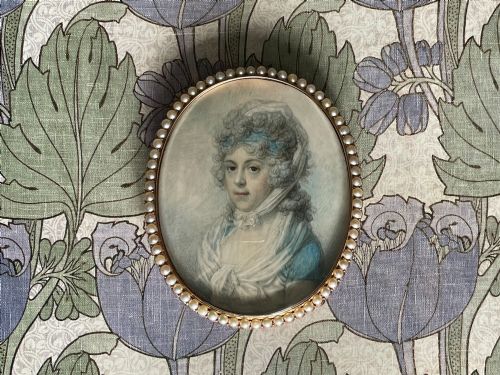


Blue and Gold Brooch
A blue and gold brooch brings together rich sapphire or enamel tones and warm precious metals to pin at a lapel or fasten a collar.
Blue and Gold Brooch
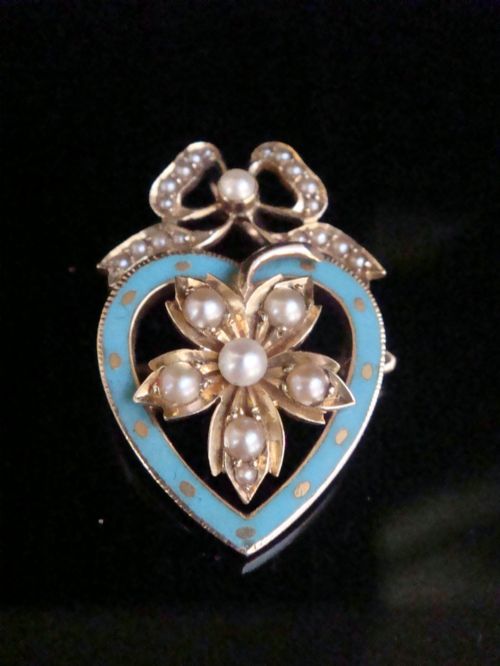
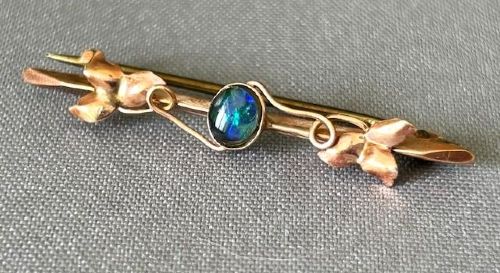
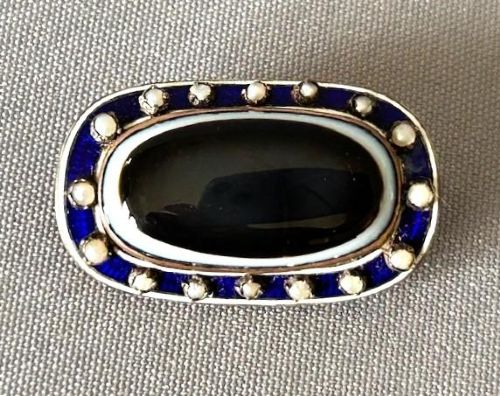
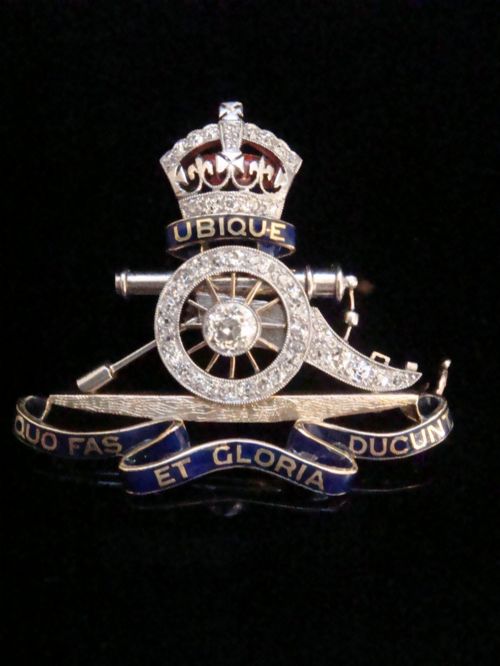
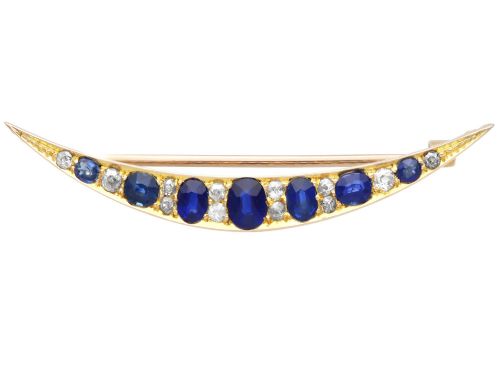
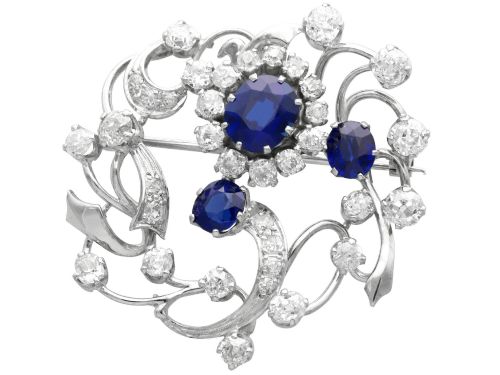
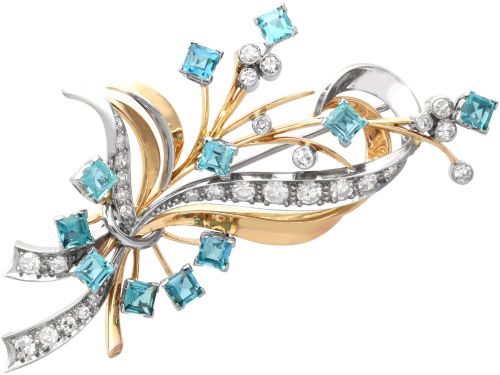
A blue and gold brooch combines deep blue gemstones or vibrant blue enamel with yellow, white or rose gold settings. These pieces range from compact crescent and circle pins to larger pendant combinations and spray motifs.
The pieces on this page span the Victorian, Edwardian, Art Deco and mid-century periods, alongside examples from the eighteenth and nineteenth centuries. Sapphire, aquamarine and blue enamel supply the colour, while gold and silver-gilt provide the foundation.
Makers set these blue stones and enamel work into forms influenced by Georgian, Renaissance Revival, Art Nouveau and Neoclassical styles. Collectors encounter everything from simple bar pins to intricate butterfly and bow designs.
Materials and construction
Craftsmen utilised various grades of gold, including nine-carat, fourteen-carat, eighteen-carat and yellow or white varieties, alongside silver-gilt, platinum and palladium. Sapphires, aquamarine, diamonds, pearls, emeralds and turquoise are set into these metals.
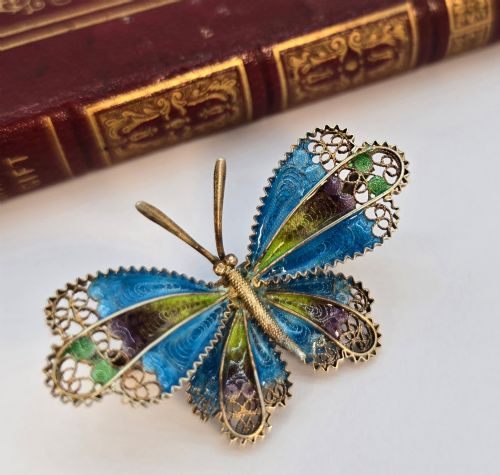
Enamel work appears frequently, including guilloché and plique-à-jour techniques that create translucent blue panels. Goldsmiths shaped these materials into foliate motifs, crescent moons, hearts and portrait miniatures.
Blue and Gold Brooch Retail Price Guide 2026
Typical asking prices for blue and gold brooch among the pieces listed under this phrase on Sellingantiques today, from the lower quarter to the upper quarter. They describe what is for sale here now, not the wider market.
A tiny butterfly spreads its enamelled wings across the centuries, guarded forever by tiny diamonds and an eighteen-carat golden antenna.
Quality variations
Quality rests upon the depth of colour in the sapphires or enamel and the precision of the metalwork. Pieces with well-matched stone sizes and crisp chasing show greater care in the workshop.
The condition of the enamel and the security of stone settings distinguish finer examples from standard production. Intricate details such as openwork frames and clean pin mechanisms elevate a piece.
Richard Cosway·Christian Friedrich Zincke·Wedgwood
The Blue and Gold Brooch Glossary
- Guilloché
- Enamel technique involving a machine-turned metal background beneath translucent enamel. This method produces repetitive geometric patterns that catch the light.
- Plique-à-jour
- Enamelling technique without a backing metal, resembling miniature stained glass. Light passes directly through the transparent blue coloured sections.
- Silver-gilt
- Silver that has a thin coating of gold applied to its surface. This combination provides the bright appearance of gold over a silver base.
- Crescent brooch
- Pin shaped in the form of a waxing or waning moon. Makers frequently set these with graduated sapphires and pearls.
- Basaltic sapphire
- Type of sapphire originating from alkali basalt terrains, known for deep, saturated blue hues. These stones often pair with yellow gold or diamonds.
Blue and Gold Brooch: Frequently Asked Questions
How do I wear a brooch?
Pin a blue and gold brooch to the lapel of a jacket, the collar of a blouse or the centre of a neckline. Heavier pendant combinations can also hang from a chain when the pin mechanism allows.
Ensure the fabric is sturdy enough to support the weight of the metal and stones without sagging. Fastening it through a woven layer or lapel facing provides the necessary stability.
What periods do these brooches represent?
The pieces span multiple eras including the Georgian, Victorian, Edwardian, Art Deco and mid-century periods. Each era brings distinct motifs, such as sentimental love tokens in the Georgian period and geometric lines in the 1930s.
Enamelling and stone cuts help identify the period of manufacture. Earlier pieces often utilise rose-cut diamonds and closed-back settings, while later twentieth-century items employ white gold and platinum.
Are these brooches also pendants?
Several pieces combine brooch fittings with hidden loops or hinged bales on the reverse. This dual purpose allows the wearer to pin the item or suspend it from a neck chain.
Inspecting the back of the piece reveals whether a folding loop or detachable fitting is present. Such versatile designs were popular across the Victorian and Edwardian eras.
How do I care for enameled jewellery?
Enamel requires gentle handling because it is essentially glass fused to metal. Avoid harsh chemical dips, ultrasonic cleaners and knocks against hard surfaces that might chip the blue finish.
Clean the metal and gemstones with a soft cloth and mild soapy water, drying the piece thoroughly afterwards. Store each brooch separately in a lined box to prevent scratching.