


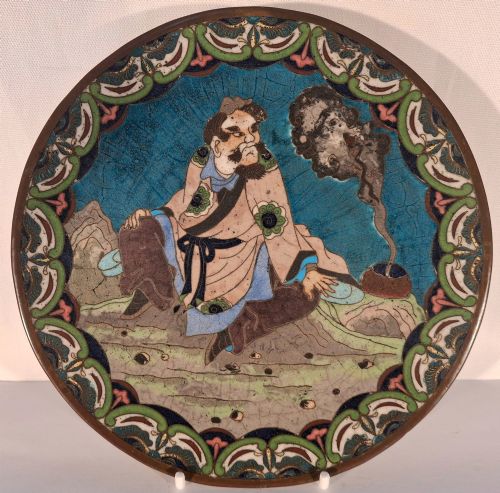
Blue and Copper Charger
These blue and copper charger plates are substantial decorative works displaying intricate cloisonne enamel craftsmanship from Japanese Meiji and Edo periods.
Blue and Copper Charger
When you examine a blue and copper charger, you are looking at large decorative plates and trays originating from Japan during the nineteenth century. The listings on this page span the Edo and Meiji periods, showcasing works created between eighteen fifty and nineteen hundred.
These items take the form of substantial platters, decorative plates, and chargers measuring up to forty centimetres in diameter. The imagery depicted upon them includes leaping koi, dragons, single-dragon motifs, samurai, demons, and auspicious symbols.
The version you are most likely to encounter here is the Japanese cloisonne enamel charger featuring deep blue fields paired with copper wire outlines. Such pieces combine utility as display platters with intricate pictorial narratives drawn from traditional Japanese iconography.
Materials and construction
The foundation of each piece relies upon metalworking, utilising copper and bronze to form the heavy base plates and trays. Artisans shape these metal bodies to receive subsequent decorative layers.
Surface ornamentation is achieved through cloisonne enamel and vitreous enamel techniques, bound together with fine brass and copper wire to create distinct cellular compartments. These wires map out complex designs of dragons, phoenixes, and figures before the coloured enamels are applied and fired.
Blue and Copper Charger Retail Price Guide 2026
Typical asking prices for blue and copper charger among the pieces listed under this phrase on Sellingantiques today, from the lower quarter to the upper quarter. They describe what is for sale here now, not the wider market.
Listings span the nineteenth century, capturing Japanese production across both the Edo and Meiji periods.
Factors of distinction
Quality in these works rests upon the precision of the wirework and the depth of the enamel fields. Finer examples display meticulous cellular geometry that defines intricate subjects like samurai, demons, and leaping koi without flaw.
The ambition of the composition dictates the standing of the piece. Large chargers featuring complex dragon motifs or signed maker panels demand greater technical mastery than smaller plates with standard auspicious symbols.
The Blue and Copper Charger Glossary
- Charger
- A large ornamental plate or platter designed primarily for display rather than dining use. These substantial pieces dominate a cabinet or wall.
- Cloisonne Enamel
- A technique where metal wires are soldered to a metal base to create compartments filled with enamel paste and fired. This method produces vivid pictorial surfaces.
- Vitreous Enamel
- A glass-like substance fused to a metal substrate through high-temperature firing. It provides a durable, glossy coloured finish.
- Meiji Period
- The era in Japanese history lasting from eighteen sixty-eight to nineteen twelve, characterised by an explosion of refined decorative arts exported worldwide.
- Edo Period
- The period spanning from sixteen hundred and three to eighteen sixty-seven in Japan. Pieces from the late phase of this era show traditional craftsmanship before Meiji industrialisation.
- Ho-o Bird
- The mythical Japanese phoenix often depicted in classical decorative arts. It symbolises fidelity, justice, and imperial grace.
Blue and Copper Charger: Frequently Asked Questions
What is a charger?
A charger is a large decorative plate or platter created for display rather than everyday service at the table. These substantial pieces often feature intricate pictorial designs.
In Japanese works from the nineteenth century, chargers served as significant statements of artistic skill and patronage.
How were these plates displayed?
These decorative plates and trays were typically exhibited on walls, stands, or within specialised display cabinets in nineteenth-century interiors. Their considerable size allows the detailed enamelwork to be appreciated from a distance.
Collectors today continue to display them on sturdy wall mounts or dedicated plate stands.
How do I date a piece?
Dating relies on stylistic markers, the specific palette of the vitreous enamels, and historical periods such as the Edo or Meiji eras. Pieces marked with signatures or specific wiring characteristics often point to distinct decades.
Comparing the subject matter, such as early dragon motifs versus later intricate compositions, helps narrow the production window.
What motifs appear most often?
Common subjects include dragons, ho-o birds, samurai, demons, leaping koi, and various auspicious symbols drawn from Japanese folklore. These themes dominate the cloisonne enamel surface.
Each motif is rendered using delicate copper and brass wires to separate the coloured enamel fields.