



Blond Maple Vanity Table
A blond maple vanity table brings striking grain and clean lines to a dressing space, rooted primarily in the interwar years.
Blond Maple Vanity Table
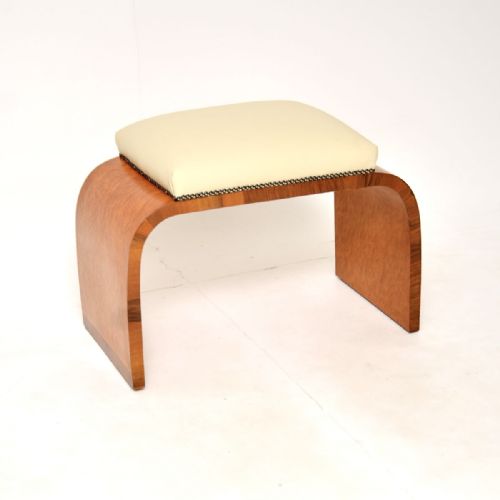
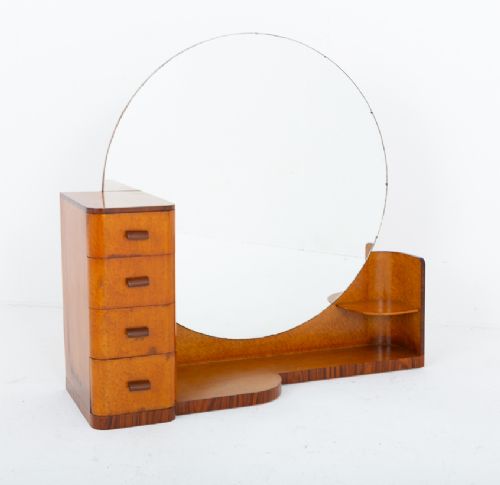
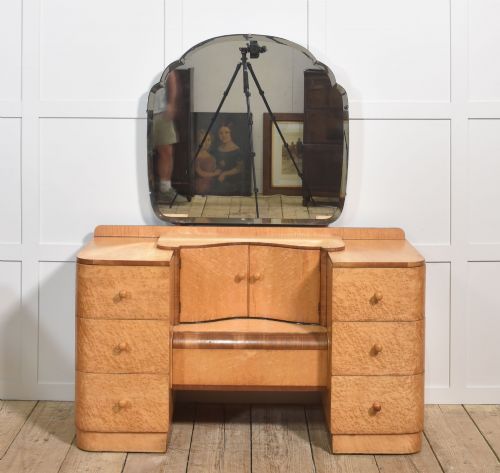
A blond maple vanity table is essentially a dressing table executed in light timbers, most frequently appearing from the 1920s and 1930s alongside associated stools and dressing mirrors. Buyers searching this phrase encounter distinct Art Deco and Swedish Grace forms, often featuring bird's eye maple or burr maple veneers.
The prevailing examples on this page date to the 1930s, displaying the characteristic geometric lines and functional mirror arrangements of the period. Alongside these modernist vanity tables, related seating such as Art Deco stools and Georgian-era dressing mirrors occasionally surface in the listings.
What varies in quality
Quality rests principally on the selection and matching of the maple veneer across the visible surfaces of the vanity table. Pieces by named makers display superior timber choice and more deliberate grain continuity than standard workshop productions.
The integration of original mirror glass and the retention of matching stools or dressing mirrors elevate the integrity of a piece. Finer examples balance modernist geometry with balanced proportions and expert timber selection.
Blond Maple Vanity Table Retail Price Guide 2026
Typical asking prices for blond maple vanity table among the pieces listed under this phrase on Sellingantiques today, from the lower quarter to the upper quarter. They describe what is for sale here now, not the wider market.
Listings feature pieces spanning the Georgian period through to the 1930s, executed in bird's eye maple, mahogany, walnut, and plain maple.
Harry and Lou Epstein
The Blond Maple Vanity Table Glossary
- Birdseye Maple
- A figured variation of maple timber showing small, circular knots resembling birds' eyes. It was heavily utilised during the Art Deco period for decorative veneer work.
- Art Deco
- A design style of the 1920s and 1930s characterised by sleek geometric shapes, streamlined forms, and modern materials. Vanity tables in this style often incorporate mirrors and contrasting wood inlays.
- Swedish Grace
- A refined classicist style popular in Sweden during the 1920s that preceded international functionalism. It combined restrained neoclassical lines with high craftsmanship.
- George III
- The period of British design spanning the mid to late 18th century, associated with refined mahogany and maple furniture. Pieces from this era predate the primary Art Deco focus of modern vanity tables.
Blond Maple Vanity Table: Frequently Asked Questions
What defines a blond maple vanity table?
These vanity tables are defined by their light maple and bird's eye maple timber, predominantly dating from the Art Deco era of the 1920s and 1930s.
They generally incorporate integrated mirrors and clean modernist lines that highlight the natural figure of the wood.
Are matching stools common?
Matching stools occasionally accompany dressing tables from the interwar period, designed with the same wood veneers and stylistic vocabulary.
Finding a complete set with its original seat enhances the cohesive look of the dressing area.
How do I care for maple veneer?
Keep these tables out of direct sunlight to prevent the light maple timber and delicate veneers from darkening or fading over time.
Dust gently with a dry cloth and avoid harsh chemical polishes that can damage the historical finish.
What periods do these pieces span?
The majority of pieces date from the 1920s and 1930s under the influence of Art Deco and Swedish Grace design movements.
Occasional earlier examples, such as Georgian burr maple mirrors, also appear alongside the modernist pieces.