


Black Wrought Iron Table
These black wrought iron table examples combine industrial weight with domestic elegance, offering sturdy surfaces for gardens and interiors alike.
Black Wrought Iron Table
A black wrought iron table search brings up robust structural forms designed for both interior and exterior settings, spanning the nineteenth century through to the Art Deco period. These pieces frequently appear paired with contrasting tops made from marble, zinc, granite, glass, or wood.
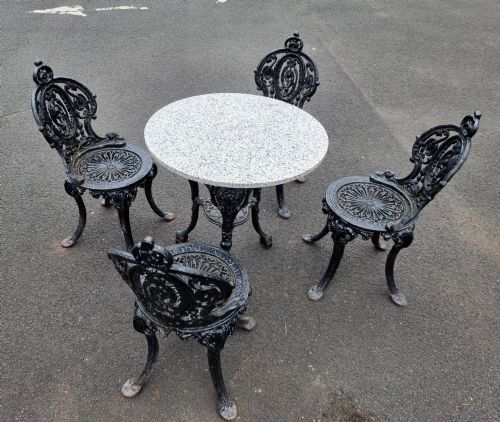
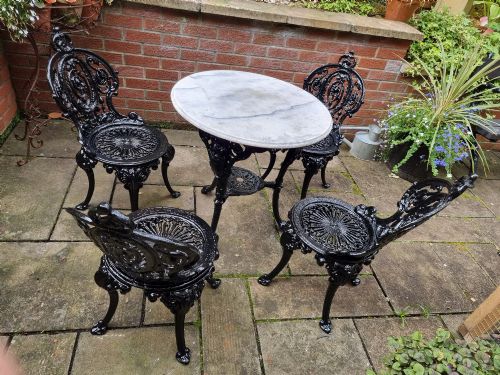
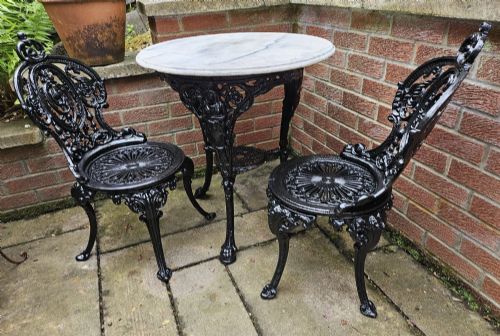
The versions most commonly met on this page range from Victorian console tables and occasional pieces to French bistro sets and industrial foundry tables. Many feature scroll work or simpler functional frames, often accompanied by matching chairs or folding seating.
Origins heavily lean towards French provincial, chateau, and country aesthetics, alongside English industrial pieces from the eighteen-fifties onwards. Buyers encounter diverse applications, from garden dining sets and coffee tables to specialised patisserie boucher tables with original stone surfaces.
Materials and construction
Construction relies heavily on the combination of heavy cast and wrought iron frameworks paired with dense natural or man-made surfaces. Iron elements provide the foundational skeleton, while marble, granite, zinc, and oak form the working tabletops.
Makers utilised foundry techniques to cast structural bases and decorative scrolls, uniting metalwork with timber tops via traditional fixings. Surface finishes incorporate patinated iron alongside polished stone and treated wood.
Recorded object types span console tables, bistro sets, table lamps, coffee tables, garden dining sets, and dinner gongs.
Assessing quality and origin
Quality rests in the heaviness of the casting and the integrity of the original top materials, such as genuine marble or zinc. Pieces featuring intact matching sets or signed lamp bases demonstrate higher desirability among collectors.
The distinction between standard utility items and finer decorative examples depends on the crispness of the iron scroll work and the authenticity of period surfaces.
Degue
The Black Wrought Iron Table Glossary
- Wrought iron
- A tough, malleable form of iron that can be heated and forged into decorative shapes. It forms the primary structural framing for many period tables.
- Cast iron
- Iron poured into a mould to create complex shapes and heavy bases. Found frequently in Victorian garden furniture and decorative scroll work.
- Patisserie boucher table
- A heavy work table traditionally used in French butcher shops or pastry kitchens. These feature original marble tops combined with robust iron bases.
- Bistro set
- A small table accompanied by matching chairs designed for compact spaces. Often constructed with iron frames and wooden or stone tops.
- Console table
- A table designed to stand against a wall, frequently featuring mirrors or elaborate ironwork supports. Popular in nineteenth-century interiors.
Black Wrought Iron Table: Frequently Asked Questions
Are these tables suitable for outdoor use?
Many of these pieces originate as garden furniture or robust bistro sets designed to withstand the elements. Iron frames naturally handle outdoor placement when properly maintained.
However, tables featuring delicate wooden tops or polished interior marble benefit from shelter during harsher weather conditions.
How do I identify a nineteenth-century piece?
Nineteenth-century examples display characteristic weight, hand-forged iron details, and traditional construction methods typical of early industrial foundries. Victorian pieces often incorporate detailed scroll work and heavy cast components.
Examining the fastening methods and the natural wear on the iron helps confirm the age of the piece.
What maintenance do iron and marble tables need?
Iron frames require periodic cleaning and occasional protection to prevent surface oxidation, especially if kept outdoors. Marble and stone tops need regular wiping with mild soap to avoid staining from liquids.
Avoiding harsh chemical cleaners preserves the original patina of both the metal and the stone.
Can I use a bistro table indoors?
Bistro tables function exceptionally well in kitchens, breakfast nooks, and smaller dining spaces due to their compact footprints. Their mixed iron and wood or marble construction complements various interior schemes.
Adding matching chairs creates a complete dining area within limited space.