






Black Wooden Lamps
Black wooden lamps bring dark surfaces and sculptural form into a room, spanning periods from the eighteenth century to the art deco era.
Black Wooden Lamps
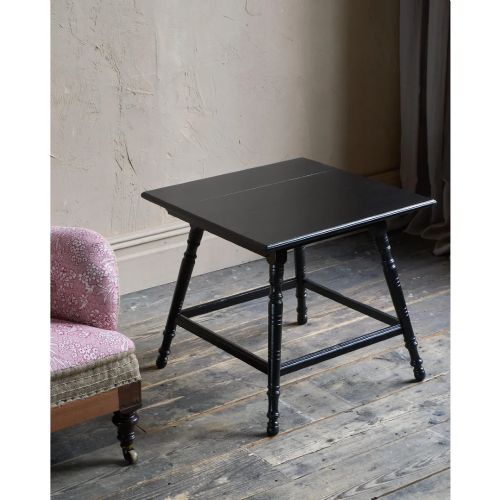
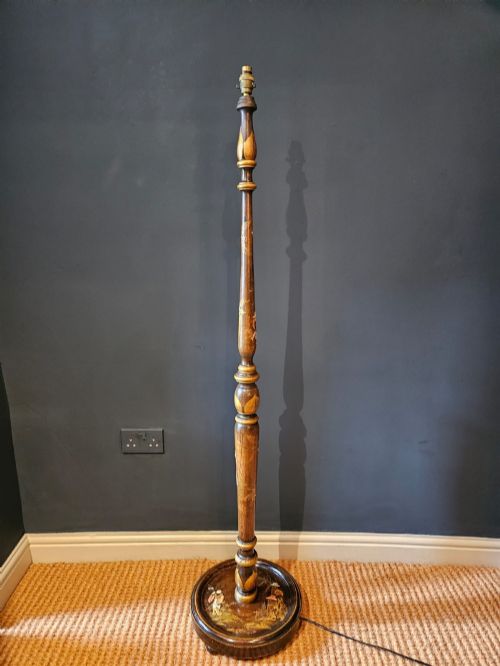
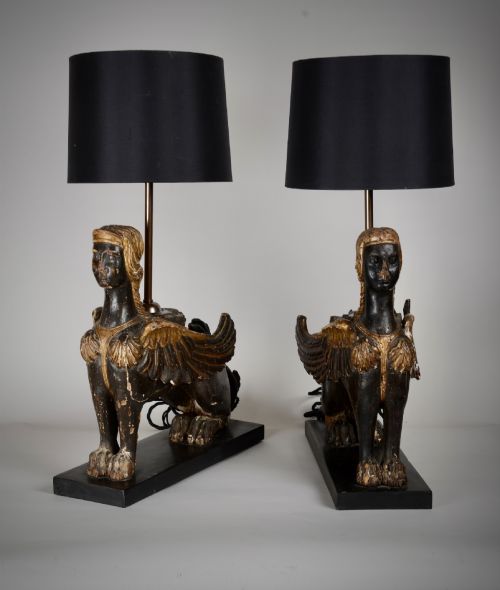
When buyers search for black wooden lamps, they encounter a diverse group of lighting and furniture conversions dating from the eighteenth century to the 1930s. These pieces include tall floor standards, table lamps, and carved figures adapted for illumination.
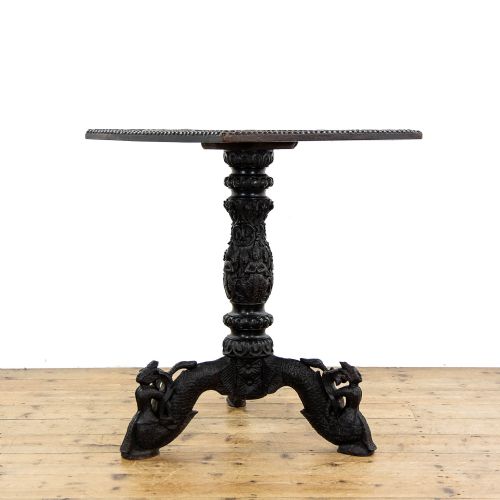
Origin points range widely across British, French, Japanese, and Indian workshops, showcasing both European dark wood finishes and Eastern decorative traditions.
Materials and construction
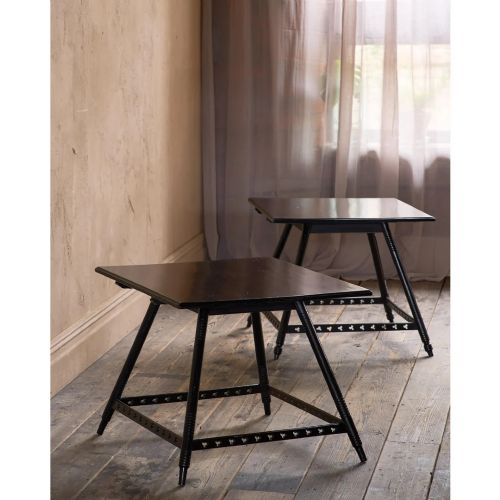
Craftsmen shaped these items from various woods including hardwood, elm, and linden, frequently applying ebonising treatments to achieve a deep black surface. Gilding and parcel gilt details often highlight carved elements.
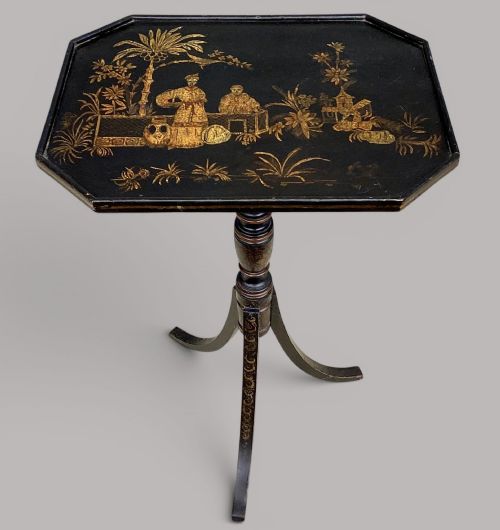
Decorative finishes rely heavily on lacquer and paint, particularly in Chinoiserie and Japanese-inspired works where smooth dark grounds support elaborate ornamentation. Metal components such as brass frequently provide structural support or decorative contrast.
Black Wooden Lamps Retail Price Guide 2026
Typical asking prices for black wooden lamps among the pieces listed under this phrase on Sellingantiques today, from the lower quarter to the upper quarter. They describe what is for sale here now, not the wider market.
Listings feature woods including ebonised timber, elm, hardwood, and linden, spanning the eighteenth, nineteenth, and early twentieth centuries.
Assessing quality and craftsmanship
Quality rests in the precision of the woodwork and the depth of the ebonisation or lacquer finish. Finer examples display crisp carving, particularly on Black Forest figures and nineteenth-century occasional tables.
The integrity of the conversion from furniture or decorative object to lamp affects desirability. Superior pieces integrate electrical wiring cleanly without compromising the historic timber or original ornamentation.
Hindley and Sons·Liberty·EW Godwin
The Black Wooden Lamps Glossary
- Ebonised wood
- Timber treated with stain or polish to resemble costly ebony. This finish gained popularity during the nineteenth century, particularly within the Aesthetic Movement.
- Aesthetic Movement
- A late nineteenth-century design style that emphasised decorative art and visual beauty over narrative subject matter. Ebonised occasional tables and stands frequently reflect this philosophy.
- Chinoiserie
- European interpretations of Chinese artistic traditions, featuring lacquered surfaces and painted motifs. These designs appear on eighteenth-century and Regency tables adapted for lighting.
- Parcel gilt
- Wood or metal partially covered with gold leaf to highlight specific carved details or mouldings. This technique adds contrast against dark painted grounds.
- Barley twist
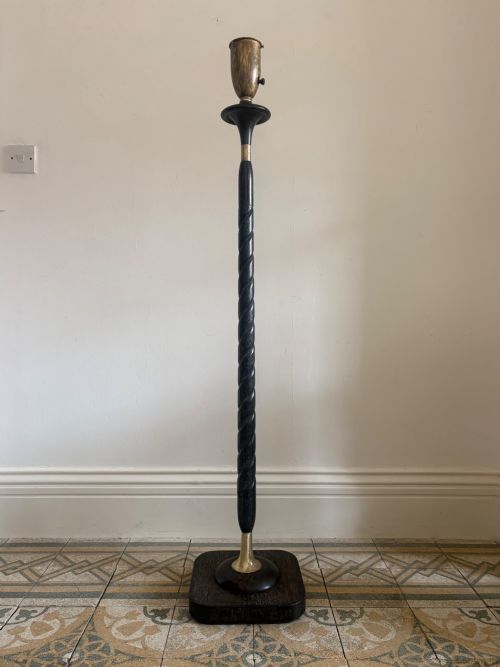
- A spiral turning technique used on wooden floor lamp standards and table legs. It creates dynamic light reflection along the vertical axis.
Black Wooden Lamps: Frequently Asked Questions
Are these original lamps?
Many items listed under black wooden lamps began as side tables, torchères, or decorative carvings before receiving electrical fittings later.
This practice of conversion preserves historic woodwork while adapting antique forms for modern domestic use.
How do I identify an Aesthetic Movement piece?
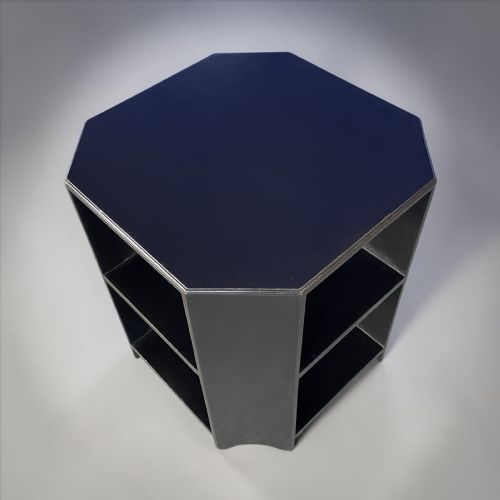
Aesthetic Movement pieces typically feature ebonised wood surfaces with clean geometric lines or subtle Japanese influences. These designs date from the late nineteenth century and often include tiered structures.
Look for refined proportions and minimal ornamentation that prioritises form and dark finishes.
What is Black Forest woodcarving?
Black Forest carvings originate from nineteenth-century European mountain regions, famous for realistic animal sculptures. Bears holding lighting components are a characteristic form from this tradition.
These pieces utilise local timbers such as linden wood, shaped with detailed hand-carving.
Where should I place a floor lamp?
Tall standards and floor lamps suit corners of rooms where dark timber finishes can contrast against lighter walls. Their vertical presence adds height and ambient lighting to a space.
Ensure the base sits on a stable surface, particularly with heavier turned timber designs.