



Black Wood Hand Glass
A black wood hand glass brings tactile Victorian craftsmanship to a dressing table, offering a portable mirror crafted from dark timber.
Black Wood Hand Glass
When you search for a black wood hand glass, you encounter portable mirrors framed in dark, ebonised, or carved timber from the nineteenth century and the Regency period.
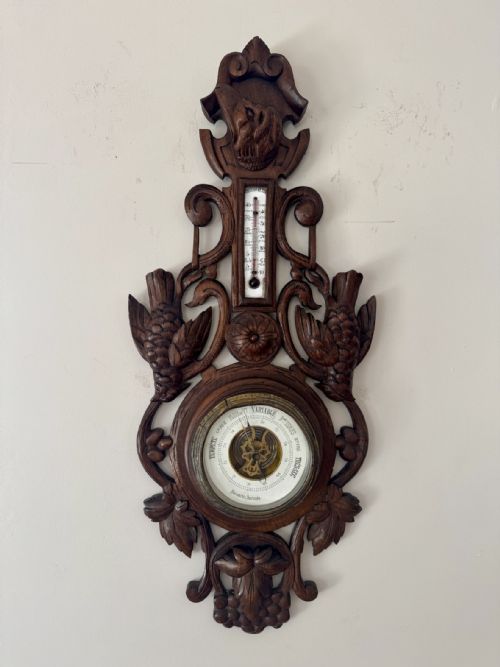
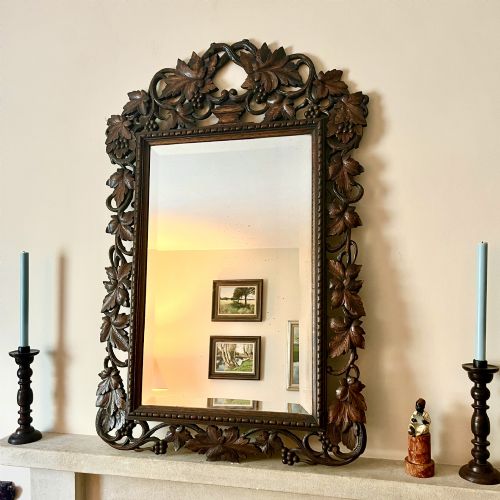
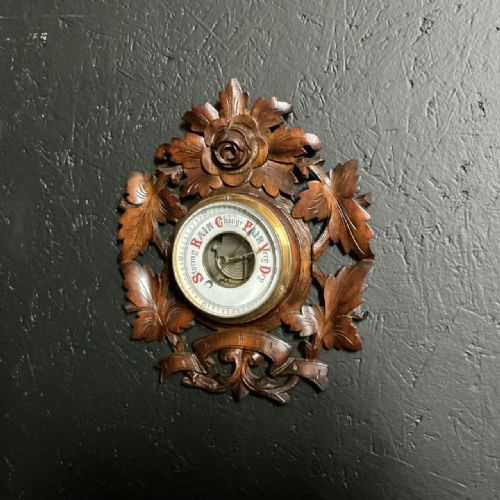
The items found on this page span styles such as Victorian Black Forest, Aesthetic Movement, and Regency, showcasing carved wood, oak, walnut, and ebonised wood alongside glass.
While the current listings lean towards wall mirrors, barometers, and inkstands rather than hand mirrors alone, the ebonised Regency hand held double sided mirror represents the category directly.
Materials and construction
Craftsmen shaped these objects from dense timbers including oak, walnut, linden wood, and ebonised wood, frequently applying deep carving techniques seen in Black Forest and nineteenth-century pieces.
Mirrors utilise original glass plates held within robust wooden frames, whilst related items incorporate brass, ceramic dials, and porcelain details to complement the dark wood bodies.
Listings on this page include nineteenth-century, Regency, and Edwardian periods, utilising carved wood, oak, walnut, ebonised wood, brass, and glass.
Assessing quality and character
The distinction between ordinary and superior pieces rests on the depth and crispness of the hand carving, particularly in the foliage, animal figures, and moulded wooden bezels.
Quality also depends on the preservation of the original wooden finish and the clarity of the glass plate, where untouched nineteenth-century examples display greater authenticity than later adaptations.
The Black Wood Hand Glass Glossary
- Ebonised wood
- Timber treated with a dark stain or finish to imitate ebony. This technique was popular during the Regency and Victorian eras for decorative objects.
- Aesthetic Movement
- A late nineteenth-century design style emphasising visual beauty over narrative or moral function. Items in this style often use ebonised finishes.
- Aneroid barometer
- A device for measuring atmospheric pressure without liquid. Many nineteenth-century examples are mounted inside carved wooden frames.
Black Wood Hand Glass: Frequently Asked Questions
How do I date a black wood mirror?
Dating relies upon examining the style of the wood carving, the type of timber utilised, and the method used to secure the glass plate within the frame.
Nineteenth-century pieces often exhibit hand-cut joinery and dense ebonised finishes distinct from later reproductions.
What is Black Forest carving?
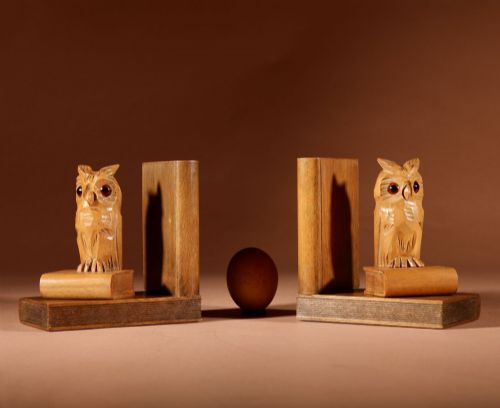
Black Forest carving is a style of detailed woodwork originating in Central Europe during the nineteenth century, known for realistic depictions of bears, owls, and foliage.
These pieces were carved from local timbers such as linden wood and oak to serve both decorative and practical household functions.
Are these mirrors fragile?
Like most antique glassware and carved timber, these items require careful handling to protect the projecting wooden details and the original glass plates.
Placing them away from direct heat sources helps prevent the timber from splitting over time.