



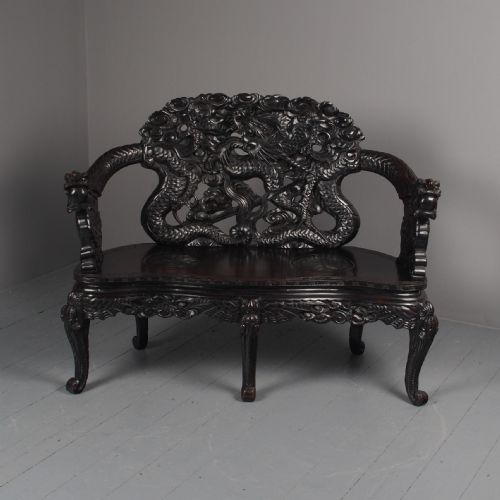


Black Wood Sofa
A black wood antique sofa brings deep ebonised surfaces and classic nineteenth-century forms into a room, offering both formal presence and seating.
Black Wood Sofa
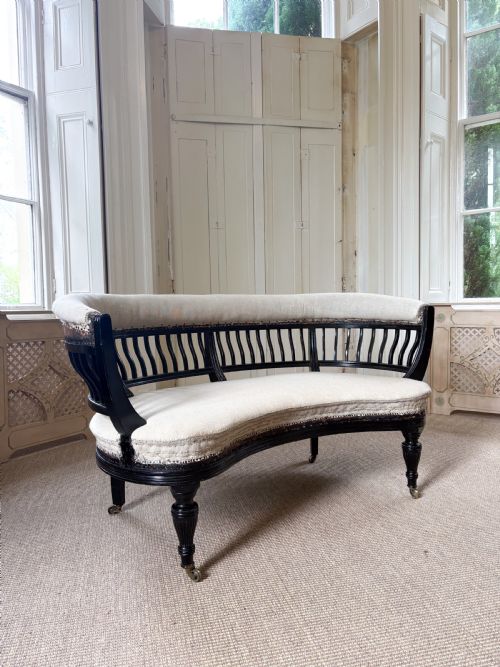
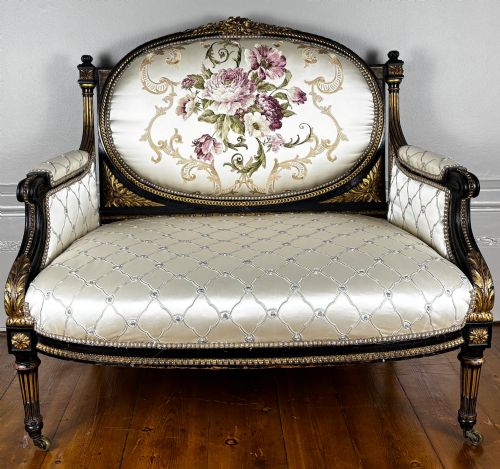
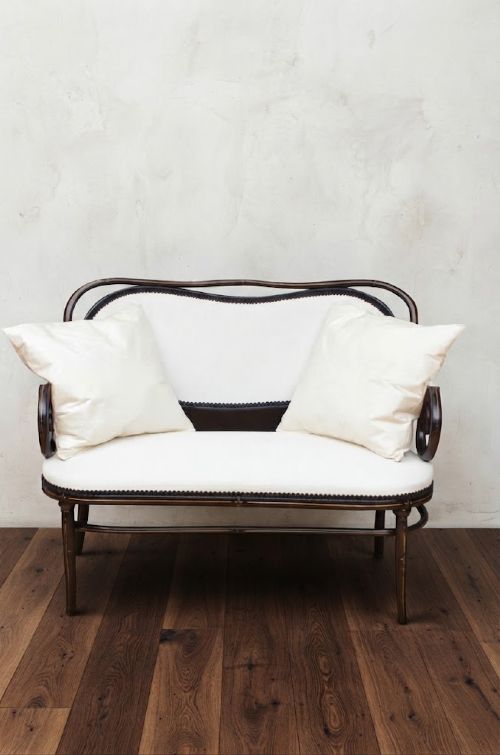
A black wood antique sofa typically takes the form of ebonised wood frames, scroll-ends, or bentwood settees originating from the nineteenth century up to nineteen-twenty. These pieces range from French Napoleon III and Empire styles to English Regency and Viennese bentwood designs.
Buyers are most likely to meet ebonised beech or walnut frames paired with upholstery in silk, linen, or various standard fabrics. Forms span from classic settees and canapes to banquettes and bench loveseats.
Continental and English workshops dominate the selection, bringing varied regional interpretations to dark-finished wood seating. The grouping reflects both formal parlour furniture and lighter occasional seating.
Materials and construction
Construction relies heavily on beech and hardwood, treated with ebonising techniques to achieve a dark, uniform surface mimicking ebony. Parcel gilt accents and gold leaf details frequently highlight carved elements on French and English frames.
Upholstery techniques incorporate traditional textile applications using silk, linen, and patterned fabrics stretched over padded frames. Steam-bending methods appear in bentwood examples, allowing for curved structural lines.
Black Wood Sofa Retail Price Guide 2026
Typical asking prices for black wood sofa among the pieces listed under this phrase on Sellingantiques today, from the lower quarter to the upper quarter. They describe what is for sale here now, not the wider market.
Listings feature pieces spanning the 19th Century, 1870, 1900, and 1920, utilising ebonised wood, beech, brass, gold leaf, silk, and linen.
Judging quality in ebonised seating
Quality rests upon the crispness of the wood carving and the depth of the ebonising finish rather than surface polish alone. Finer examples retain intact parcel gilding and well-preserved structural joins without excessive wear.
The sophistication of the stylistic execution distinguishes standard production from superior pieces, particularly in pieces bearing French Napoleon III or Thonet bentwood characteristics. Original upholstery materials and stable frame integrity further elevate a piece.
The Black Wood Sofa Glossary
- Ebonised
- Wood finished to resemble ebony through staining, painting, or chemical treatment. This dark finish gained popularity during the nineteenth century for formal seating.
- Banquette
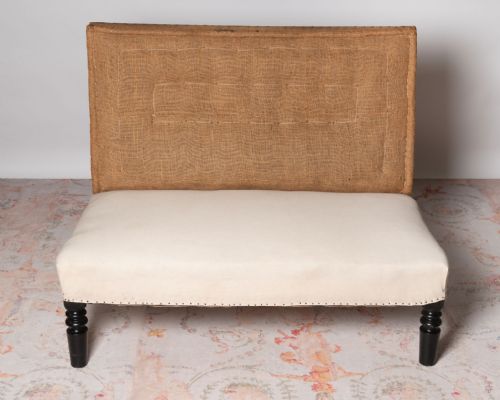
- An upholstered bench or long seat often lacking a backrest or featuring low upholstered ends. These pieces function well in hallways and reception rooms.
- Scroll-end
- A furniture arm or terminal shaped into a volute or scroll. This profile appears frequently on nineteenth-century scroll-end sofas.
- Parcel Gilt
- Partially gilded with gold leaf applied to specific carved details or highlights. It creates contrast against the dark ebonised wood background.
- Bentwood
- Wood shaped by steam heating and forced into curved forms. This technique defines specific nineteenth-century production methods.
Black Wood Sofa: Frequently Asked Questions
How do I style a black wood antique sofa?
Position the sofa against a neutral wall to let the dark ebonised frame stand out as a focal point in the room. Combine it with contrasting textiles or cushions that complement the existing upholstery fabric.
Keep surrounding furniture simple to avoid visual clutter around ornate frames like French Napoleon III or Aesthetic Movement pieces. Adequate lighting ensures the dark wood grain and any parcel gilt details remain visible.
What periods do these sofas come from?
The available pieces primarily span the nineteenth century, including specific dates around eighteen-seventy, nineteen-hundred, and nineteen-twenty. This timeframe covers late Victorian, Edwardian, and continental European manufacturing periods.
Design influences across these decades range from French Empire and Louis XV revivals to Viennese bentwood and Aesthetic Movement principles.
Are these sofas comfortable for daily use?
Many of these settees provide firm, upright seating typical of nineteenth-century parlor and reception furniture. Their ergonomics reflect the formal posture of the period rather than modern lounge seating standards.
Comfort levels depend on the internal padding and the condition of the upholstery fabric, which may range from silk to sturdy linen.
How do I identify French versus English styles?
French pieces often feature carved details, parcel gilt accents, and formal silhouettes associated with Napoleon III or Empire designs. English variants tend to follow Regency or Victorian traditions with simpler turning and scroll-work.
Examining the wood species, such as beech or ebonised hardwoods, and the specific shaping of the legs and arms helps clarify the regional origin.