


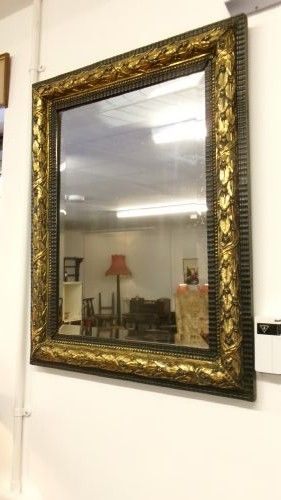


Black Timber Mirror
A black timber mirror brings a dark, striking silhouette to a room, offering depth and dramatic focus through ebonised wood, carved oak, and deeply recessed frames.
Black Timber Mirror
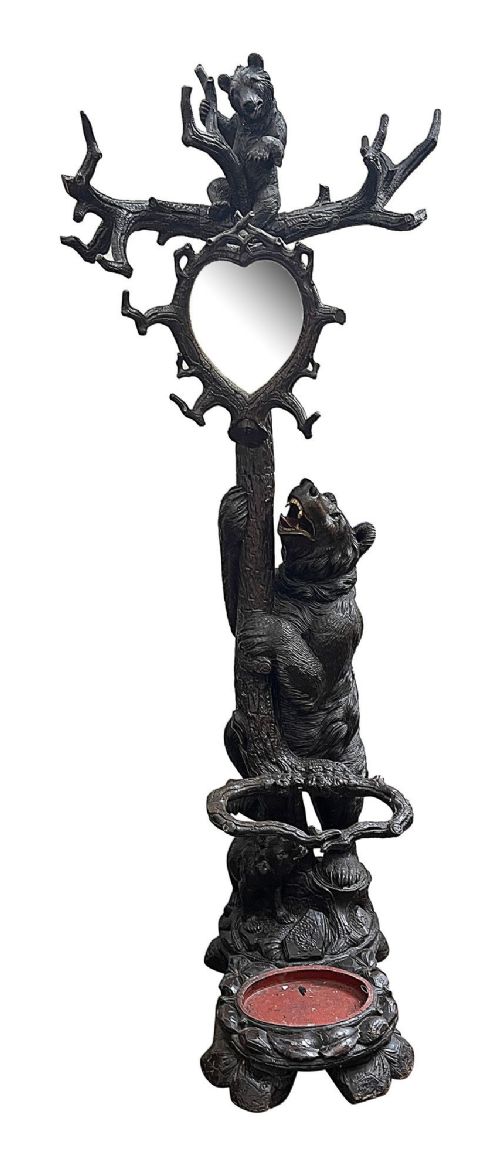
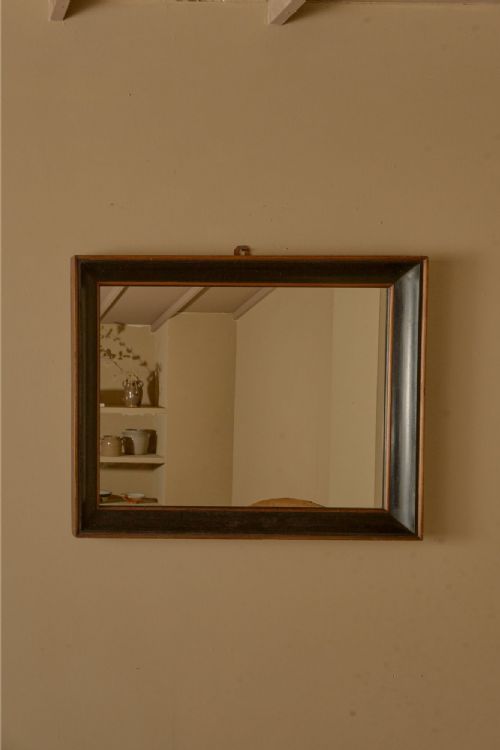
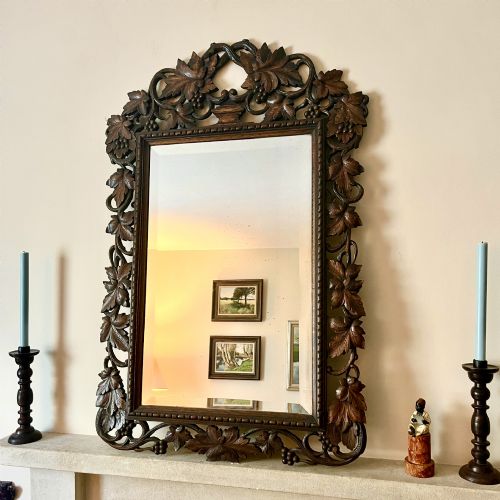
A black timber mirror draws the eye through dark frames, typically taking the form of wall mirrors originating from the nineteenth century up to the nineteen-twenties. These pieces range from sombre carved oak panels to ornate Black Forest bird carvings and Italian ebonised frames finished with faux tortoiseshell.
Buyers seeking a black timber mirror encounter diverse stylistic revivals, including Victorian and Gothic interpretations, Italian Baroque revival work, and occasional fairground or circus glass. The most commonly met versions on this page combine bevelled mirror glass with heavily carved wood or ebonised surfaces.
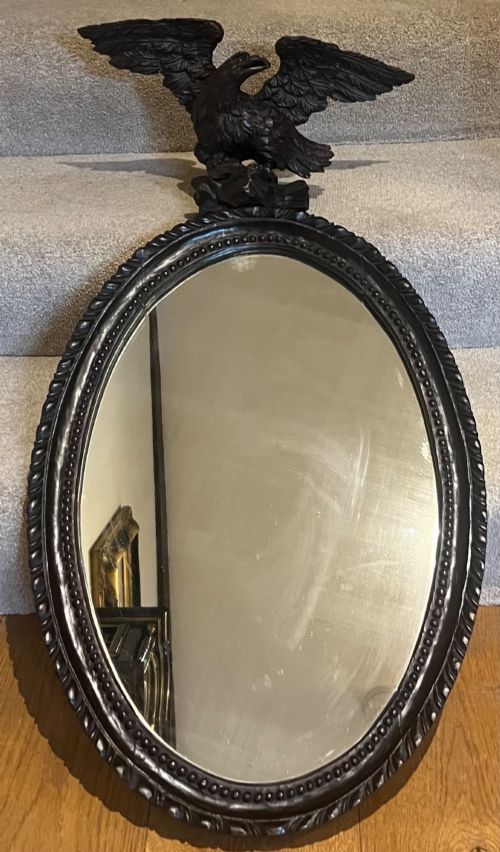
Many examples date from the Victorian era and the Edwardian period, utilising dark finishes to create high-contrast reflections. Whether geometric and brass-mounted or naturalistic with eagles and foliage, each piece relies on the weight of its dark timber surround to anchor the interior scheme.
Materials and construction
Makers constructed these frames using solid timber such as oak, alongside softer woods treated with ebonised finishes to mimic expensive ebony. Carved details often feature naturalistic foliage or birds of prey, executed with deep relief work characteristic of Black Forest craftsmanship.
Surfaces frequently incorporate veneer, brass mounts, and mercury glass or standard mirror glass plates. Ebonisation involved staining and polishing timber to achieve a dense black sheen, occasionally paired with faux tortoiseshell or gilt highlights.
Black Timber Mirror Retail Price Guide 2026
Typical asking prices for black timber mirror among the pieces listed under this phrase on Sellingantiques today, from the lower quarter to the upper quarter. They describe what is for sale here now, not the wider market.
Listings feature oak, ebonised wood, and carved timber spanning the nineteenth century to the nineteen-twenties.
Distinguishing quality
Quality rests in the depth and precision of the wood carving, where crisp, undercut foliage or sharply defined animal forms elevate a piece above standard production. The integration of materials, such as secure brass mounts and well-fitted multi-section mirror plates, also dictates the standard.
The treatment of the ebonised finish significantly influences the visual weight, with smooth, deep black polishes offering greater refinement than flat painted surfaces. Original glass plates with authentic foxing provide historical integrity that replacements lack.
The Black Timber Mirror Glossary
- Ebonised wood
- Timber treated with stain or polish to resemble genuine ebony. This dark finish was popular in the nineteenth century for achieving a formal, dramatic appearance.
- Black Forest
- A style of intricate wood carving originating from the mountainous region of central Europe. Pieces often depict birds, animals, and natural foliage in high relief.
- Faux tortoiseshell
- A decorative paint technique or applied material mimicking the mottled amber and brown shell of a turtle. It frequently appears alongside ebonised frames to add contrast.
- Mercury glass
- Double-walled silvered glass popular in the nineteenth century. It produces a misty, atmospheric reflection with distinct depth.
- Bevelled mirror
- Glass featuring an angled, polished edge that catches the light. This detail adds dimension and refinement to the frame boundary.
Black Timber Mirror: Frequently Asked Questions
What periods do these mirrors come from?
The pieces span the nineteenth century through to the nineteen-twenties, encompassing Victorian, Edwardian, and early twentieth-century examples.
Styles range from Gothic and Italian Baroque revivals to ornate Black Forest carvings and fairground novelties.
How were black timber frames finished?
Frames were typically ebonised using dark stains and polishes on woods like oak to create a dense, light-absorbing surface. Some incorporated contrasting brass mounts or faux tortoiseshell details.
Carved elements were often left in natural dark wood or blackened to match the primary structure.
Where should I hang a wall mirror?
These dark frames suit spaces requiring a strong focal point, such as above a fireplace mantel or in a hallway. Their reflective glass brightens darker rooms while the heavy timber provides grounding contrast.
Consider the scale of the frame relative to surrounding furniture to balance the visual weight.
Are the mirror plates original?
Many listings feature original glass, sometimes displaying age-related foxing or mercury backing that contributes to historical character. Fairground and circus pieces utilise specialist curved or multi-section glass.
Careful inspection of the glass edges and backing reveals whether the plate has been replaced over time.