





Black Tea Caddy
A black tea caddy holds the leaf in style, bringing period craft and dark polish to any room.
Black Tea Caddy
When you search for a black tea caddy, you enter a world of small storage containers designed to keep precious dry leaves fresh. The examples gathered here span the Regency and Victorian periods, alongside Chinese export pieces and later 1920s items. Most of the pieces on this page take the form of tea caddies, decorative boxes, and tea canisters.
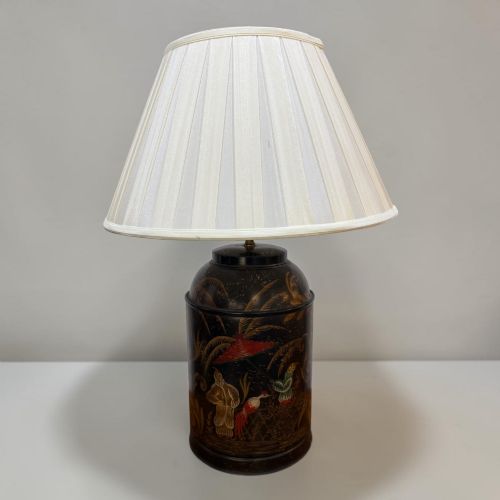
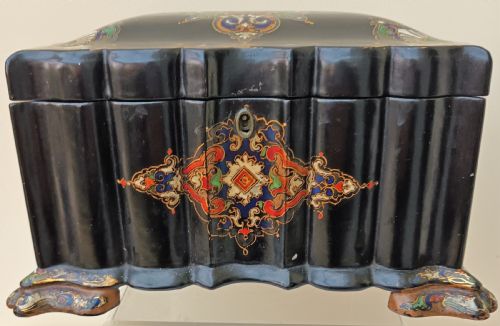
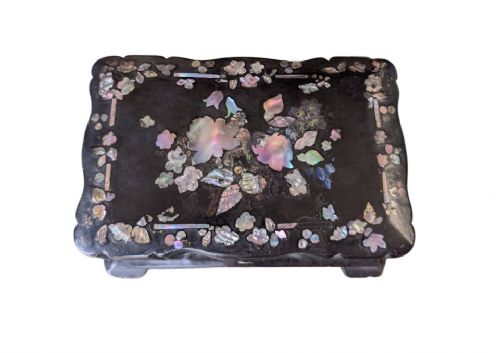
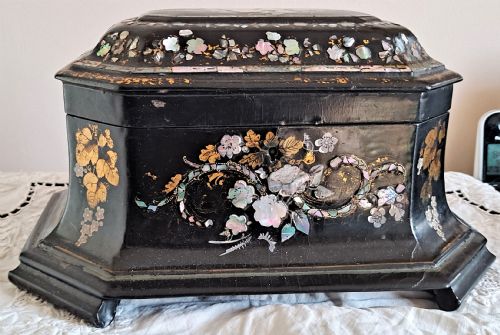
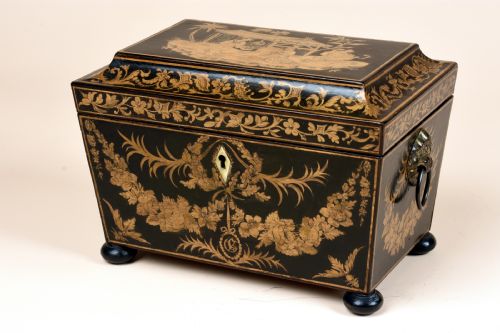
The objects vary from finely decorated penwork boxes to lacquered vessels and papier-mâché tea caddies with mother-of-pearl inlay. You will also find items adapted over time, such as tea canister table lamps and keepsake boxes. These containers range from Chinese export items to English Regency and William IV toleware creations.
Materials and construction
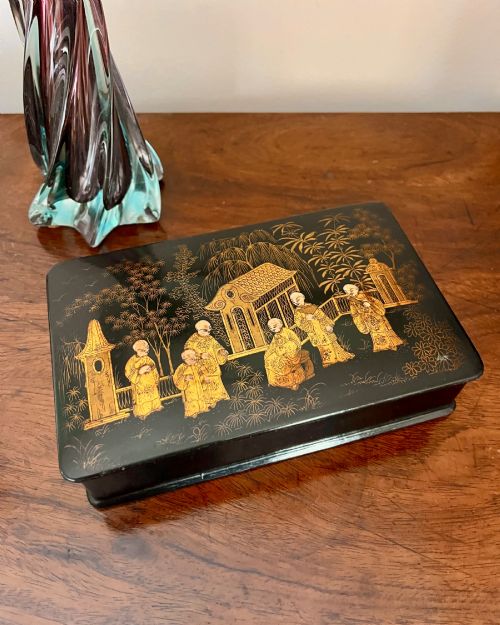
Maker workshops relied on wood, lacquer, and papier-mâché as the primary bodies for these containers. Skilled hands applied gold leaf and hand-painted details to create intricate chinoiserie scenes on the dark surfaces.
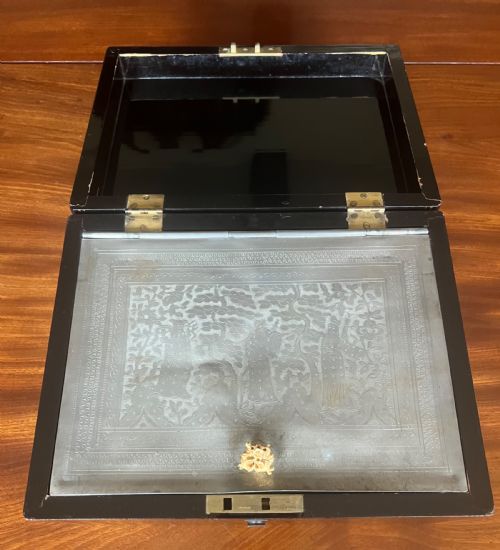
Many examples feature delicate penwork decoration, while others incorporate brass fittings, bone elements, and mother-of-pearl inlay. Interiors often retain remnants of foil lining or multiple compartments designed to separate different tea leaves.
Black Tea Caddy Retail Price Guide 2026
Typical asking prices for black tea caddy among the pieces listed under this phrase on Sellingantiques today, from the lower quarter to the upper quarter. They describe what is for sale here now, not the wider market.
Listings on this page include materials such as lacquer, papier-mâché, coromandel, and mother-of-pearl across the 19th century.
What separates the finest pieces
The skill of the decorator largely dictates the standing of a penwork or chinoiserie box, where precise lines and detailed pictorial scenes elevate the work. Crisp execution in the gold leaf and the depth of the lacquer finish distinguish superior examples.
The survival of internal components, such as original mixing bowls, lids, and intact foil linings, adds to the integrity of a tea caddy. The quality of the underlying material, whether sturdy papier-mâché or finely turned wood like coromandel, also marks the grade of the piece.
The Black Tea Caddy Glossary
- Penwork
- A decorative technique using fine ink lines drawn onto a prepared surface to simulate engraved or inlaid designs. Artisans often worked on light or dark grounds to create intricate geometric or figurative motifs.
- Chinoiserie
- European artistic interpretation of Chinese and East Asian artistic traditions, popular during the Regency and Victorian eras. This style frequently appears in lacquered or painted designs on boxes and caddies.
- Papier-mâché
- A composite material made from paper pulp or reinforced sheets of paper mixed with glue, then moulded and dried. Once hardened, it provided a smooth ground for japanning, lacquer, and mother-of-pearl inlay.
- Toleware
- Tin-plated steel articles painted and baked with a japanned lacquer finish. William IV examples often utilised this technique for durable tea canisters.
- Coromandel
- A dense, dark timber imported from Asia, valued for its rich grain and utilised for high-quality English boxes and cases.
Black Tea Caddy: Frequently Asked Questions
How were they used originally?
Tea was an expensive commodity in the Regency and Victorian periods, so the mistress of the house kept the caddy locked to portion out the leaves.
Servants brought the caddy to the parlour or dining room, where tea was measured into a teapot or mixing bowl.
How do I spot a Regency piece?
Regency pieces often display fine penwork, delicate chinoiserie motifs, or classical proportions dating around 1800 to 1830.
Look at the execution of the painted details and the style of any brass feet or ring handles to help date the object.
Can I still use one for tea?
While original foil linings and interior wooden lids can still hold dry goods, many collectors prefer to use them for keepsakes or display them empty.
Care should be taken with delicate surfaces like papier-mâché and mother-of-pearl inlay if stored in damp conditions.
What is papier-mâché?
Papier-mâché is a durable composite material formed from paper pulp or layered paper mixed with binders, then baked and hardened.
It provided an ideal smooth black surface for Victorian makers to apply mother-of-pearl inlay and gold leaf decoration.