

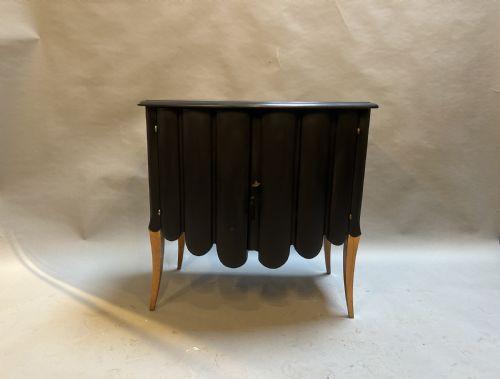


Black Storage Cabinet
A black storage cabinet brings dark polish and enclosed utility to a room, offering everything from Victorian ebonised timber to Chinoiserie lacquer.
Black Storage Cabinet
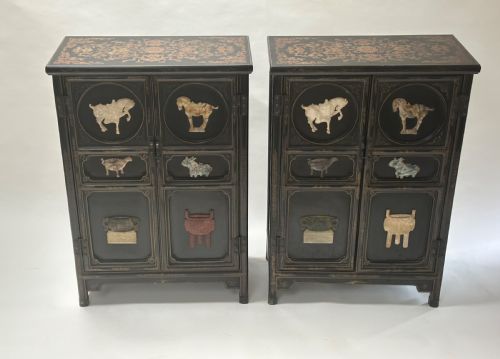
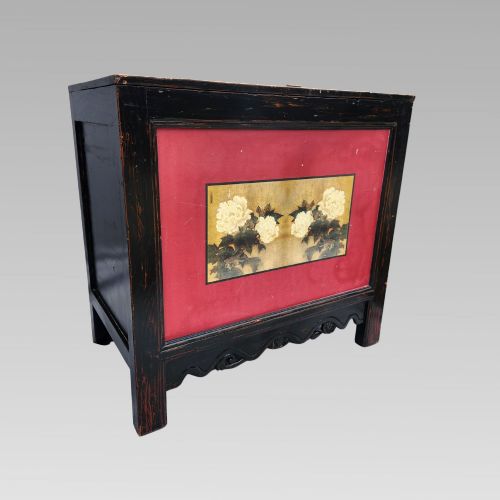
When searching for a black storage cabinet, you encounter a broad sweep of domestic furniture spanning the eighteenth, nineteenth, and early twentieth centuries. These pieces cross diverse traditions, including English ebonised sideboards, French Art Deco commodes, and oriental lacquer chests.
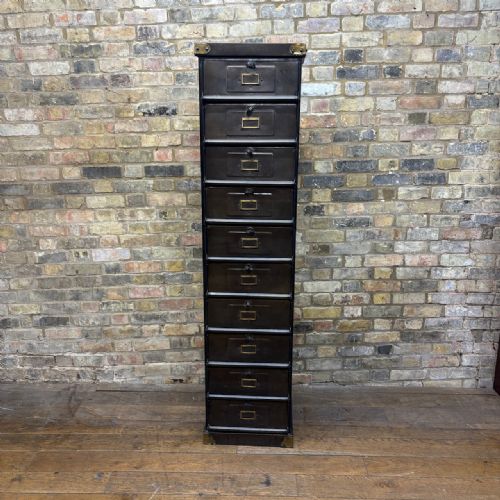
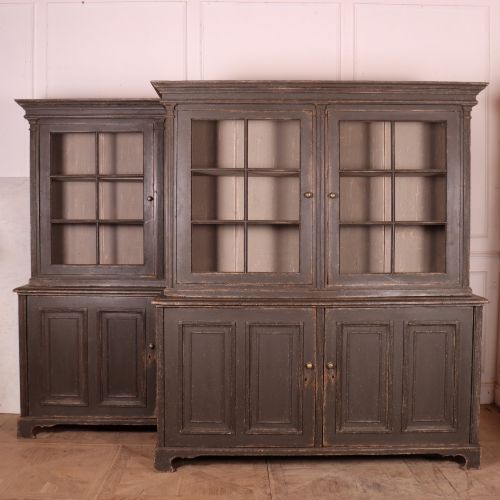
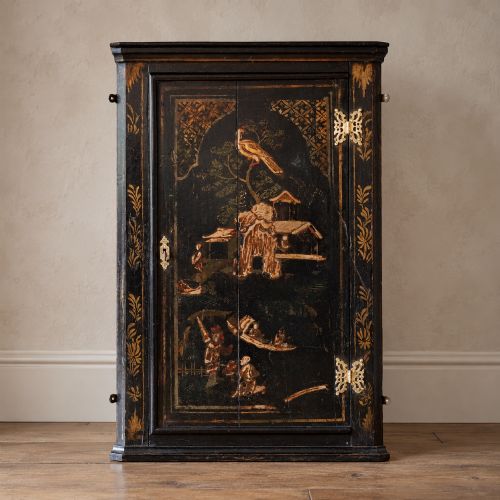
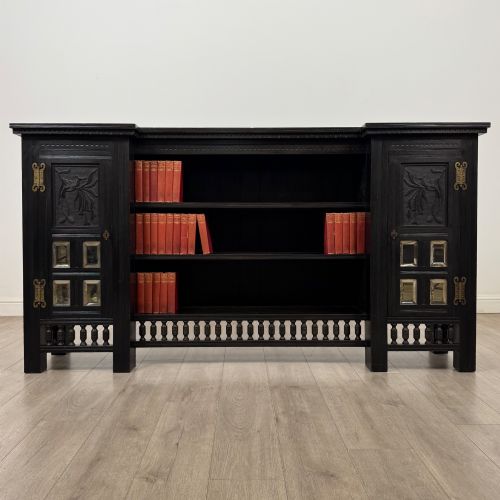
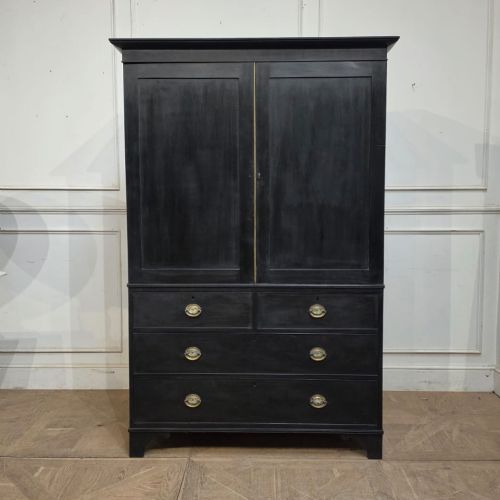
The version you are most likely to meet on this page is a nineteenth-century or early twentieth-century cabinet utilising painted pine, ebonised wood, or black lacquer. Forms range from tall linen presses and corner cupboards to side cabinets and table cabinets.
Regional and stylistic variations shape the selection, taking in Victorian tool chests, Japanese tansu chests, and eighteenth-century Tuscan and Chinoiserie examples. Each piece serves a primary storage function while displaying the distinct aesthetic of its period.
Materials and construction
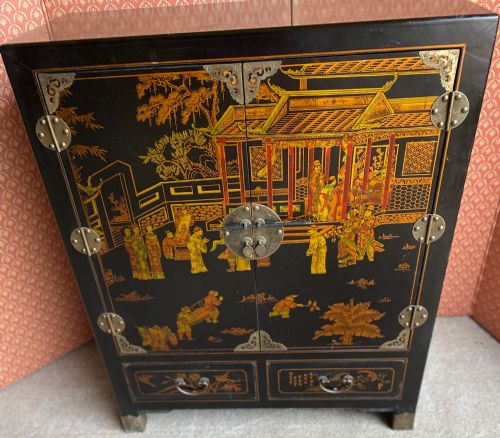
Construction relies heavily on timbers such as pine, walnut, and oak, which are frequently ebonised, painted, or finished with black lacquer. Surface ornamentation often incorporates brass hardware, gilt-metal mounts, and intricate floral or bird motifs applied in the Chinoiserie tradition.
Traditional joinery methods anchor these cabinets, from the fitted drawers of nineteenth-century chests to the panelled doors of housekeeper larder cupboards and linen presses. Lacquered and japanned pieces build up multiple layers of finish to achieve a deep, reflective dark surface.
Black Storage Cabinet Retail Price Guide 2026
Typical asking prices for black storage cabinet among the pieces listed under this phrase on Sellingantiques today, from the lower quarter to the upper quarter. They describe what is for sale here now, not the wider market.
Listings feature black storage cabinets spanning the seventeenth through the twentieth centuries, utilising materials from pine and walnut to lacquer, brass, and iron.
Distinguishing craftsmanship
Distinctions in quality often rest on the execution of the surface finish and the preservation of original decoration. Hand-applied lacquer, detailed hand-painted Chinoiserie motifs, and well-maintained ebonised wood denote higher levels of original craftsmanship.
Structural integrity and the retention of original brass or gilt-metal hardware further separate standard domestic utility items from finer cabinetwork. The precision of the joinery in carcases and drawers indicates the skill of the original maker.
Henry Ogden and Son
The Black Storage Cabinet Glossary
- Ebonised
- Wood treated with a dark finish to imitate expensive ebony. This technique gained significant popularity during the Victorian and Regency periods for accentuating formal cabinetwork.
- Chinoiserie
- European decorative style reflecting Chinese artistic influences. It frequently employs black lacquer grounds painted with gilt figures, landscapes, birds, and flowers.
- Japanned
- European imitation of Japanese and East Asian lacquerwork. The process involves layering resin finishes and curing them to produce a hard, glossy surface.
- Tansu
- Traditional Japanese mobile storage chest constructed from wood. These pieces often feature multiple drawers, sliding panels, and iron reinforcement straps.
- Linen Press
- Tall storage furniture designed primarily for textiles. It typically combines upper cupboard doors enclosing sliding shelves with lower drawer storage.
Black Storage Cabinet: Frequently Asked Questions
What is a black storage cabinet used for?
These cabinets serve as versatile storage furniture for domestic interiors, holding items ranging from linens and books to tableware and general household goods.
Historically, specific forms were built for dedicated tasks, such as music cabinets for sheet music, larder cupboards for provisions, and linen presses for textiles.
How do I identify a Chinoiserie cabinet?
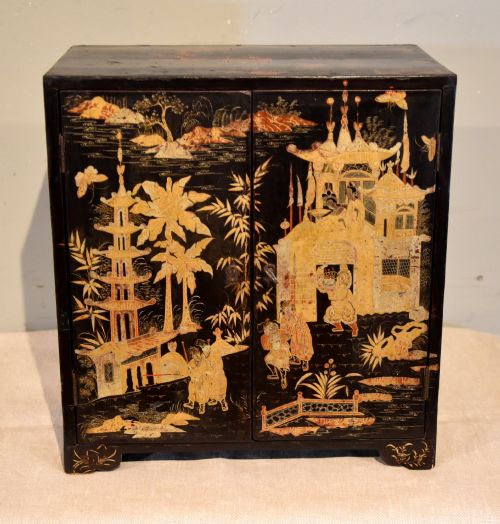
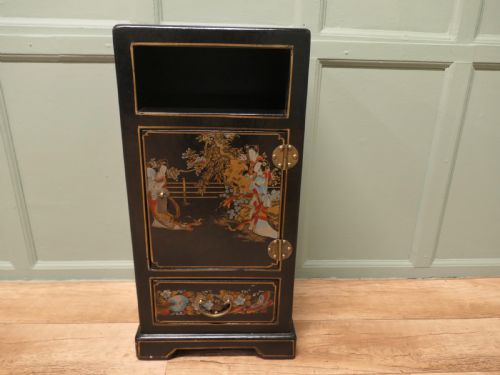
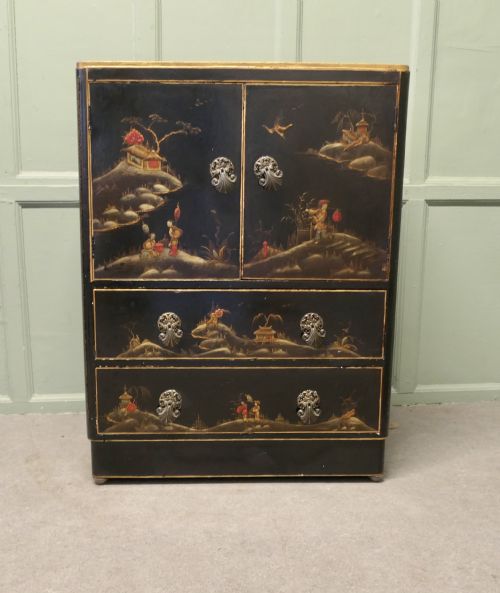
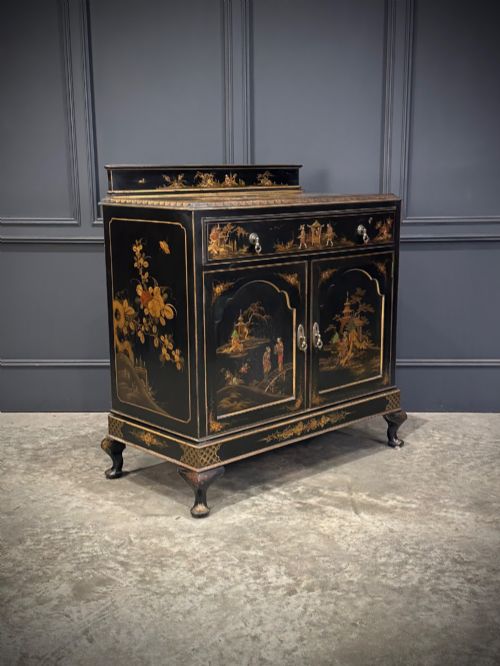
Chinoiserie cabinets feature dark lacquered or japanned surfaces decorated with painted motifs inspired by East Asian art. Look for characteristic scenes depicting figures, pagodas, birds, and floral arrangements.
These designs frequently utilise gilt or coloured paint against a black background, spanning eighteenth-century pieces to early twentieth-century revivals.
What is ebonised wood?
Ebonised wood is standard timber treated with stains, paints, or chemical processes to create a dark, polished finish resembling dense ebony. This treatment was widely utilised in nineteenth-century furniture to achieve a formal appearance.
It appears frequently on Victorian sideboards, pier cabinets, and Regency chests of drawers.
How do I care for antique lacquer furniture?
Antique lacquer surfaces require gentle maintenance using a dry, soft cloth to remove dust. Avoid chemical cleaners, excessive moisture, and direct sunlight, which can damage the delicate finish.
Maintaining stable room humidity prevents the timber beneath the lacquer from expanding or contracting.