


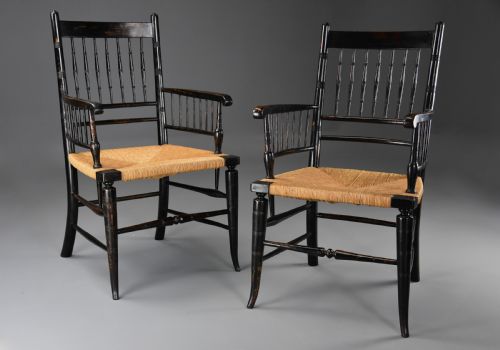


Black Spindle Chair
A black spindle chair brings together vernacular turning and dark finished timber, offering a robust seat with a slender silhouette.
Black Spindle Chair
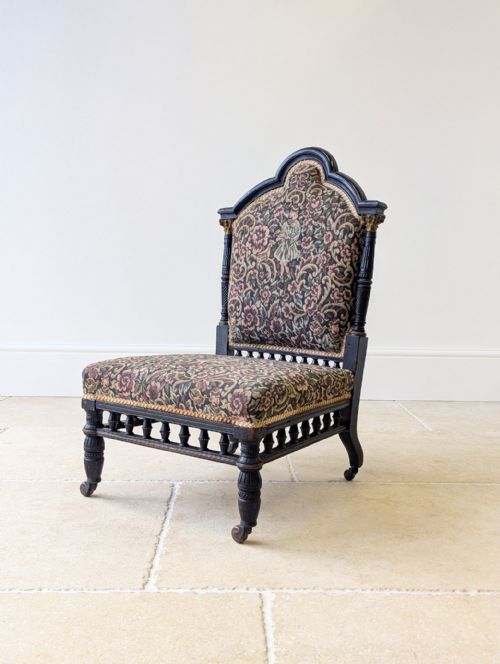
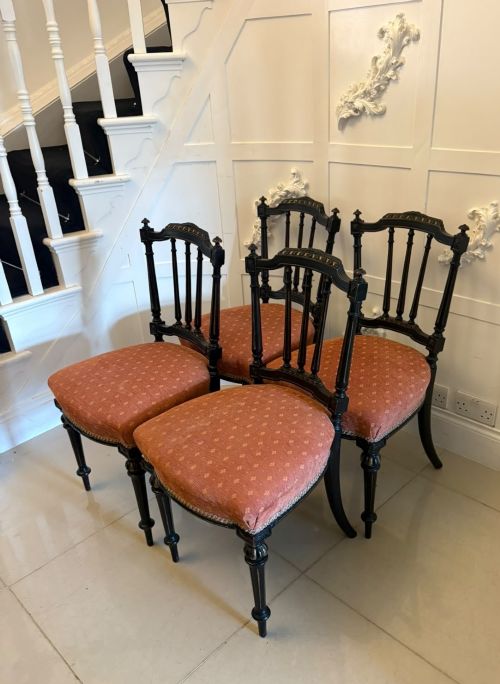
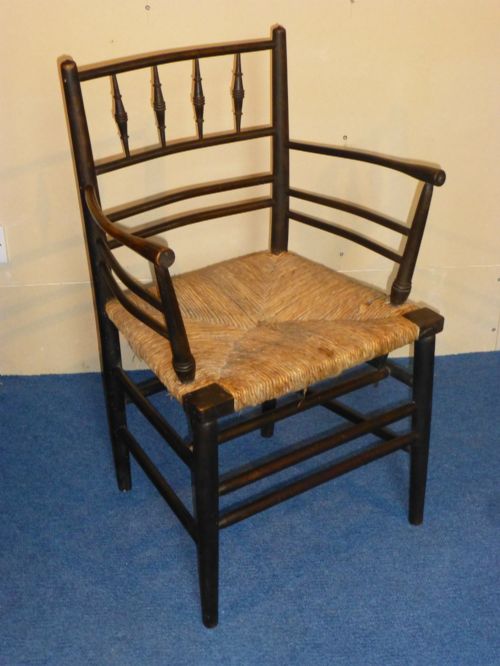
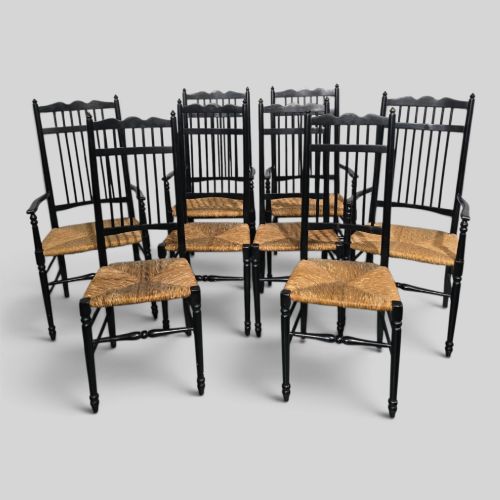
A black spindle chair is a traditional seating form defined by turned vertical uprights in the backrest and a dark surface finish, drawing on vernacular English, Welsh and Scandinavian traditions. These range from substantial rocking chairs and revolving desk chairs to low salon seating and sets of dining chairs.
The pieces seen here span the eighteenth, nineteenth and early twentieth centuries, encompassing Regency country models, Victorian ebonized designs, and Arts and Crafts pieces associated with makers such as Morris and Co. Buyers are most likely to encounter Victorian ebonized examples alongside painted country rocking chairs and turned vernacular forms.
How they were made
Construction relies heavily on turned timber components, utilising hardwoods like mahogany alongside ebonized finishes and original paint surfaces to achieve the characteristic dark appearance. Individual spindles are shaped on a lathe and fitted into steam-bent or mortised frames.
Seating areas often incorporate woven rush, fabric upholstery, or plain wood, while decorative details sometimes include brass accents, gilding, or applied leather.
Black Spindle Chair Retail Price Guide 2026
Typical asking prices for black spindle chair among the pieces listed under this phrase on Sellingantiques today, from the lower quarter to the upper quarter. They describe what is for sale here now, not the wider market.
Pairs marketed specifically as His and Hers chairs let nineteenth-century couples sit in matching ebonised symmetry.
What varies in quality
Quality depends upon the crispness of the wood turning and the integrity of the frame construction, where tighter joints and well-proportioned spindles separate standard utilitarian seating from finer artistic commissions. The retention of original surface treatments, whether ebonization or early paint, significantly influences the integrity of the piece.
Design provenance also marks the upper tier, with documented workshop attributions or specific retail labels commanding distinct attention compared to unbranded vernacular items.
Morris & Co·Philip Webb·Liberty of London·Ford Maddox Brown
The Black Spindle Chair Glossary
- Ebonised wood
- Timber treated with stain or paint to imitate expensive ebony. This dark finish gained popularity during the Victorian and Aesthetic periods to create stark, dramatic silhouettes.
- Spindle
- A slender, turned wooden rod used vertically in chair backs. These elements provide structural support while keeping the piece visually light.
- Vernacular
- Everyday objects built by local tradesmen following regional traditions rather than high-style academic designs. These pieces prioritize practical utility and local materials.
- Rush seating
- Woven marsh grass used to form a durable, flexible seat base. It is commonly wrapped around a wooden frame in traditional chair construction.
Black Spindle Chair: Frequently Asked Questions
Are these chairs comfortable?
Most of these designs rely on supportive upright spindles and angled backs rather than deep upholstery. Some variations include woven rush or padded fabric seats for added comfort.
Rocking and desk variants offer ergonomic adjustments suited for prolonged sitting, while salon and dining chairs are built for upright posture.
How do I date a black spindle chair?
Dating relies on examining the turning style, joinery methods, and the nature of the surface finish. Victorian ebonized pieces often show nineteenth-century machine assistance, whereas earlier vernacular examples reveal hand-lathed irregularities.
Associated movements like Arts and Crafts or the Aesthetic period provide specific stylistic windows between the mid-nineteenth and early twentieth centuries.
Where should I place a black spindle chair?
Their dark finish and slim profile make them versatile accents in both traditional and contemporary interiors. A single rocking or low salon chair works well in a corner or bedroom.
Sets of dining or desk chairs can be integrated into working home offices or around dining tables to introduce texture and historical contrast.
What is the difference between regional and designer chairs?
Regional or country pieces reflect local woodworking traditions and unbranded vernacular craftsmanship. They prioritize sturdy construction and simple utility.
Designer pieces from this category carry specific aesthetic philosophies, tied to workshops and makers who elevated turned seating into high art.