


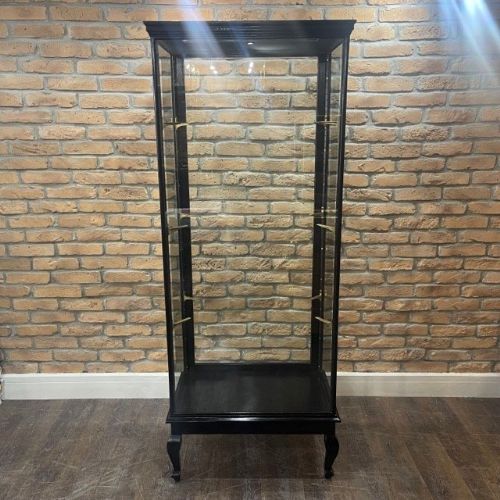


Black Shop Display Case
A black shop display case brings instant commercial character into a room, offering glass and ebonised timber to frame your collection.
Black Shop Display Case
A black shop display case encompasses countertop vitrines, tall tower cabinets, and freestanding commercial shop counters designed to showcase merchandise. When exploring a black shop display case, expect to find sturdy pieces originating from the nineteenth century through the Art Deco era.
The selections available here lean heavily toward early twentieth-century examples, featuring ebonised wood and glazed construction. These commercial survivors range from compact jewellery boxes lined in velvet to grander floor-standing towers and counters.
Makers from both British and American commercial backgrounds produced these functional objects, utilising glass, brass mounts, and steel frames. Each item reflects the practical needs of past retailers who required clear visibility and secure presentation.
How they were made
Construction relies heavily on ebonised wood, mahogany, and steel frameworks designed to support large panes of glass. Brass mounts, velvet linings, and leather details frequently accent the primary timber and metal structures.
Joinery methods reflect robust commercial manufacturing standards intended to withstand daily retail handling over decades. Glass panels are typically secured within rebated frames or held by brass fittings to maximise the viewing area for potential buyers.
Black Shop Display Case Retail Price Guide 2026
Typical asking prices for black shop display case among the pieces listed under this phrase on Sellingantiques today, from the lower quarter to the upper quarter. They describe what is for sale here now, not the wider market.
Some cabinets survived decades of retail trade only to spend their retirement holding someone's prized collection of tiny ceramic ducks.
What varies in quality
The distinction between standard commercial grade and superior quality lies in the refinement of the materials and hardware. Heavy brass mountings, original velvet or leather linings, and distinct architectural proportions elevate certain pieces above utilitarian shop furniture.
Condition of the ebonised finish and the clarity of the original glass play a major role in the overall integrity of the cabinet. Pieces retaining their manufacturer details or featuring more complex structural forms like tower configurations demonstrate higher design ambition.
Quincy Showcase Works Illinois·Sage & Co
The Black Shop Display Case Glossary
- Ebonised Wood
- Timber treated with a dark stain or finish to imitate the appearance of ebony. This dark surface finish defines many early twentieth-century commercial cabinets.
- Vitrine
- A glass display cabinet or case designed for protecting and exhibiting objects of value. These enclosures utilise glass on multiple sides to ensure maximum visibility.
- Tower Cabinet
- A tall, vertical display structure built to maximise floor space while offering multiple tiers of shelving. Such forms were standard in twentieth-century retail environments.
- Countertop Display Cabinet
- A smaller vitrine designed to sit directly upon a shop counter for close customer inspection. These compact cases often feature hinged rear doors for staff access.
Black Shop Display Case: Frequently Asked Questions
Where were these cases used?
These cabinets originally stood in nineteenth and early twentieth-century retail shops, pharmacies, and jewellers to merchandise small goods.
Merchants relied on them to keep valuable items secure behind glass while allowing customers a clear view of the stock.
How do I clean the glass?
Use a standard glass cleaner applied to a soft cloth rather than directly onto the cabinet to protect surrounding wood and metal.
Take care around original brass mounts and ebonised surfaces to avoid moisture damage to antique finishes.
Are the shelves adjustable?
Many commercial cabinets feature fixed internal shelving due to the sturdy structural demands of retail display.
Some tall tower and counter variants incorporate slot supports, but verification depends on the internal construction of each individual piece.
How do I date these cabinets?
Dating relies on architectural styles such as Art Deco geometric lines or Victorian proportions, alongside construction materials like ebonised wood.
Hardware details and maker signatures, when present, provide further confirmation of the manufacturing era.